When Remodelista founder Julie Carlson attended a benefit dinner at Wave Hill, a public garden and under-the-radar treasure in the Bronx, she enjoyed the beautiful plantings and the breathtaking views of the Hudson River, but it was the garden chairs she saw on the property that bowled her over. (She is a design geek, after all.)
Turns out, the Wave Hill chairs have been bewitching visitors for decades. They were designed in the 1960s by landscape designer Lester Collins, who based the chair on a 1918 design by architect Gerrit Rietveld; Collins later allowed Wave Hill to make his version of the chair for use in their public garden.
Good news for Julie and others who can’t stop thinking about them: Wave Hill sells DIY plans for the chair.
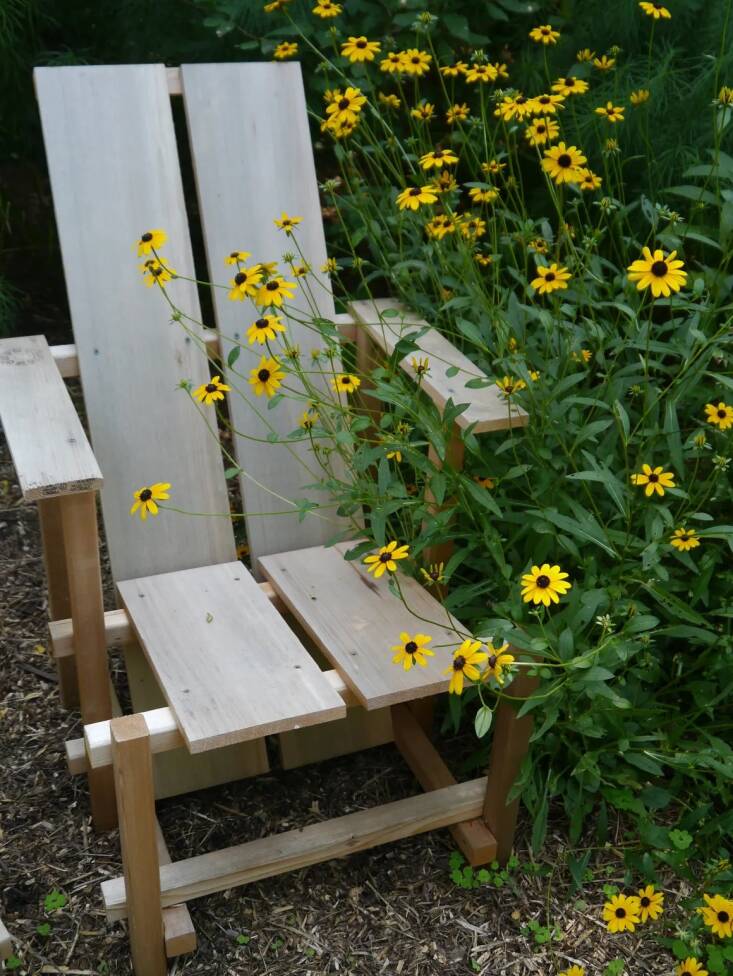
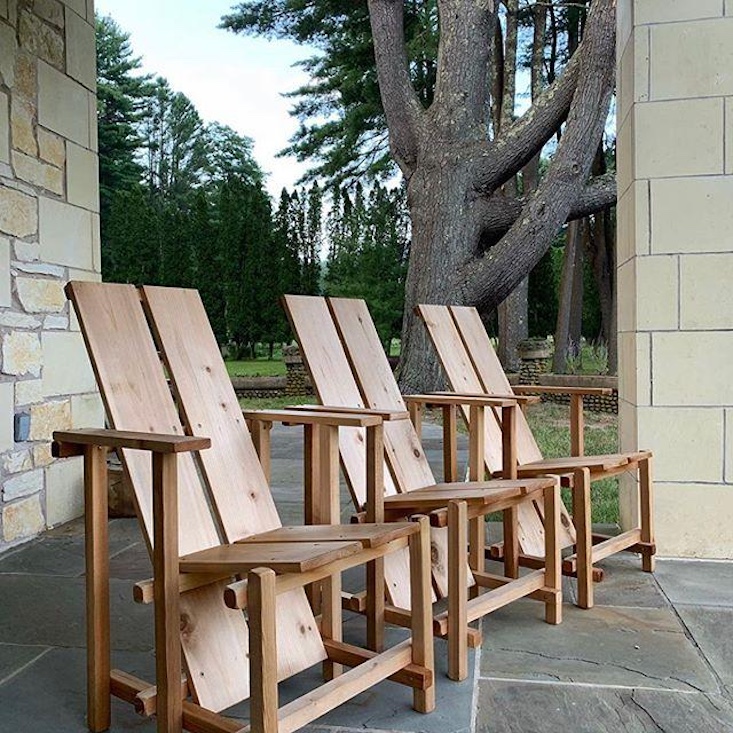
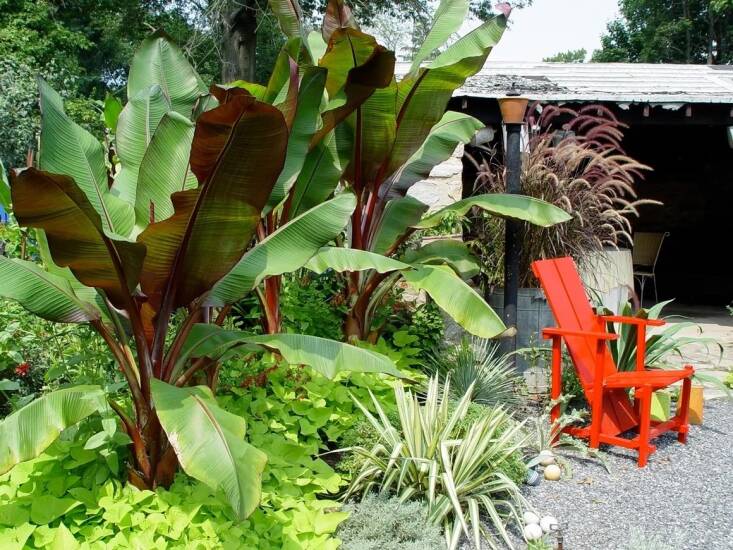
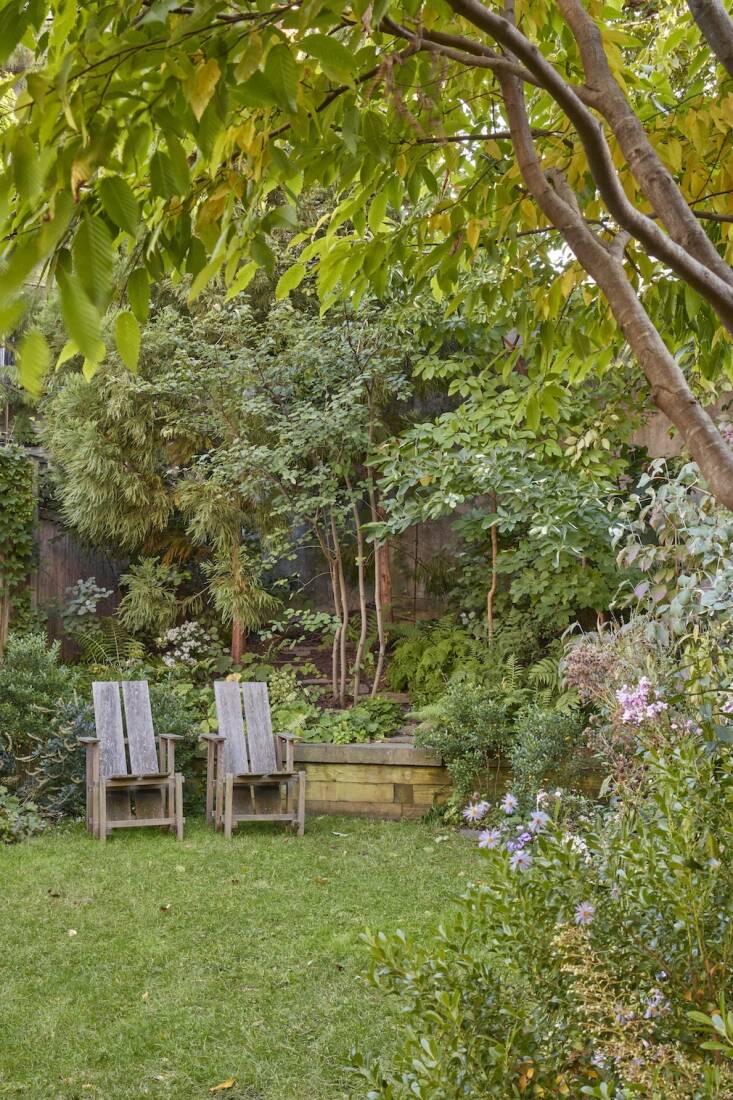
Above: The beauty of these chairs is that you can use cheap store-bought planks to build them and paint them in the color of your choosing. To purchase the plans, contact The Shop at Wave Hill at 718.549.3200 x249, or email [email protected]. Above: Horticulturalist Dan Benarcik designed his own version after becoming obsessed with the chairs at Wave Hill. On his site, he sells the plans for his chair for $35; a DIY kit with all the materials you need for $325; a workshop to make a chair for $350; and a fully assembled chair, in western red cedar, for $425. Find details here. Above: You can also purchase pre-made Wave Hill chairs in your choice of wood—white ash, white oak, walnut, cherry, red oak, reclaimed oak, reclaimed pine, maple, or cedar (pictured) from Hugo and Hoby. Above: While we like the look of the untreated wood chairs that age with time, we also quite enjoy them painted or stained (Margaret Roach writes about her painted versions here). Photograph via Dan Benarcik. Above: A pair of weathered untreated chairs in horticulturalist and garden designer Rebecca McMackin’s Brooklyn backyard. Photograph by Caitlin Atkinson for Gardenista: The Low-Impact Garden.
When you register as a free Member of the Remodelista family of websites (Remodelista, Gardenista, and The Organized Home), you gain access to all current posts plus 10 archived posts per month, our internal bookmarking tool, and the community bulletin board.
Access 10 archived posts (older than one year) per month on each site
Use of our internal bookmark tool, so you can save products, posts, and other pages for quick reference
Access to our community bulletin board so you can ask and answer design-related questions
Unlimited access to the Product Catalogs, Design Travel sources, and Architect & Designer Directory listings
Choose from our ten newsletters to keep up with the latest on the sites
Or Subscribe for Maximum Value!
For $5/month ($59.99 paid annually) you'll enjoy unlimited, ad-free access to Remodelista, Gardenista, and The Organized Home and all the benefits of Membership.
Annual subscribers pay 50% off the monthly subscription price of $9.99
×
Subscribe to the Remodelista family of websites
For $5/month ($59.99 paid annually) you'll enjoy unlimited, ad-free access to Remodelista, Gardenista, and The Organized Home and all the benefits of Membership.
Annual subscribers pay 50% off the monthly subscription price of $9.99
×
Sorry! As a registered member you get 10 free posts from our archive (posts more than a year old) every 30 days. You have reached your limit for this 30-day period. If you would like to access unlimited posts from the archive (ad free, too), become a subscriber today, and keep reading as many articles as you want.
Full Access Individual Subscription
Benefits include:
Unlimited access to Remodelista, Gardenista, and The Organized Home sites
Ad-free browsing environment
Unrestricted access to 30,000+ archived posts
Receive the full-text daily newsletters
All features that Members have access to
Annual subscribers pay just 50% off the monthly subscription price of $9.99
Sorry! You have reached your limit of three (3) free posts from our archive every 30 days. You can increase this to 10 posts by joining as a free Member, or read unlimited posts with no ads by becoming a paid Subscriber.
Subscribe to the Remodelista family of websites
For $5/month ($59.99 paid annually) you'll enjoy unlimited, ad-free access to Remodelista, Gardenista, and The Organized Home and all the benefits of Membership.
Annual subscribers pay 50% off the monthly subscription price of $9.99
Become a Member at no charge
When you register as a free Member of the Remodelista family of websites (Remodelista, Gardenista, and The Organized Home), you gain access to all current posts plus 10 archived posts per month, our internal bookmarking tool, and the community bulletin board.
Congratulations on becoming a Subscriber to Remodelista, Gardenista and The Organized Home! You now have access to many great features across the sites:
Unlimited access to all three sites
Ad-free browsing environment
Unrestricted access to 30,000+ archived posts
Receive any of the newsletters, including the the full-text daily Remodelista and Gardenista newsletters
Use of our internal bookmark tool, so you can save products, posts, and other pages for quick reference
Access to our community bulletin board so you can ask and answer design-related questions
Congratulations on joining as a free Member of Remodelista, Gardenista and The Organized Home! You now have access to many great features across the sites:
Access to all posts published in the past year
Access 10 archived posts (older than one year) per month on each site
Use of our internal bookmark tool, so you can save products, posts, and other pages for quick reference
Access to our community bulletin board so you can ask and answer design-related questions
Unlimited access to the Product Catalogs, Design Travel sources, and Architect & Designer Directory listings
Choose from our ten newsletters to keep up with the latest on the sites
If at any time you want to become a Subscriber and enjoy unlimited, ad-free access to all our content, just go to the My Account link and choose Subscribe.
We use cookies to ensure that we give you the best experience on our website. If you continue to use this site we will assume that you are happy with it.






Have a Question or Comment About This Post?
Join the conversation