

Gardeners must observe and abide by the rules of season. It is what it is. Cooks may choose to ignore it—seasonless supermarkets make strawberries and basil and green leaves possible in every month of the year. But for gardeners and growers who are also cooks, there is a deeper connection–we know what grows when, and sometimes we have the ingredients at hand, for inspiration and creation. Which brings us, at winter’s end and on the fickle cusp of spring, to the union of calamansi—a small, sour citrus fruit—and root vegetables in a vegetable adobo.
The bright citrus, overwintering indoors in our house, breathes new life into the familiar stalwarts of the winter crisper drawer, long before new life arrives in our gardens at farmers’ markets.
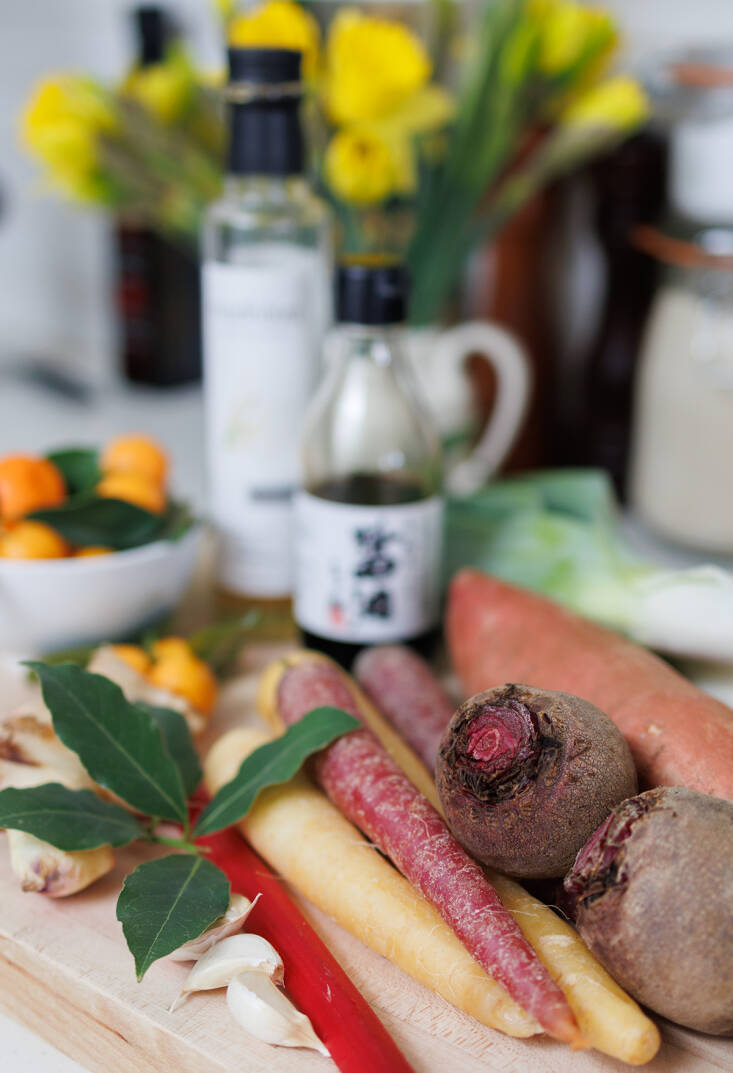
Ubiquitous in Filipino cuisine calamansi, also known as calamondin (Citrus x microcarpa), evolved in Maritime Southeast Asia and is usually used unripe, before it turns orange. Traditional Filipino adobo combines soy and vinegar in slow-braised meat-based dishes. In this root vegetable riff, sweetly earthy vegetables and aromatically sour calamansi are a fortifying digression. Fresh bay leaves, from our indoor tree, add a satisfyingly authentic layer of aroma. (The Mediterranean bay leaves in adobo would have been a Spanish colonial introduction.)

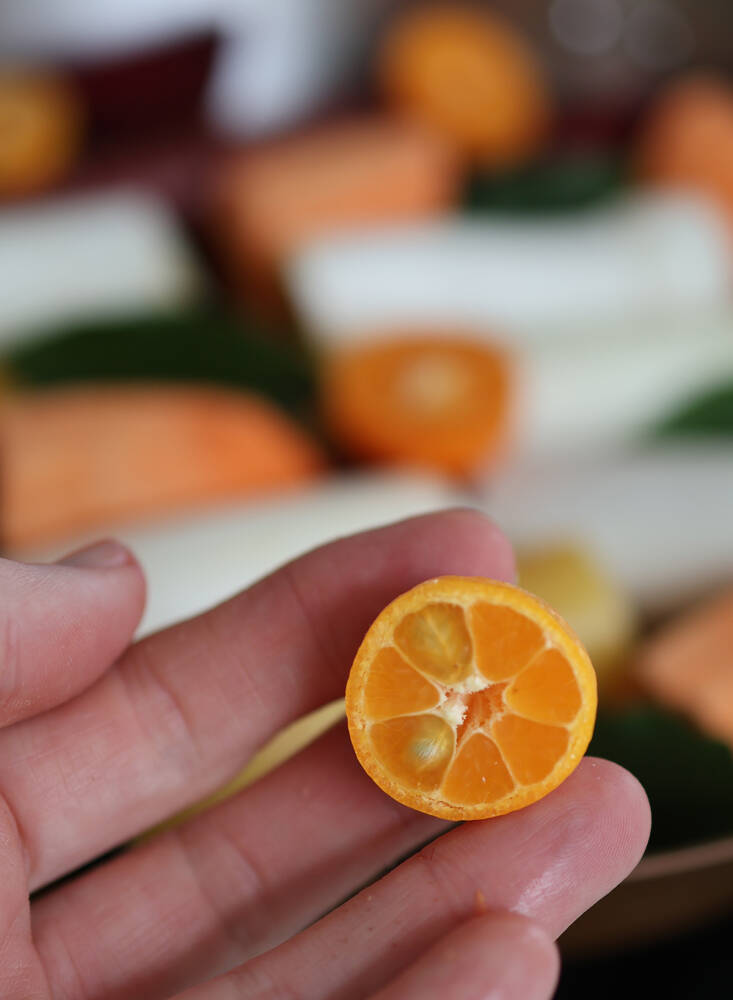
While calamansi are sold unripe at markets, the fruit I collect from our relatively-low-fuss-for-an-indoor-citrus-tree are ripe and orange, but still piercingly sour. Their skin has the aroma of clementines, with very little pith, and little bitterness, as a consequence. Each small fruit—ranging from a quarter of an inch to one inch in diameter—contains up to three seeds.
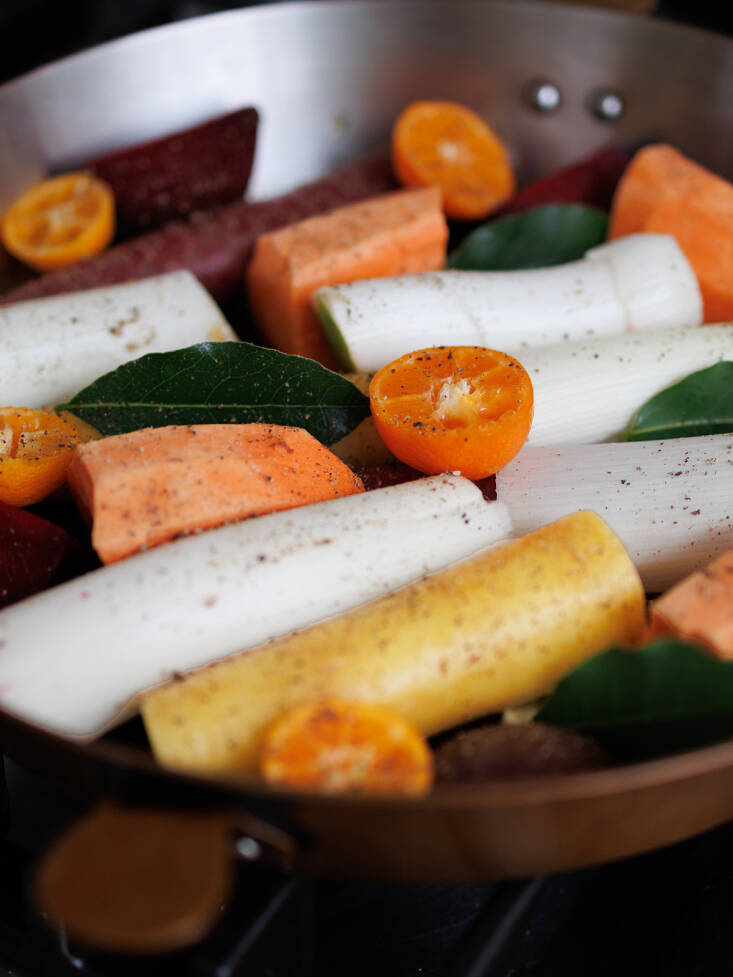
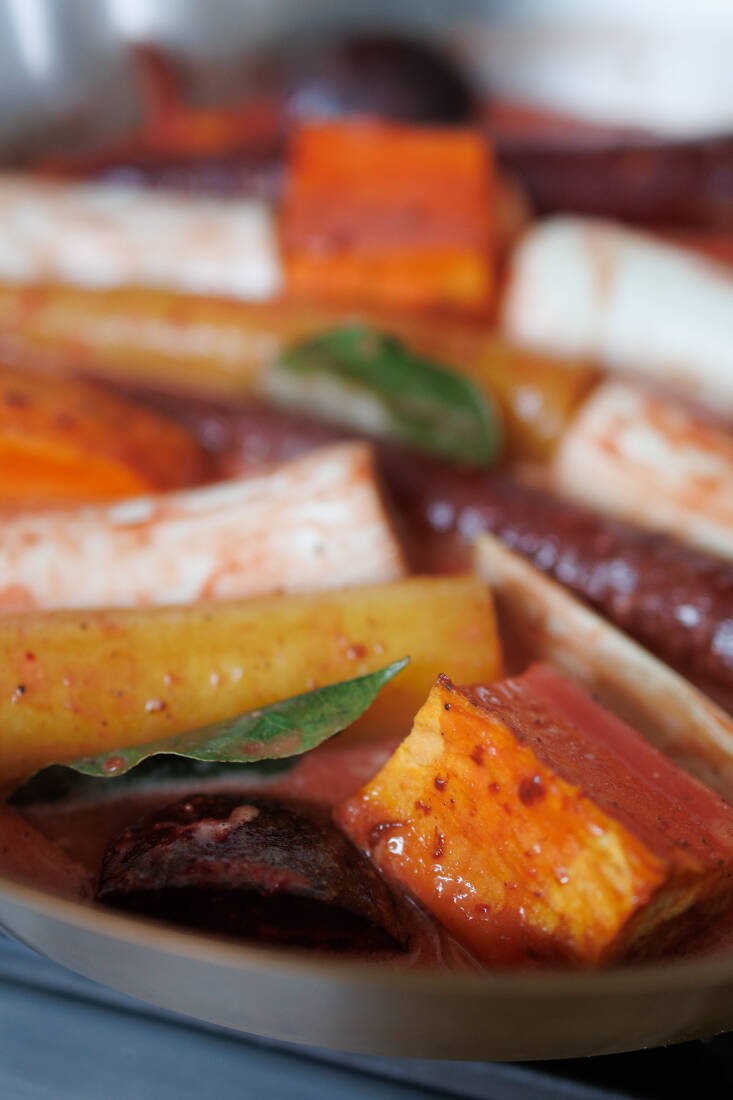
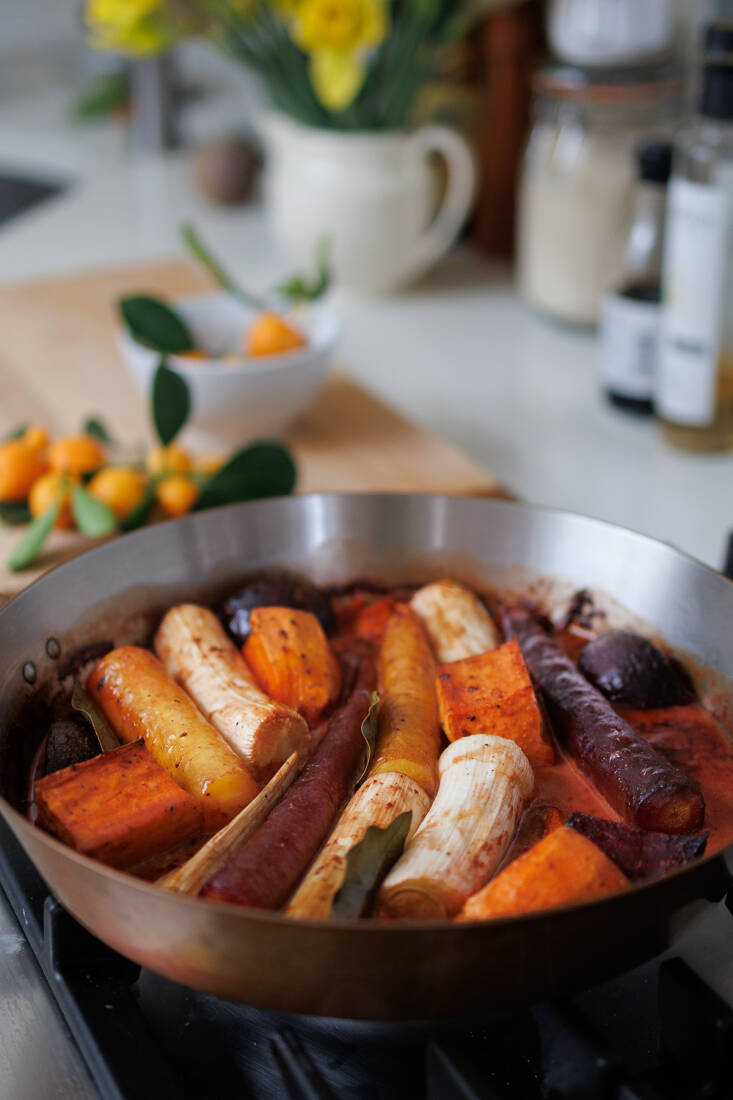
The essence of a Filipino adobo is the savory sauce—salty with soy sauce, sour with vinegar (and calamansi in this case), and svelte with optional coconut milk. So feel free to improvise with the vegetables in it: You could also add waxy potatoes, parsnips, turnips, and even leafy greens like beet greens, kale or chard, as long as those green things go in about 25 minutes before the end of cooking time, stirred in and under the other vegetables. If you love baby spinach, add that five minutes before the end and stir into the sauce.
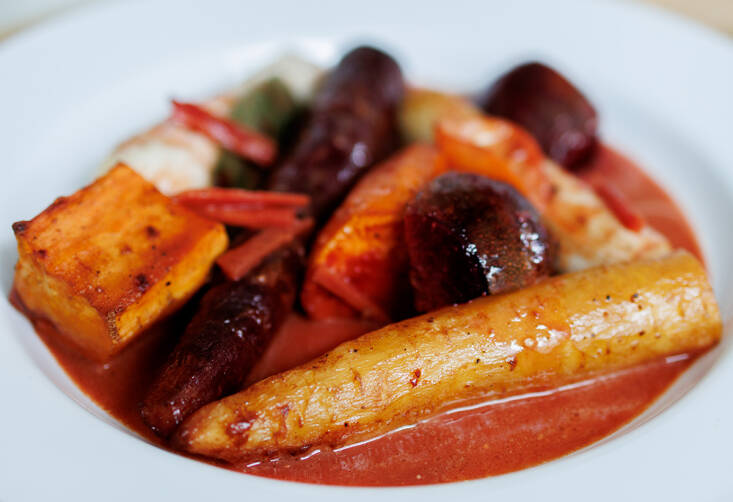
Vegetable Adobo with Calamansi
Serves two as an entrée, four as a side
Root vegetables and leeks add natural sweetness to the delicious sour-salty sauce. Vegetable sizes vary widely, so feel free to eyeball quantities and add or subtract vegetable as you wish. If you do not grow calamansi, substitute half of a quartered Meyer lemon and a quartered clementine (both with skin on), their seeds pricked out. Or settle for the clementine and add a big squeeze of regular lemon juice.
- 2-inch piece of ginger, cut into matchsticks
- 3 cloves of garlic, peeled and quartered lengthwise
- 5 fresh bay leaves
- 3 medium carrots, skins on, cut in half
- 2 medium leeks, white parts cut in half (save the green for soup or a side, wilted in oil)
- 1 medium beetroot, skin on, quartered
- 1 medium-small sweet potato, peeled and cut into 2-inch chunks
- 1 stem rhubarb, thinly sliced (optional)
- ½ cup coconut milk
- ¼ cup rice vinegar (substitute white wine vinegar)
- ¼ cup soy sauce
- Black pepper, freshly ground, about a ¼ teaspoonful
- 4 calamansi, halved, seeds pricked out
Preheat the oven to 350°F.
Combine the ginger, garlic, bay leaves, and all the prepared vegetables in a baking dish or saucepan that can hold the vegetables in single layer. In a small bowl, stir together the soy sauce, vinegar, coconut milk and pepper. Pour over the vegetables. Make sure the bay and ginger and garlic are beneath the surface where they can infuse the liquid. Arrange the halved calamansi pieces (or lemon and clementine substitutes) across the top; they will cook down and collapse, slowly. Transfer to the oven and cook for 1 hour. Remove the dish, turn each vegetable and add a little water if the liquid is close too reduced (you want a soupy, spoonable sauce). Cook for another 45 minutes, or until the vegetables are tender when pierced.
Serve in shallow bowls, with spoon for scooping the delectable sauce. (For a bigger meal, serve atop steamed rice.)
See also:
- Crowd Pleaser: A White Bean Chili Packed with Aromatics
- Naancaccia: A Butter-Drenched, No-Knead Flatbread Singing with Field Garlic
- A No-Knead Focaccia for Thanksgiving and Beyond




Have a Question or Comment About This Post?
Join the conversation