

We all need to get from A to B, but paving—like a lawn—is best when it’s kept proportionate. Even better is a pathway that can aid water absorption, instead of an impermeable layer that puts pressure on drains during storms. And a path that uses locally-appropriate materials will add to a garden’s sense of place. Here are some ideas for ecologically seamless pathways, courtesy of designers and horticulturalists featured in our new book, Gardenista: The Low-Impact Garden.
Photography by Caitlin Atkinson.
Step lightly with level changes.
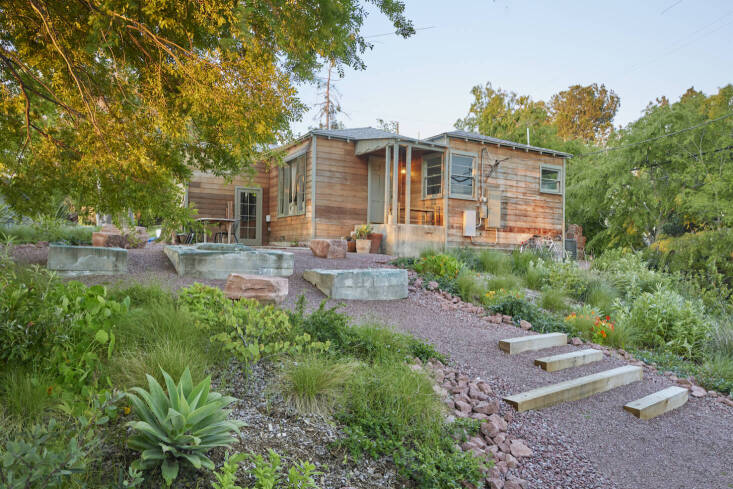
At this Los Angeles property designed by Terremoto, risers in gravel, rather than an engineered flight of steps, minimize visual and environmental disruption. “These are six-by-six timbers that are green pressure treated, which is usually what we use,” says Dani VonLehe of design group Terremoto. “They are rebarred straight into the ground. The treads are graded soil with gravel on top.”
Mix it up.
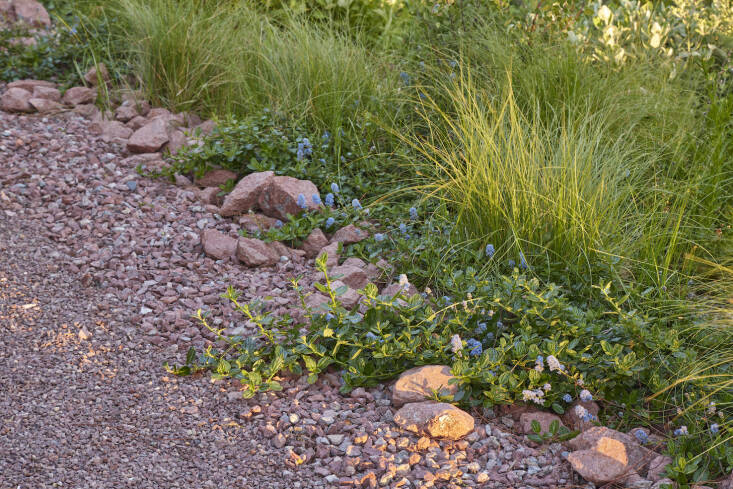
Creeping Ceanothus ‘Yankee Point’ wanders across three gradients of gravel. This detail provides a loose yet effective definition as the pathway bleeds out to rougher ground. Here, pink is mixed with some black. A mixture keeps it more lively; a color that doesn’t relate to its surroundings can be jarring
Shop your property.
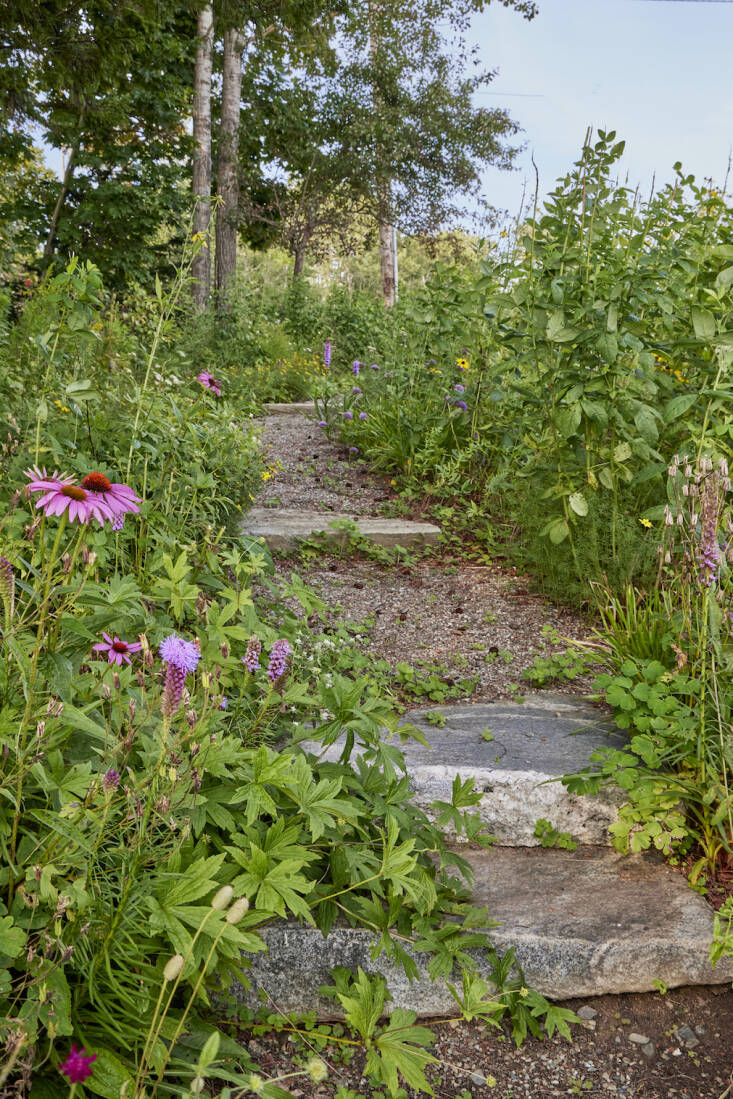
In this Maine cottage garden, James McCain made paths that are just wide enough for necessary landscape management. James found some of the granite slabs on the property; they are “solid and timeless,” adding to this garden’s sense of place. Relaxed level changes make navigation easier on sloping ground, while generous steps like these act as small terraces, slowing storm water as it flows downhill.
Make it mossy.
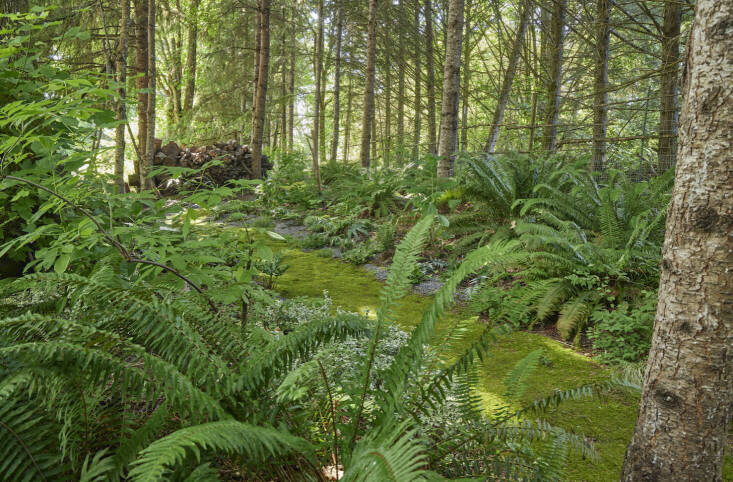
Tamara Paulat (who blogs as Chickadee Gardens) cultivates a moss path on compacted ground that is tangled with tree roots. Observing how well moss grew in patches, Tamara began to consolidate it, first scraping, and sometimes bulking up soil. Moss requires an absence of leaves and weeds, which for Tamara is easily done with a few minutes each week on a battery-operated leaf blower (the only reason to use one).
Choose ground cover over grout.
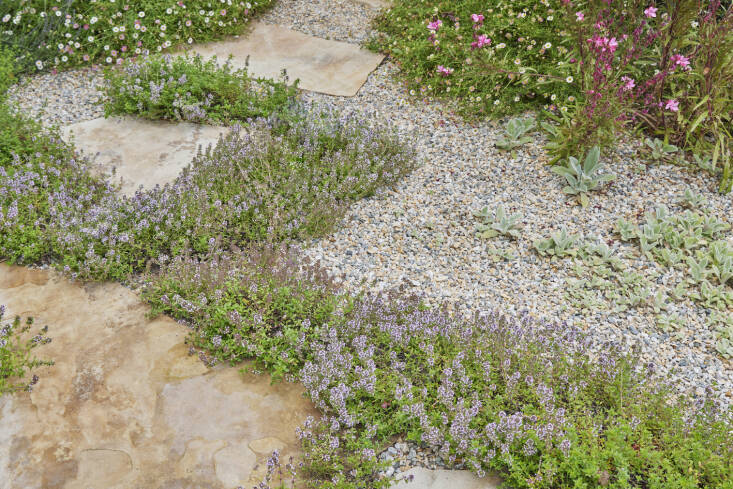
A relaxed hardscaping mosaic of irregular pavers and gravel around the edges of a parking court is home to self-seeders that are easily thinned. Wild European thyme (Thymus serpyllum) thrives along hot rock edges, with daisy-like Erigeron karvinskianus, ambitious lamb’s ear (Stachys byzantina) and Gaura lindheimeri.
Upcycle dead trees.
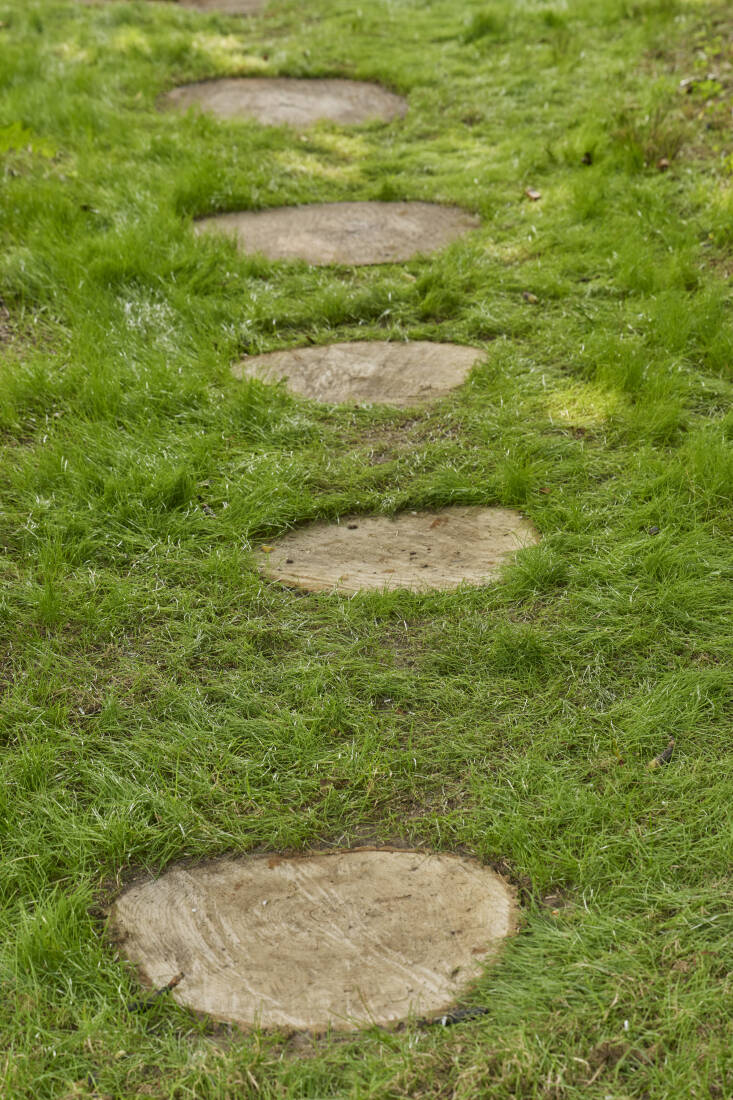
Ecological landscape designer Edwina von Gal, of Perfect Earth Project, has grassy pathways that get an upgrade courtesy of a local arborist who knows to make a detour to her house after collecting a fallen tree. Slices are taken off, before being inserted into shallow recesses, slowly rotting and feeding the soil from underneath.
Blend into the landscape.
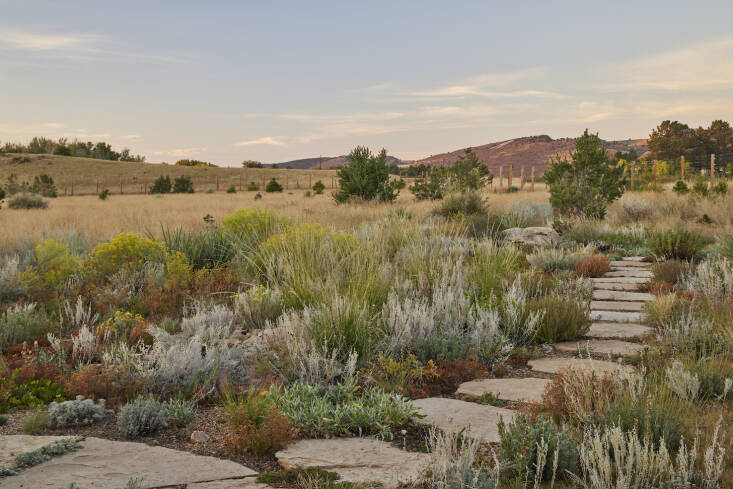
Horticulturalist Lauren Springer’s rocky meadow filters out toward the wider landscape in a harmonious palette of silver and gold. Rocks were placed with the help of a friend and a front-loading skid steer. It didn’t take a long time: “We had a half hour per rock.”
Turn your lawn into a path.
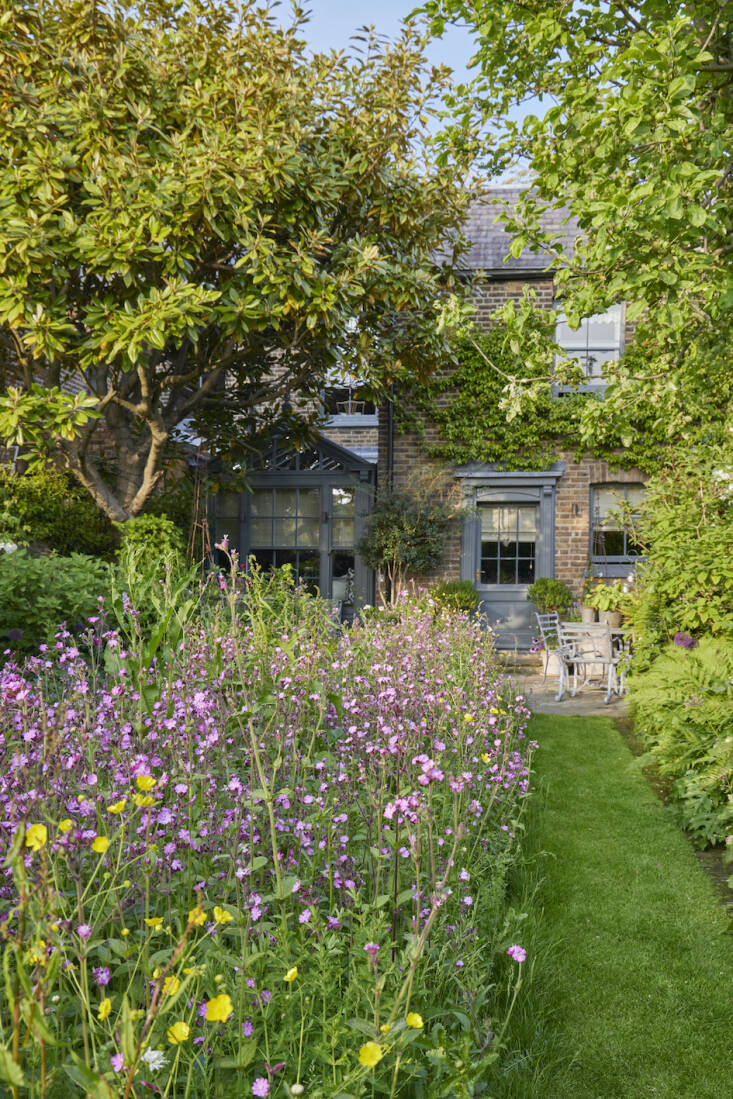
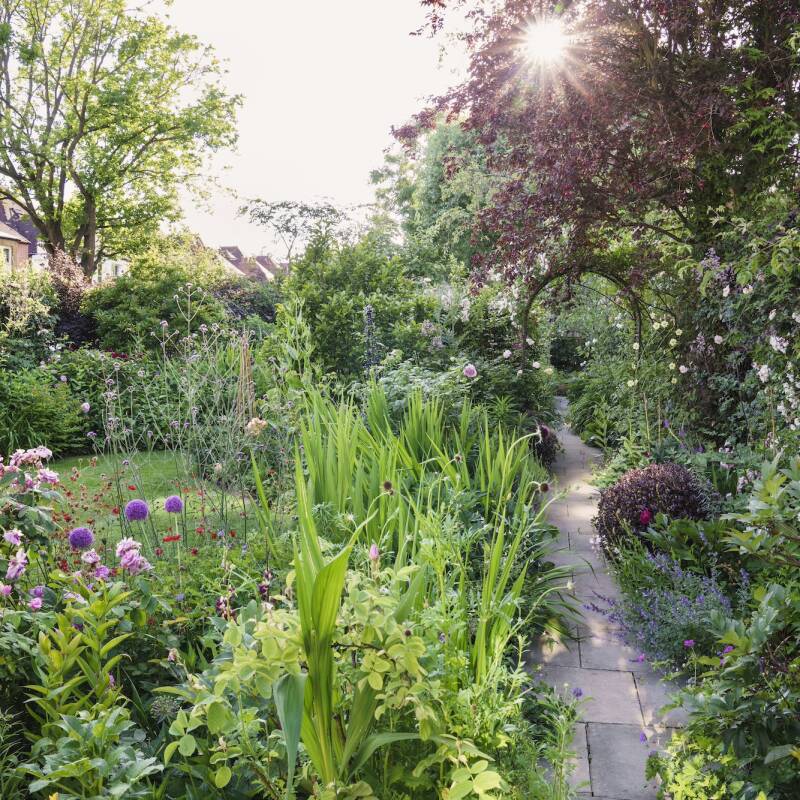
Wanting to get away from the traditional rectangular lawn in a London garden, with plants pushed against walls, Butter removed the middle section and replaced it with wildflower turf. Grass is limited to two neat paths on either side, bordered by an overflowing English flower garden, with clipped topiary for structure. “It’s the friction that makes it work,” says Butter. “The mowed strips, the formal yew pyramids, and then the mess in the middle.”
Keep it simple.
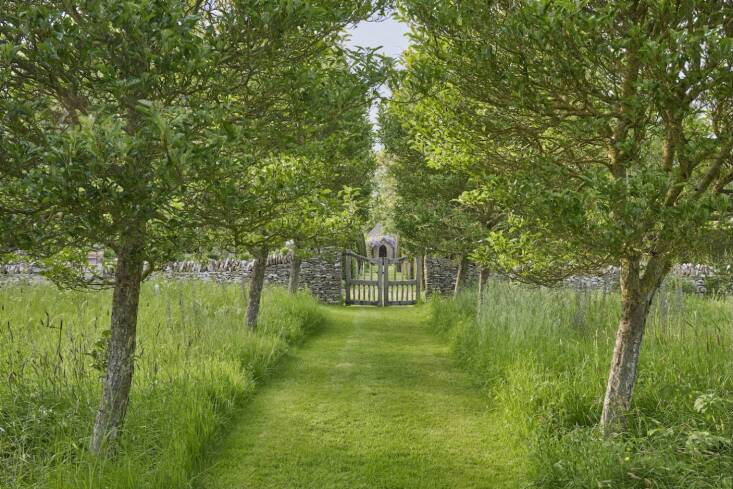
Paths mown through the meadow, behind the kitchen garden at Oxleaze Farm in the Cotswolds, show that a thriving ecosystem is more engaging than acres of green carpet. An unpaved grassy pathway keeps your options open: you can change direction or mow wider areas for sitting. Use a higher setting on the mower so that short grass is not scalped grass.
Straighten it up.
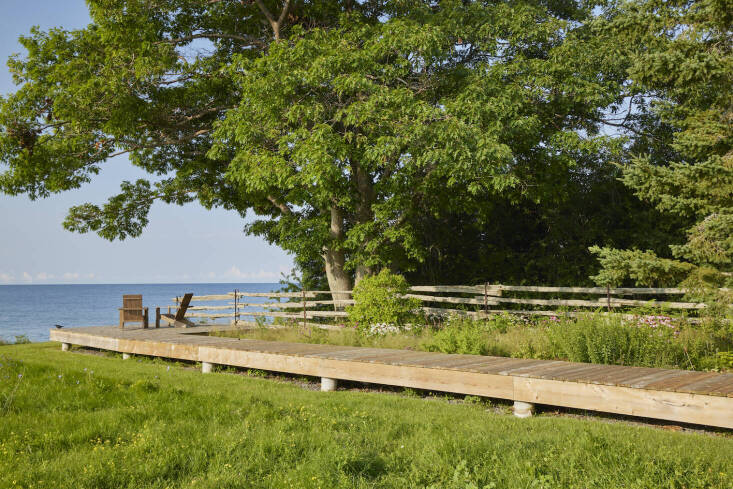
A smooth, straight boardwalk raised over the ground makes a garden out of any scene, leading here toward lounge chairs by the lake in Prince Edward County, Ontario. The lawn, which is allowed to flower, has a band of shorter grass edging the boardwalk. It’s a “cue to care,” a term coined by Joan Nassauer 30 years ago to describe the visual and cultural appeal of designing orderly frames into messy ecosystems.
See also:
- Hardscaping 101: Ground Covers to Plant Between Pavers
- Everything You Need to Know About Filler Stone for Paths
- The Art of the Edge: 10 Perfect Ways to Soften a Path



Have a Question or Comment About This Post?
Join the conversation