

What’s in a name? If it’s two varieties of Perilla, potentially a lot of confusion. Even growers and trusted internet resources (I’m looking at you, Wikipedia) get them wrong, muddling images of shiso and sesame leaf (also called beefsteak plant). These different but very similar varieties of Perilla frutescens are both commonly eaten in East Asia. Stateside, they are sometimes referred to simply as perilla, their genus name.
So we’re here to sort out shiso and sesame leaf. They are handsome, tall plants and delicious late summer herbs.
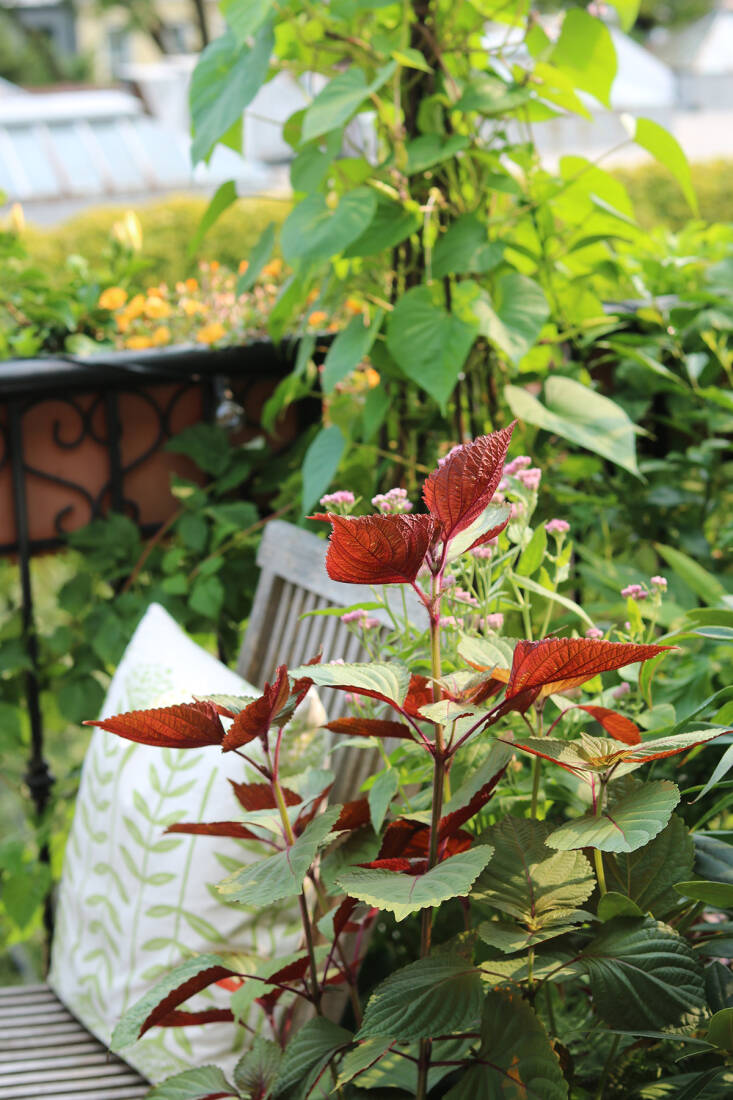
For the plants geeks, sesame leaf is Perilla frutescens var. frutescens. Shiso is Perilla frutescens var. crispa.
Plants’ common names—that is, their name in the lingua franca of any given region, versus the Latin and Greek binomial, or scientific name—are as interesting as they can be perplexing. Sesame leaf is not related in any way to sesame-the-crunchy-seed and source of sesame oil, although it does complement toasted sesame oil and seeds. And what about beefsteak plant? Well, the herb has red veins and does pair well with grilled beef, but that’s my take—I cannot trace that etymology reliably.
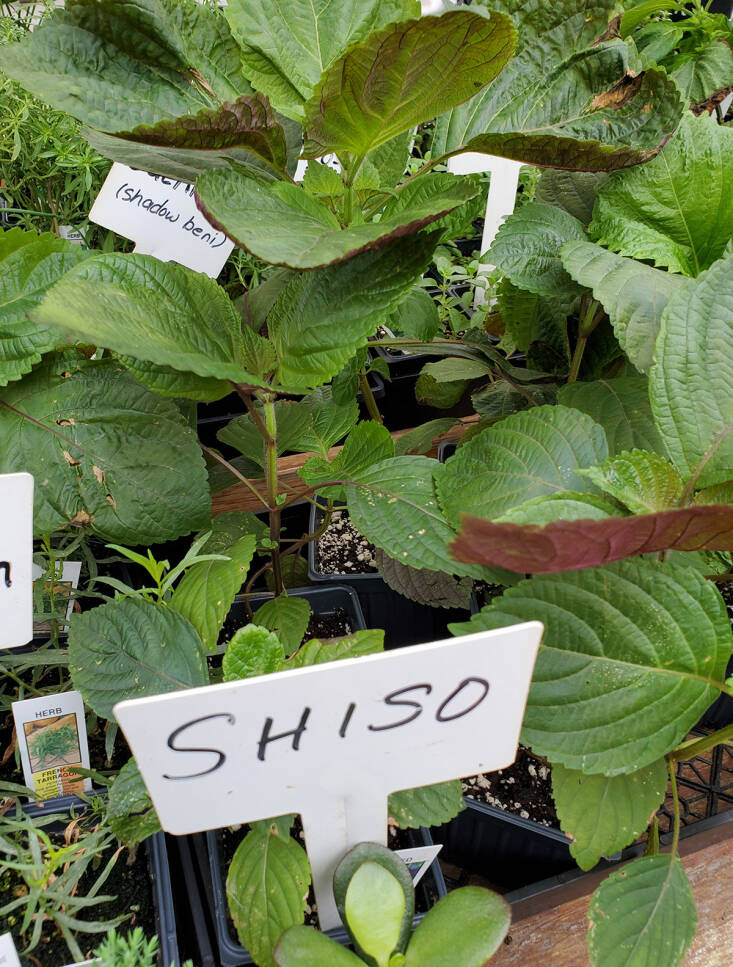
Shiso and sesame leaf taste similar, like a mingling of citrus, green coriander seed and rosewater. I find shiso brighter and more floral, while sesame leaf is more grassy. Many people mention anise, but it’s not something I pick up—taste references can be very subjective.
Sesame Leaf
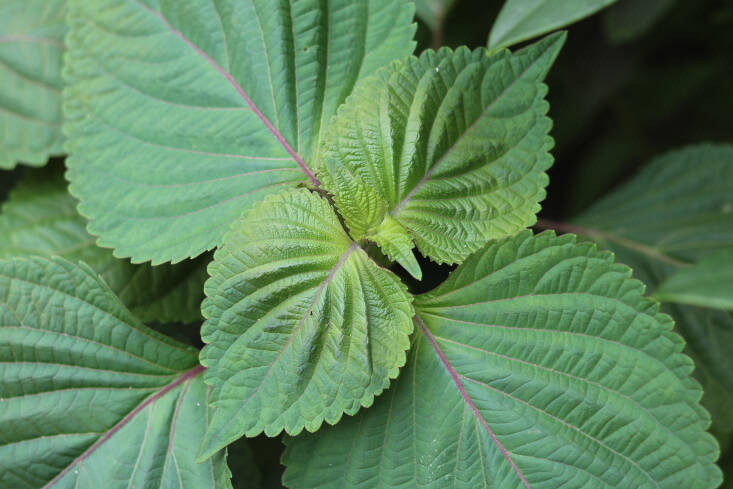
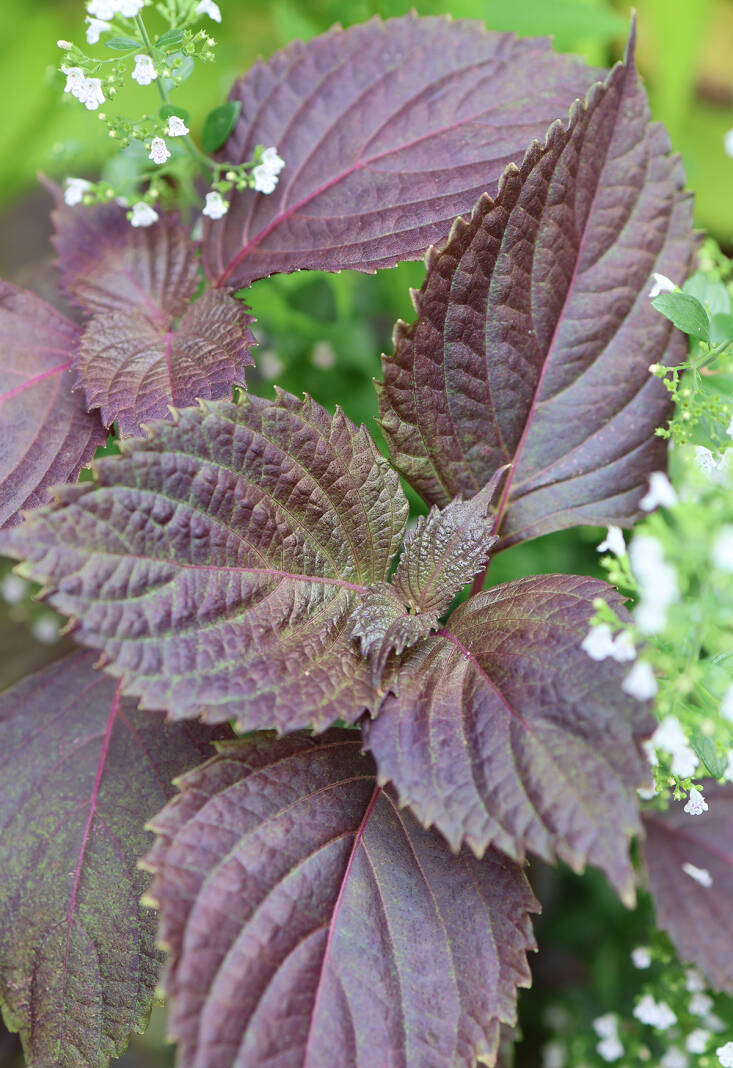
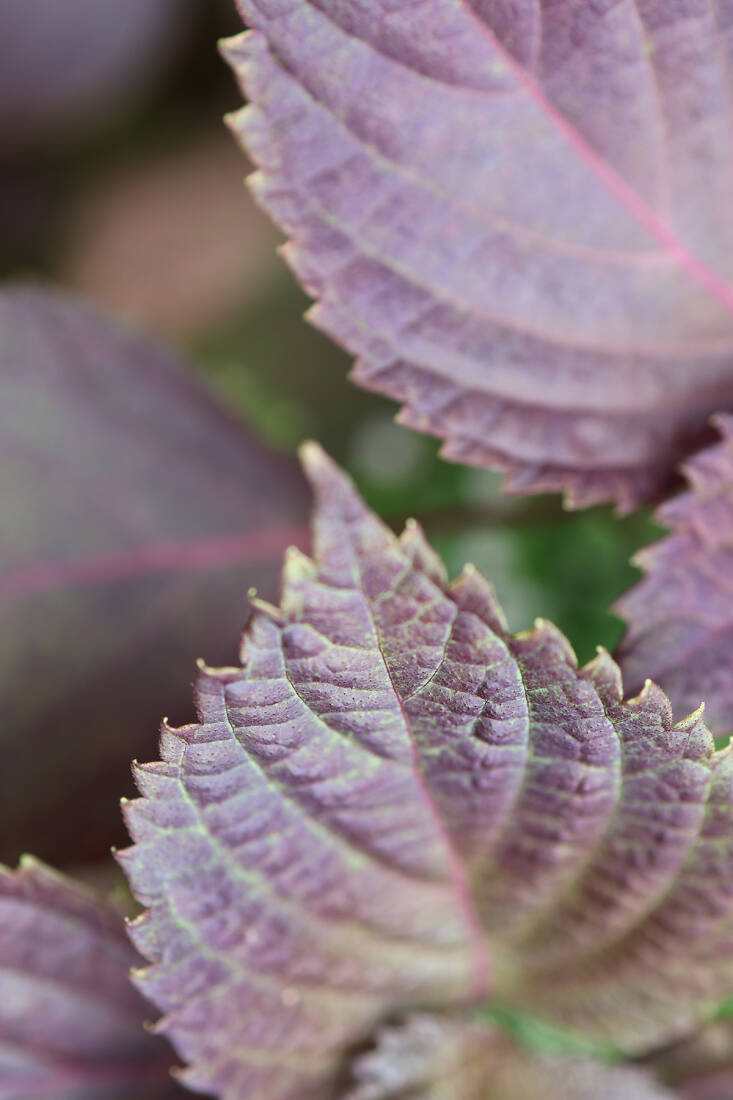
Sesame leaf, also called beefsteak plant, as well as Korean shiso (to further complicate matters), is Perilla frutescens var. frutescens. It is more commonly used in Korea—where it is known as kkaennip—than it is is in Japan.
It may be dark green or red. The green version often has pink or red veins, and dramatic purple-red undersides. Sesame leaf’s leaves have neat, small teeth and the leaf-shape is ovate and heart-shaped. Sesame leaf’s leaf edges are not curly, frilled, or floppy.
Shiso
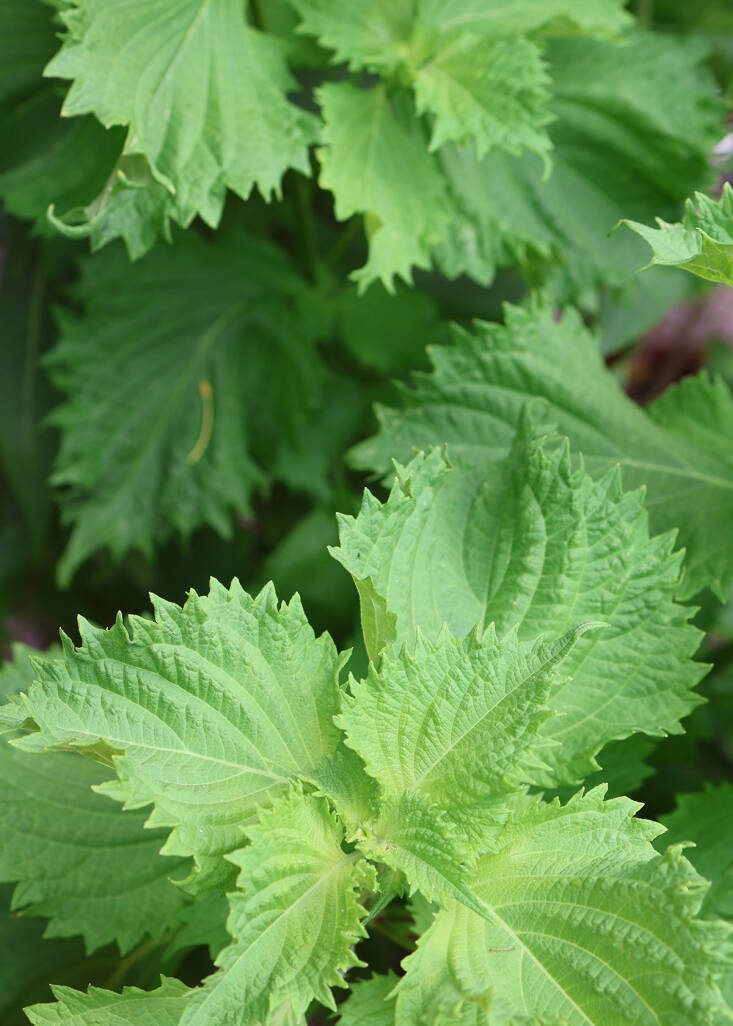
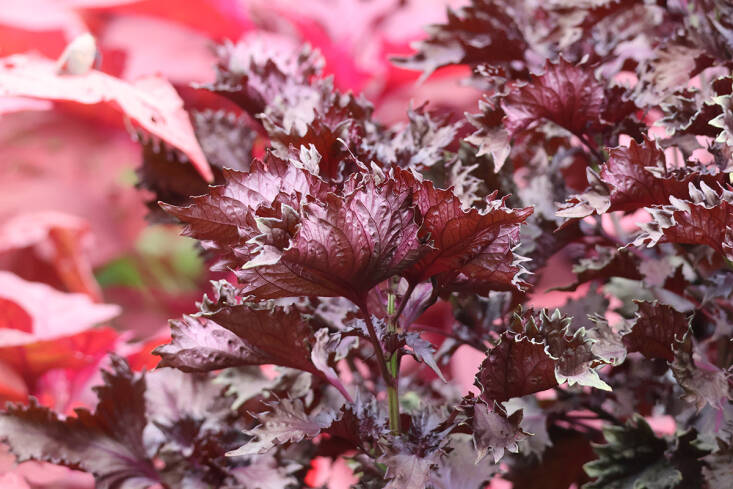
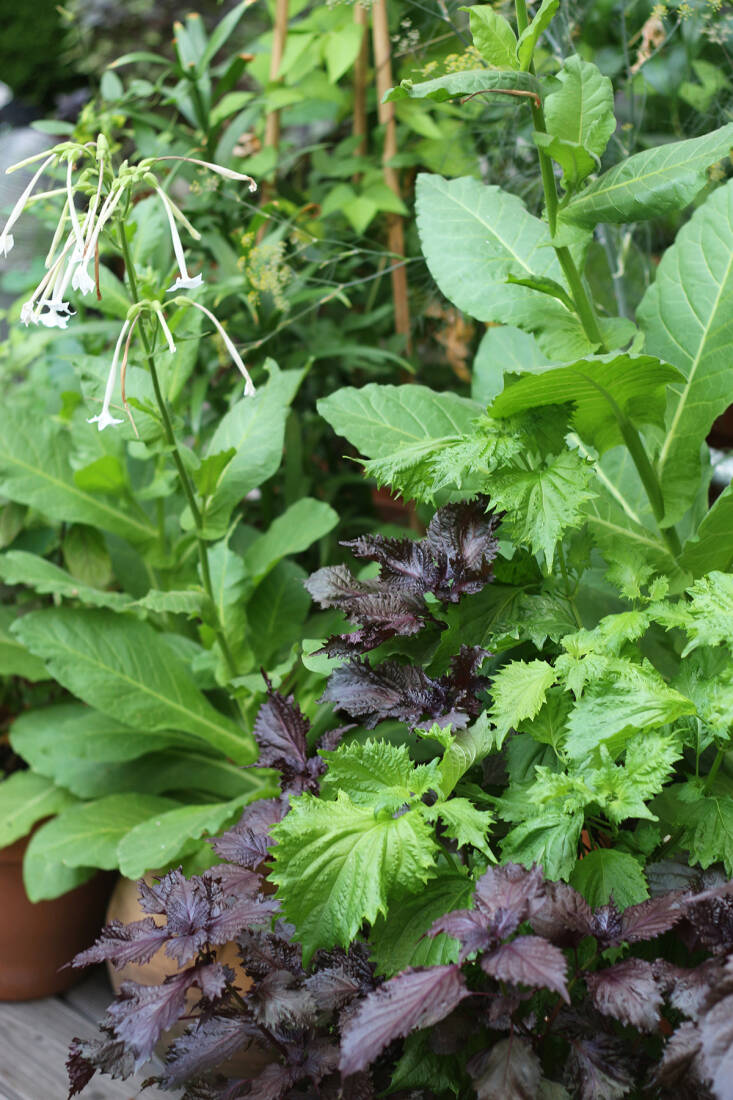
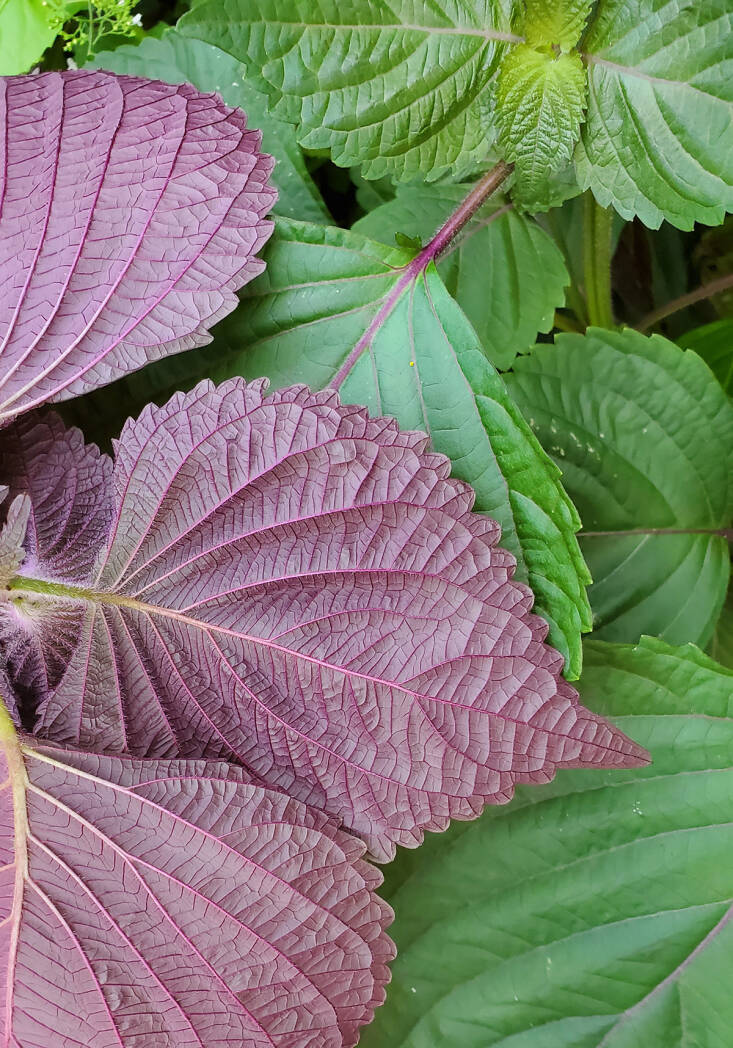
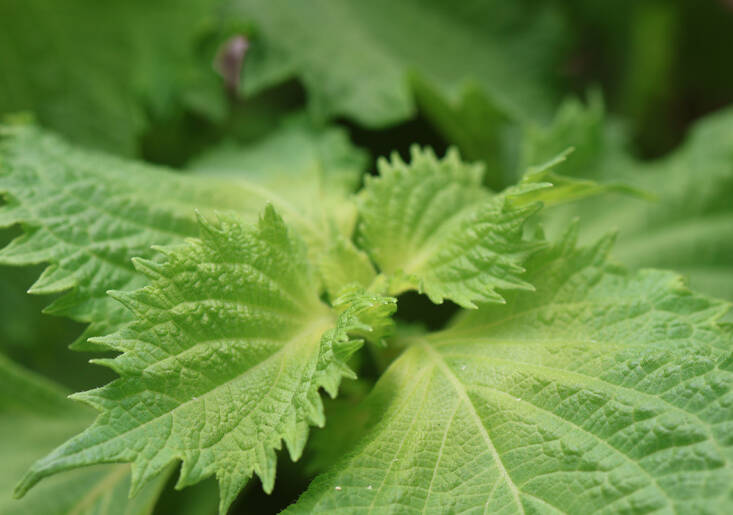
If perilla has slightly curly leaves with deeply toothed edges, it is Japanese shiso, or simply, shiso: Perilla frutescens var. crispa. I have to remind myself. To remember I say “crisp curls.” You could also morph into the reviled-or-beloved Jar-Jar Binx of Star Wars notoriety, and mutter (under your breath), “Shiso frilly and floppy.” She may be purple, she may be green. But she must be frilly and just a little floppy, when mature. She is shiso.
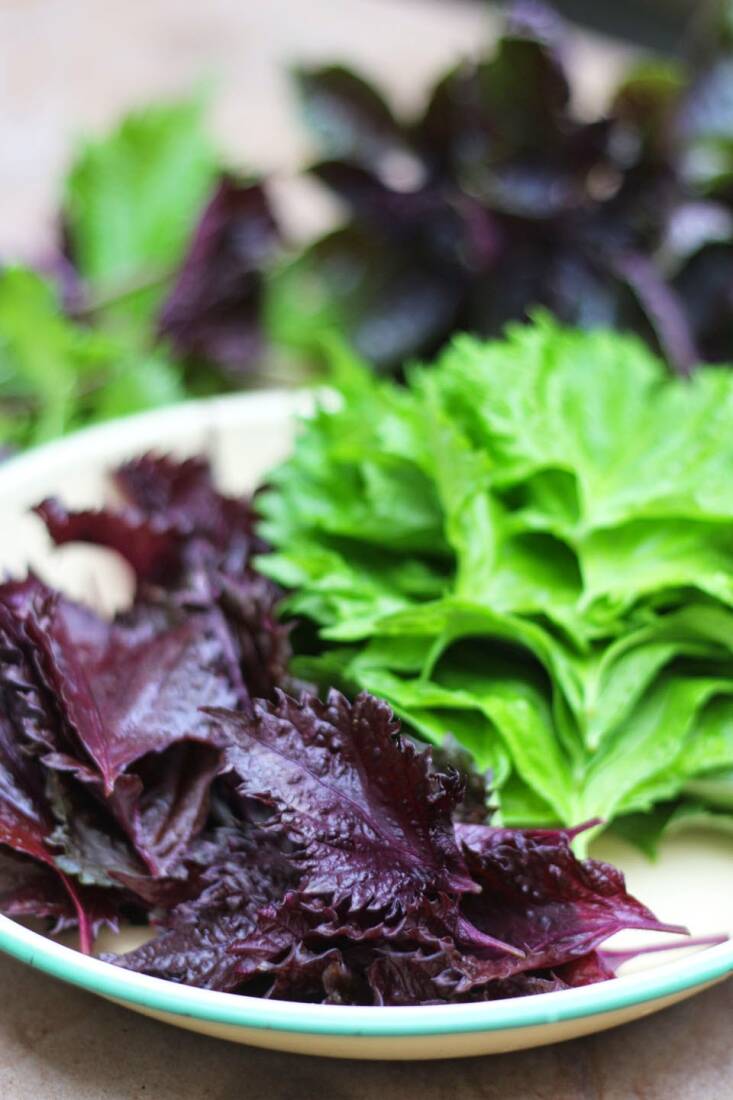
Shiso is associated with Japanese cuisine, and is brightly aromatic, but otherwise tastes similar to sesame leaf.
Fresh shiso makes a wonderful raw leaf wrap, folded around bites of a spicy filling, pickled vegetables, or slices of soy-grilled shortrib—a fresh foil for strong flavors. Shiso is also sweet and citrusy in salads, and complements stone fruit very well. I often sliver it into cake batters that include peaches or apricot. Purple shiso leaf is used traditionally to color umeboshi. (See: Umeboshi: A Traditional Japanese Pickle to Make at Home.)
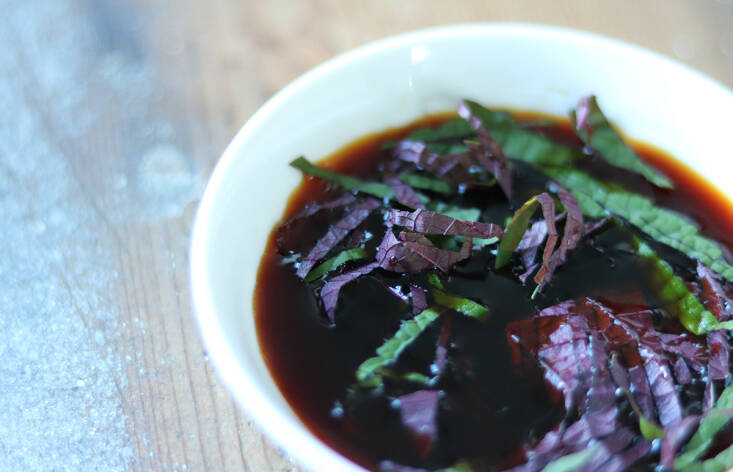
Sesame leaf softens once rubbed with salt or soaked in shoyu (or soy sauce). It makes an outstanding dressing or marinade for vegetables or grilled meats.
I grow sesame leaf and shiso in pots. Both thrive in warm temperatures and do well in both full sun or full shade. By late summer they are tall, and in early autumn they flower. These mint-family members are very attractive to pollinators. Both shiso and sesame leaf have invasive potential and have naturalized in the US, so it’s good idea to harvest all the flowers before they set seed.
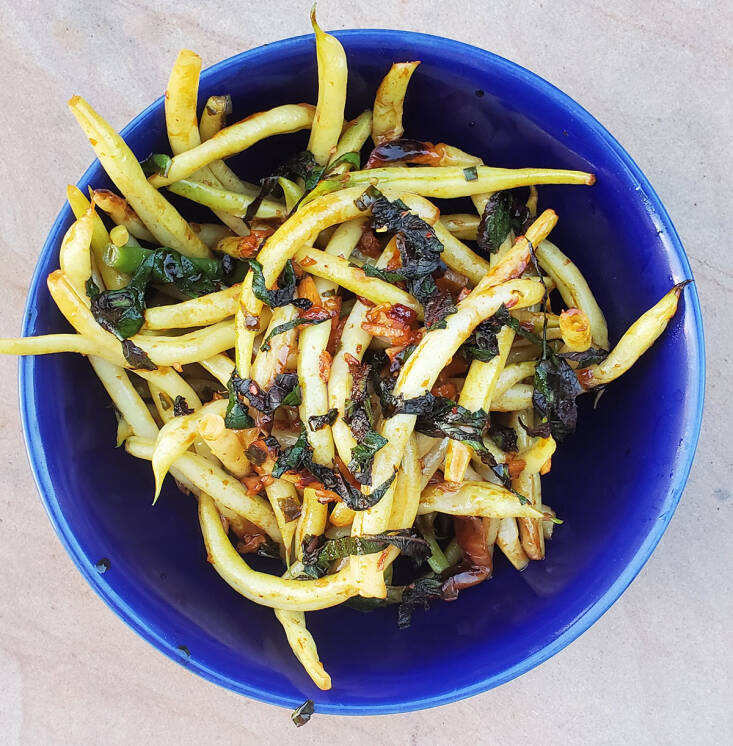
Wax Beans with Sesame Leaf or Shiso and Soy Sauce
This humble and homely bowl of summer beans with shiso or sesame leaf pickle features a riff on the method for Korean kkaenip jangajji (sesame leaf pickle). To make it I use the more tender leaves of either herb, but if you use mature leaves they will need more time in the soy to soften. They turn limp and soft but their distinctive rosewater flavor holds its own. I often add this bean dish to a skillet of curry-dusted roasted chicken or pork chops, but it is very satisfying on its own.
Shiso (or Sesame Leaf) Pickle:
- 15 young sesame leaves
- 1/4 cup soy (I like Ohsawa nama shoyu)
- 1/4 cup chopped scallion greens
- 1/2 teaspoon crushed garlic
- 1/2 teaspoon chile flakes
Beans:
- 8 oz wax or green beans
- 1 Tablespoon avocado oil
- 2 cloves garlic, finely chopped
- 1 teaspoon sugar
- 1 teaspoon toasted sesame oil
For the pickle: Layer the sesame leaves in a small bowl or in a jar with the scallions. Add all the other ingredients. (Make sure the leaves are submerged.) Allow to marinate for 1 hour before using. If the leaves are very mature, allow at least 6 hours.
For the beans: Steam the beans until bite-tender, about 6 minutes. Toss the water, and then heat the oil in the same pot over medium heat. Add the garlic and cook until the garlic starts browning lightly. Add the beans and the sugar and stir. Spoon in 2 Tablespoons of the soy and sesame leaf mixture. Slice 6 of your soy-pickled sesame leaves thinly and add them to the beans. Toss well. To finish, drizzle the sesame oil over the beans. Serve warm or at room temperature. (Store leftover sesame leaf and soy pickle in the refrigerator. It keeps indefinitely.)
See also:
- 13 Favorites: Herbs that Thrive in Shade
- Bayberry: An Herb Native to North America
- 5 Beautiful Ways to Make Fresh Herbs Last Longer



Have a Question or Comment About This Post?
Join the conversation