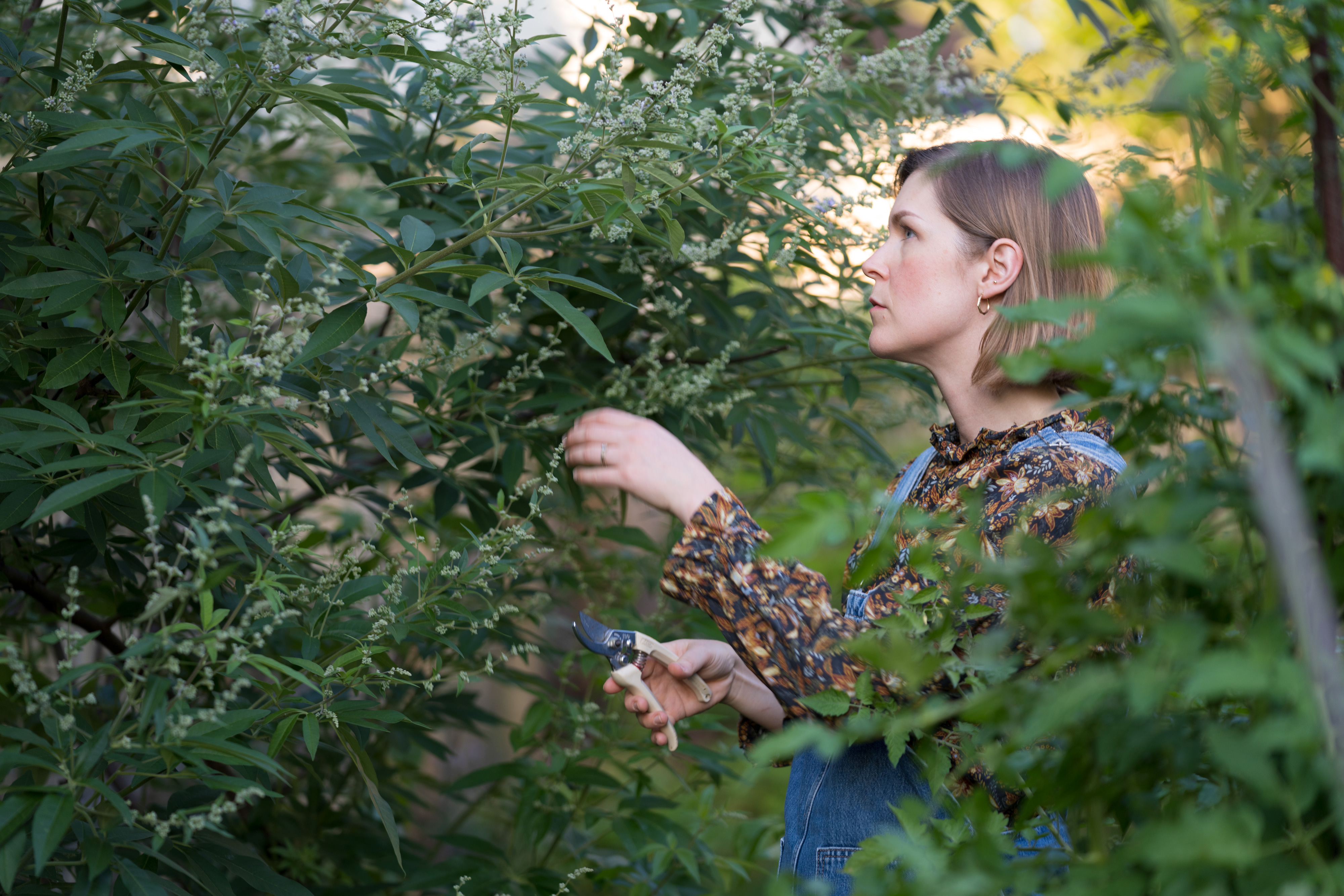


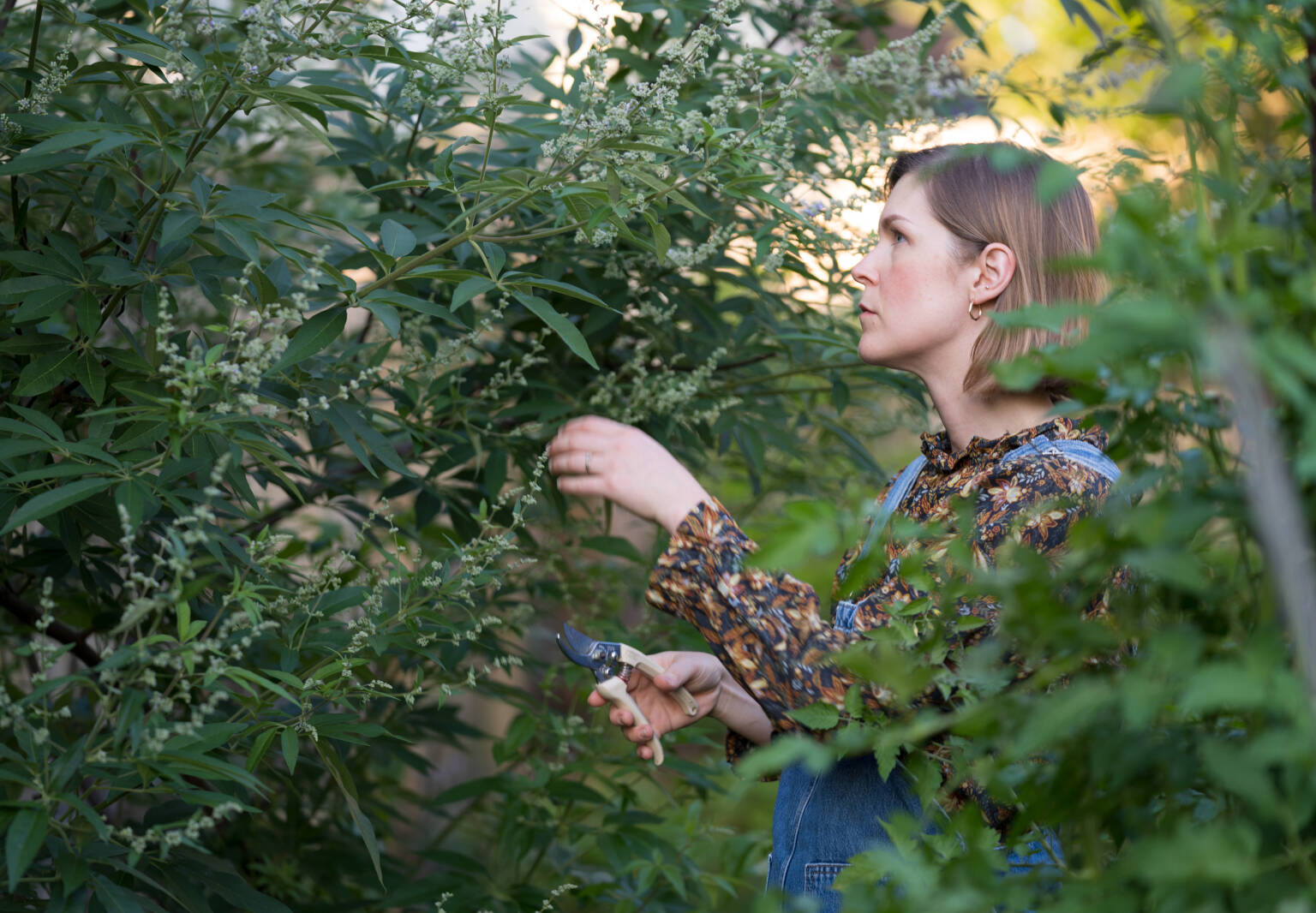
Last month, we featured a Westchester, NY, garden so quietly beautiful that we immediately tapped its mastermind, Ashley Lloyd, to be our next Quick Takes expert. The landscape designer and ISA certified arborist started her practice, Lloyd Landwright, in New York, but—West Coasters, rejoice!—she recently moved to Washington’s West Sound, just across the water from Seattle. Her philosophy, no matter where she’s working: “A landscape should feel inevitable—like it was always meant to be there,” she wrote in her design journal.
If you perceive a creative, poetic mind at work, that’s because Ashley has a background in fine arts and fashion (“including years creating sculptural headdresses from natural materials,” she says). Read on for her musings on why foliage is superior to flowers, how she outsmarts mosquitoes (editor’s note: we can’t wait to try this!), and what makes her mad when it comes to garden design (over-pruners, take note).
Photography courtesy of Ashley Lloyd.
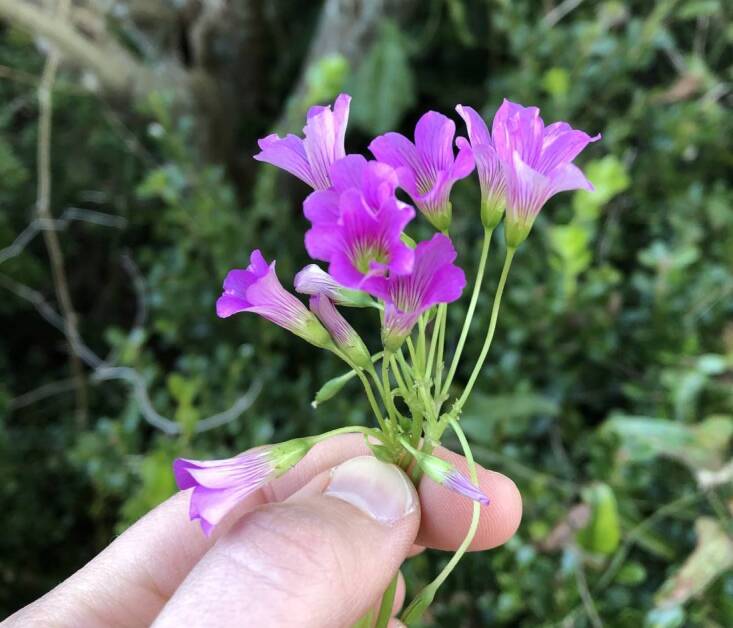
At my grandmother’s house, I’d gather wood sorrel blossoms from the shade by the pond and clover from the sunny lawn, making tiny bouquets and “infusions” as if I could bottle their magic. That violet wood sorrel stayed with me so deeply that I even carry it as a tattoo now.
I have an ever-growing library, but Nigel Dunnett’s Naturalistic Planting Design is one I return to often. My design process is intuitive—I can read a site in detail and then let the concepts flow easily—so I value how this book brings me back to the basics and reaffirms those instincts.
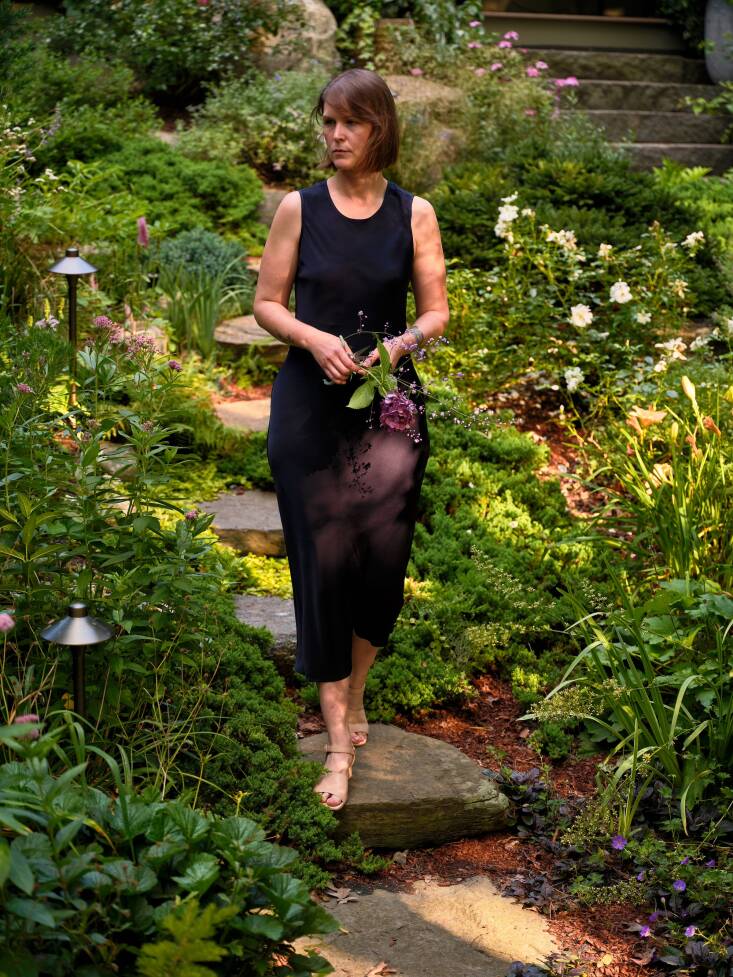
Layered. Lush. Grounded.
Sweetbay magnolia (Magnolia virginiana). I love its elegant limbs, the way some varieties hold their leaves year-round, and the flowers that return all summer. On warm afternoons and evenings, their fragrance drifts through the air—it’s transportive.
Barberry, after seeing how invasive it is in New York forests—it’s everywhere, and even the “tame” cultivars give me pause. And butterfly bush: yes, it’s nectar-rich, but it doesn’t feed caterpillars, so it leaves the larger web of life hungry.
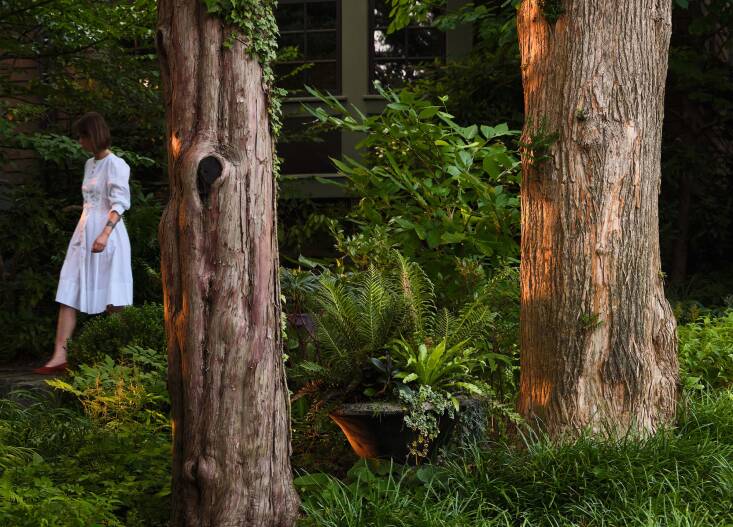
While I love flowers, I’m especially drawn to foliage—broad leaves that feel monumental, like Astilboides; the feathery delicacy of Adiantum; or the patterned silver of Pulmonaria. Leaves carry us through most of the season, while flowers are a fleeting bonus. I’m also drawn to sculptural limbs, textured bark, and the drama of large-leaved magnolias like Magnolia ashei.
Not to plant serviceberries (Amelanchier) near cedars or junipers. They’re vulnerable to cedar apple rust, and I learned the hard way that spores can travel far and leave the trees disfigured and unhealthy. It taught me that even beloved plants sometimes need to be left out for the health of the whole.
I love the intention behind pollinator gardens, but the conversation feels stuck at nectar plants. True support means food and shelter across every stage—caterpillars included—not just a fleeting snack for adults. Pollinator pathways are important, but it’s time to move past the simplified version and actually host them in our gardens.
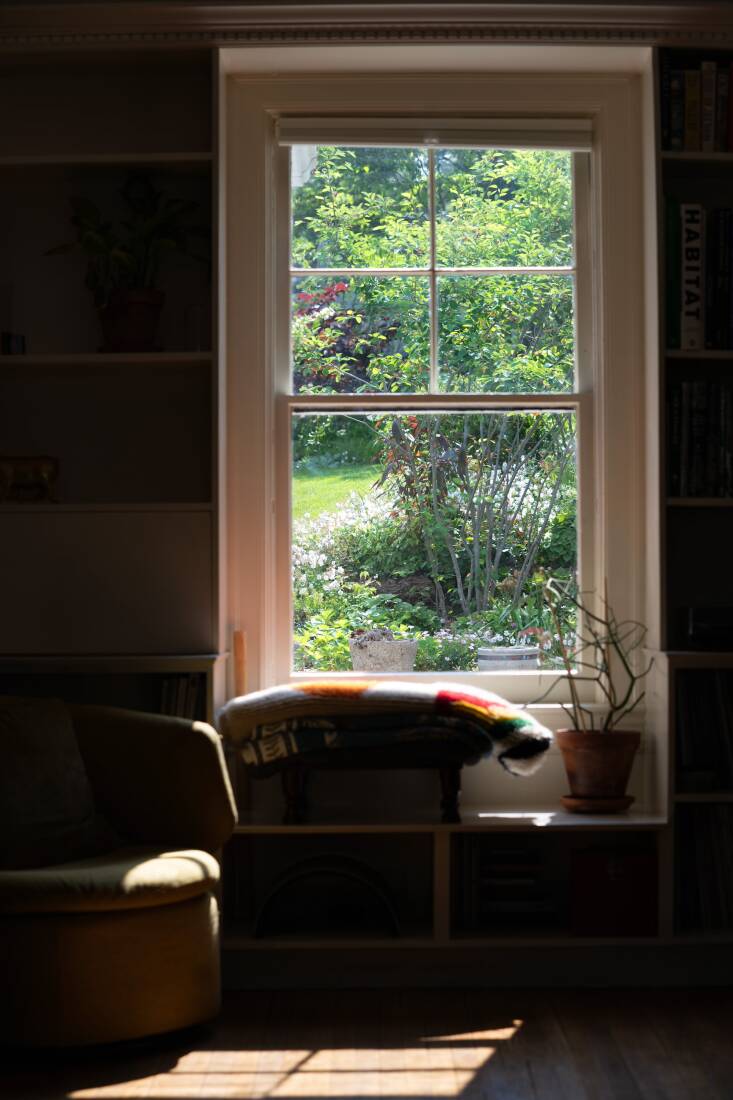
Seasonal bouquets from the garden—sometimes foliage, sometimes flowers, often with seedheads left on. I also love framing views so that the landscape itself feels like art on the other side of the glass, especially when it’s softly lit at night.
The reflex to shear everything—shrubs, hedges, even trees—into identical balls and lollipops. It’s a one-and-done approach that erases individuality, when good pruning should honor a plant’s natural form and focus on its health, not its geometry. The same goes for “standard form” lilacs, willows, and hydrangeas—just, why?
Mosquitoes are huge fans of mine, so I’m always searching for clever ways to keep them at bay. I’ve used BT in water features for years, but a post on the “mosquito bucket of doom” taught me to create a small BT–treated water trap that draws mosquitoes away from the garden. It’s delightfully unexpected magic—and the rest of the garden feels immediately more enjoyable.
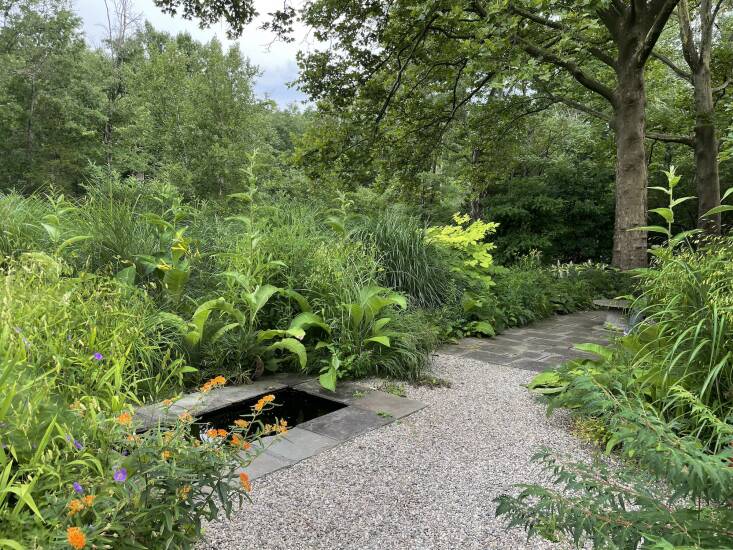
Water moment. Even a small basin or birdbath can invite bees, birds, frogs, and other visitors. It’s a simple way to give back, and it changes the whole mood of a space.
Exposed aggregate concrete. It has texture, durability, and a quiet honesty that pairs beautifully with plants. It celebrates rocks—which I love—and patinas beautifully over time.
My Lesche shovel—it cuts through clay and stone without complaint and makes digging almost satisfying. Solid steel, it’s been my trusted spade for years; I oil it a few times a season and sharpen it when it dulls. And my Hasegawa tripod ladder: lightweight, stable, and indispensable for pruning the hard-to-reach places.
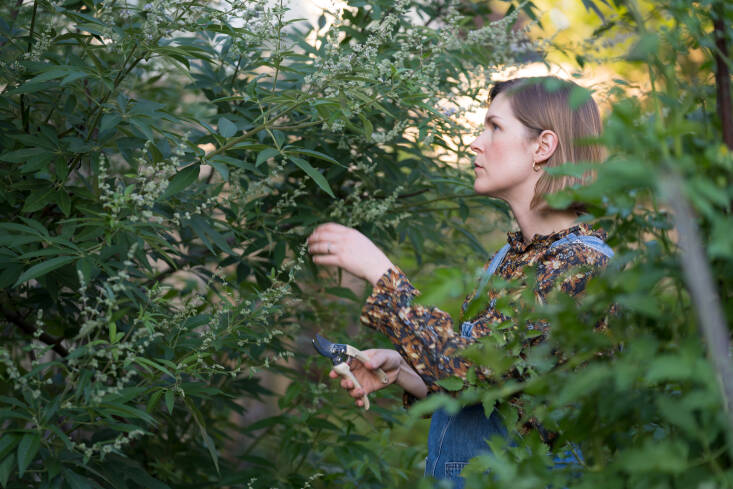
It depends on the season and the task, but usually a jumpsuit or denim overalls layered over a shirt, with Blundstones and a hat. I keep arms and legs covered—for sun protection and because gardens have a way of leaving their mark if I don’t.
On the East Coast, Issima changed the way I felt about mail ordering plants. Buying sight unseen isn’t something I usually do, but Taylor and Ed’s care, generosity, and the trial imagery they share made it feel easy and trustworthy. Out here in Washington, I’m excited to begin ordering from Far Reaches, and I’ve already found a local favorite in Valley Nursery in Poulsbo, with its thoughtful selection and warm, generous staff.
Plasticana Gardana hemp clogs. Their soft amber color comes from the natural sugars in hemp, and they feel perfect for our PNW rainy season.
Chanticleer, always. It’s a garden where the designers and gardeners are one and the same, and you feel their artistry and care in every corner. The containers alone are worth the trip. And closer to home, the Elisabeth C. Miller Garden in Seattle—a treasure of layered plantings and rare finds. I even signed up for a class just to see it; the waitlist runs until fall of next year.
Because I’m a sensitive person—sensorially, emotionally, in every sense—and gardens give me both refuge and connection. It’s meditation, therapy, and a way to give back at the same time. I learn best by doing, so tending plants teaches me how they want to grow, where they thrive, and how resilient they can be. It’s endlessly evolving, and I can lose myself for hours in that rhythm.
Thanks so much, Ashley! (You can follow her on Instagram @lloyd_landwright.)
For our full archive of Quick Takes, head here.



Have a Question or Comment About This Post?
Join the conversation