Icon - Arrow LeftAn icon we use to indicate a rightwards action. Icon - Arrow RightAn icon we use to indicate a leftwards action. Icon - External LinkAn icon we use to indicate a button link is external. Icon - MessageThe icon we use to represent an email action. Icon - Down ChevronUsed to indicate a dropdown. Icon - CloseUsed to indicate a close action. Icon - Dropdown ArrowUsed to indicate a dropdown. Icon - Location PinUsed to showcase a location on a map. Icon - Zoom OutUsed to indicate a zoom out action on a map. Icon - Zoom InUsed to indicate a zoom in action on a map. Icon - SearchUsed to indicate a search action. Icon - EmailUsed to indicate an emai action. Icon - FacebookFacebooks brand mark for use in social sharing icons. flipboard Icon - InstagramInstagrams brand mark for use in social sharing icons. Icon - PinterestPinterests brand mark for use in social sharing icons. Icon - TwitterTwitters brand mark for use in social sharing icons. Icon - Check MarkA check mark for checkbox buttons.
You are reading

For Your Inspiration: A Modern-Day Orangery

Search

For Your Inspiration: A Modern-Day Orangery

March 5, 2026

The term “orangery” was introduced in the 17th century when a craze for citrus fruits swept the continent’s nobility class, and many built lavish, light-filled buildings devoted to their cultivation. These stately outbuildings were often also used as places to entertain and impress guests. Recently, we spotted a modern-day version that had us pondering: are orangeries trending again?

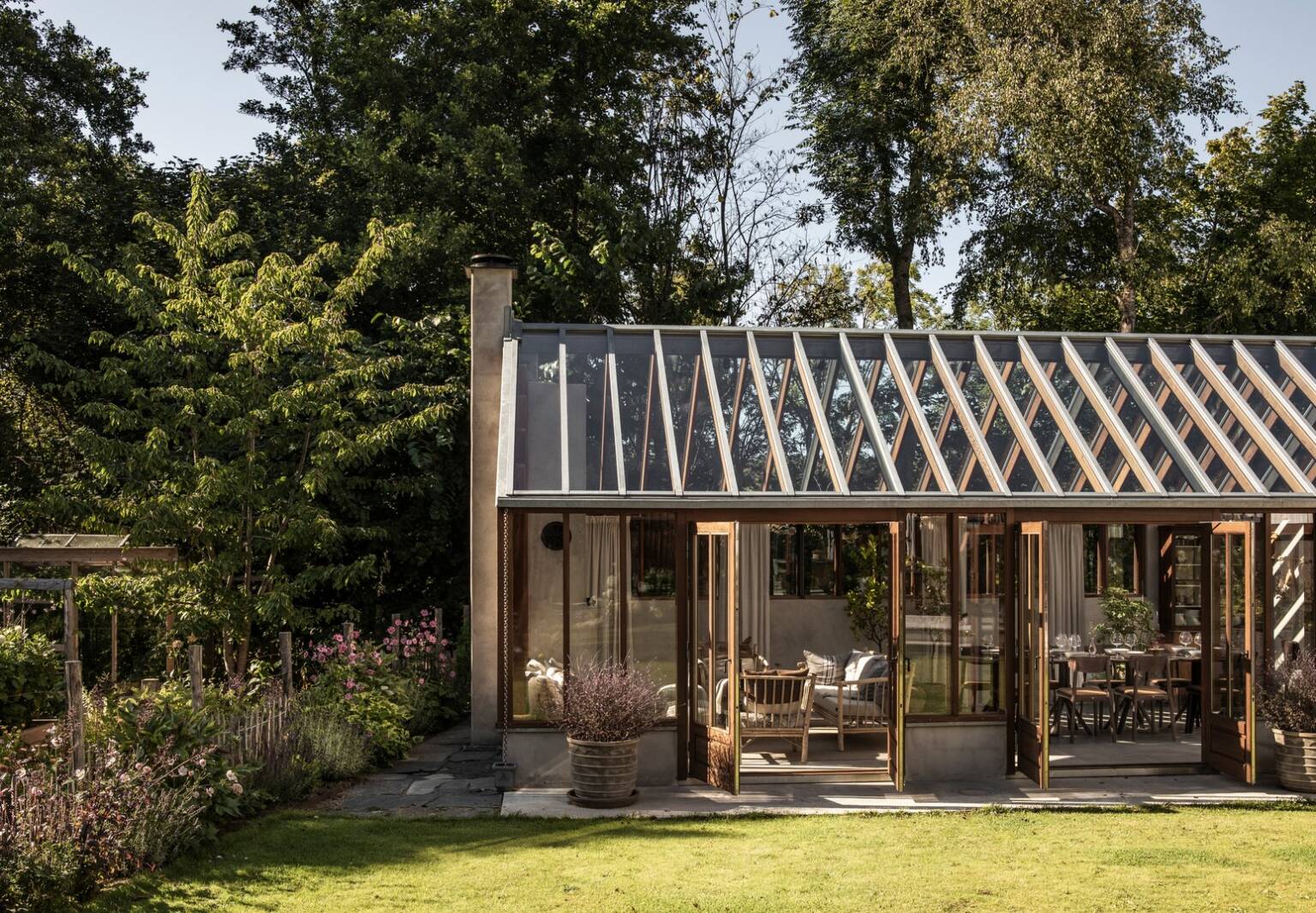
Ett Orangeri—an event space in Sweden designed in collaboration with Nordiska Kök for creative couple Camilla Simonson (a graphic designer, photographer, and cook) and Lasse Kronér (a musician and television presenter)—is like a traditional orangery in spirit, in that its purpose is to bring people together and spread delight, but it takes its design cues from modern Japandi style (a mashup of Japanese and Scandinavian sensibilities). Rather than grand proportions and an imposing stone or brick facade, this orangery has a light touch (thanks to a glazed pitched roof and four walls of glass and cedar), and the clean lines of a simple one-room cabin. And, notably, a small but functional kitchen allows Camilla to create her Japanese-influenced dishes.

Let’s take a tour.

Photography courtesy of Nordiska Kök.
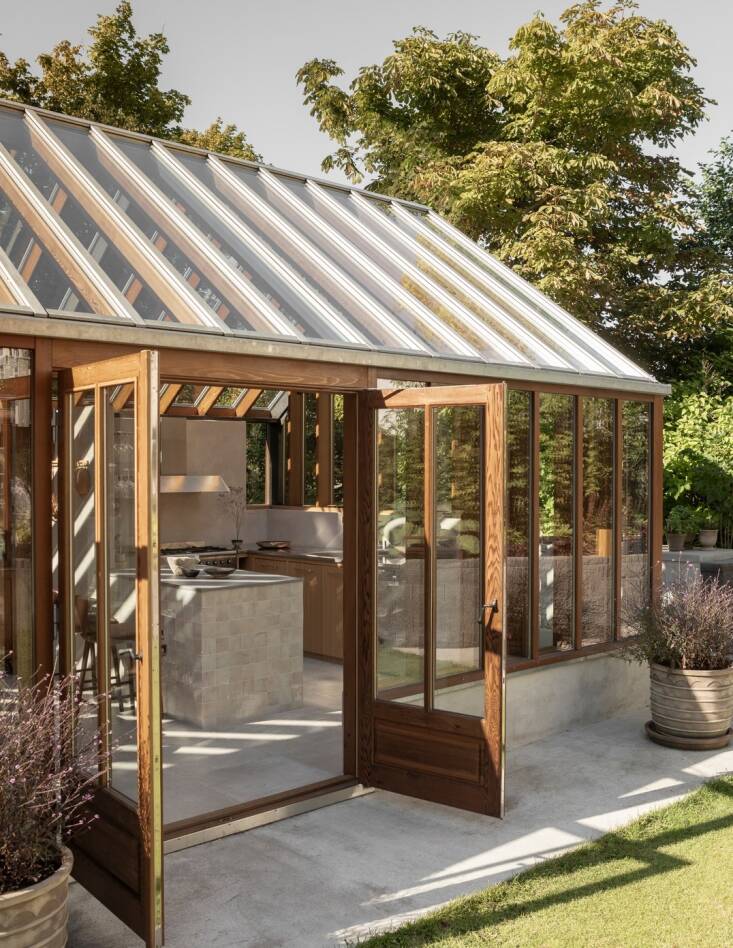
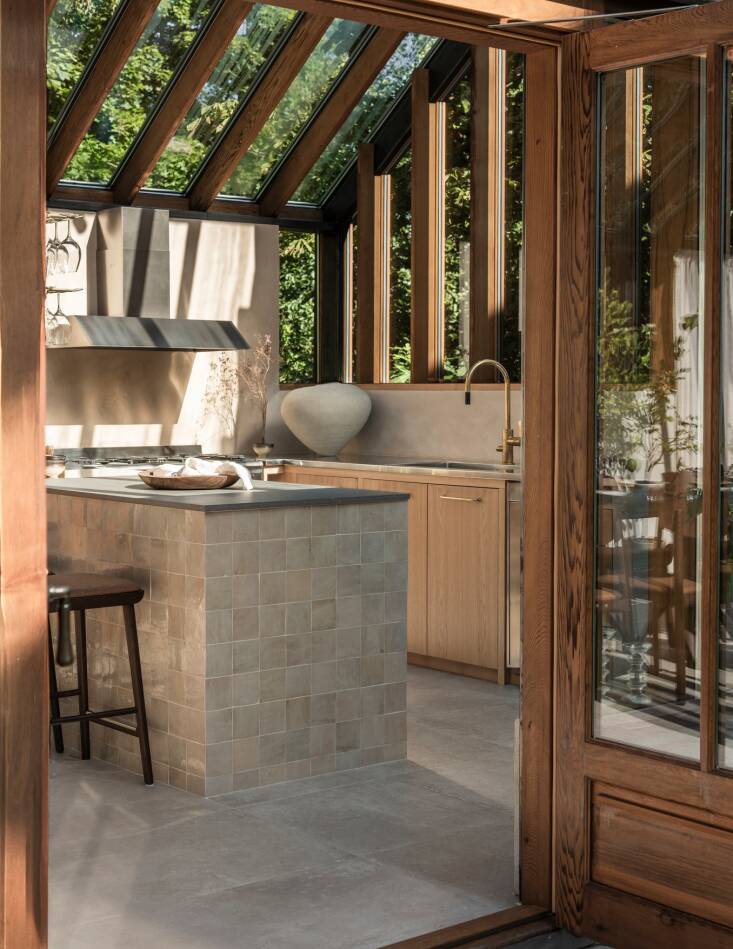
French doors welcome guests into the one-room orangery, which has walls of cedar and glass on all four sides in addition to a glass roof.
Above: French doors welcome guests into the one-room orangery, which has walls of cedar and glass on all four sides in addition to a glass roof.
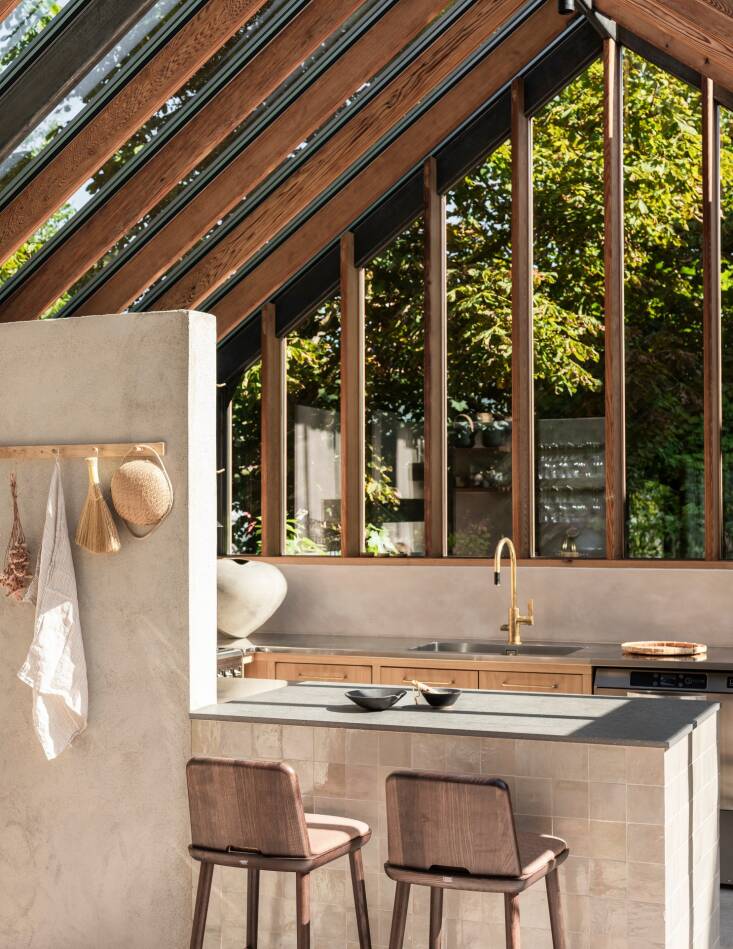
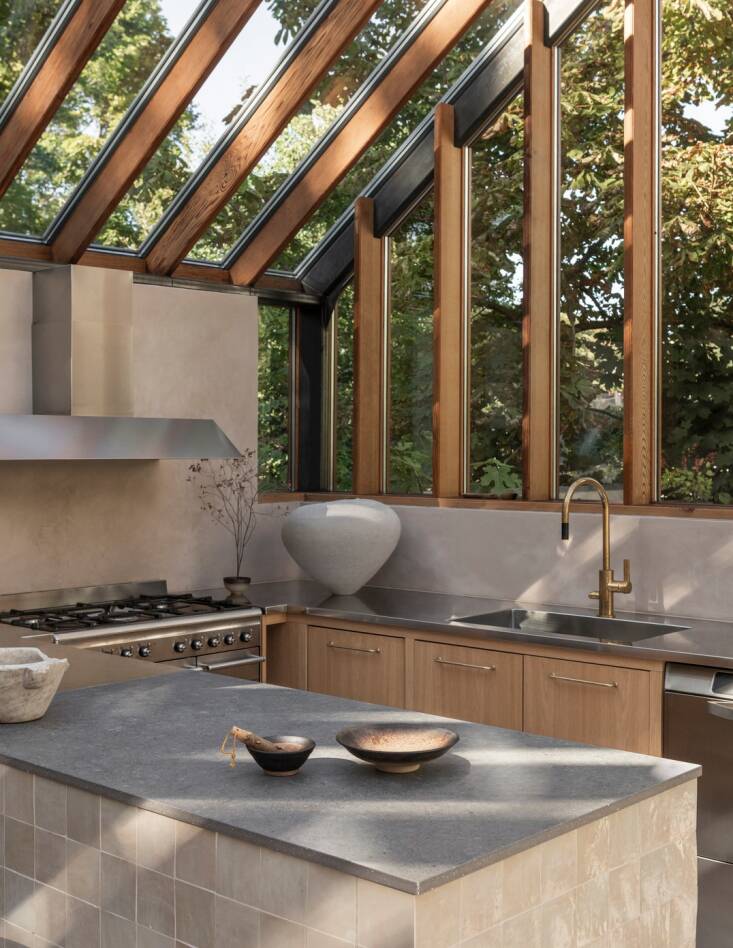
On one end of the room is a small U-shaped kitchen. Handmade French tiles cover the peninsula.
Above: On one end of the room is a small U-shaped kitchen. Handmade French tiles cover the peninsula.
The peninsula abuts a half wall that separates the cook space from the rest of the room.
Above: The peninsula abuts a half wall that separates the cook space from the rest of the room.
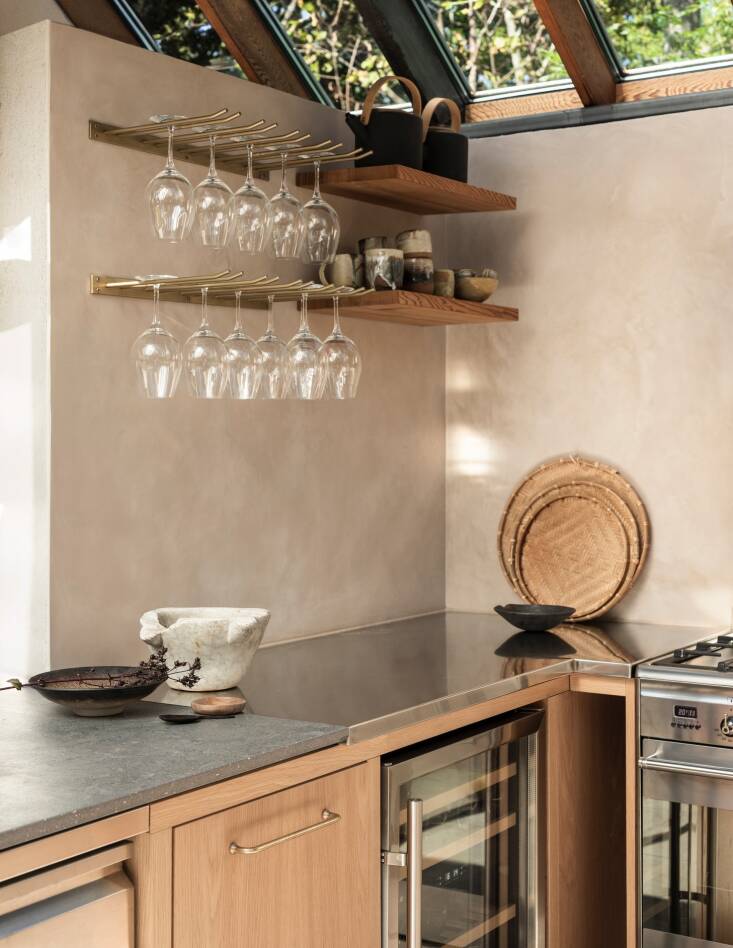
 &#8\2\20;Despite the limited space, we’ve managed to fit in everything we need. The kitchen is both beautiful and functional–and it’s magical to cook with the sky above and lilacs and chestnut trees just outside,&#8\2\2\1; Camilla told Nordiska Kök.
“Despite the limited space, we’ve managed to fit in everything we need. The kitchen is both beautiful and functional–and it’s magical to cook with the sky above and lilacs and chestnut trees just outside,” Camilla told Nordiska Kök.
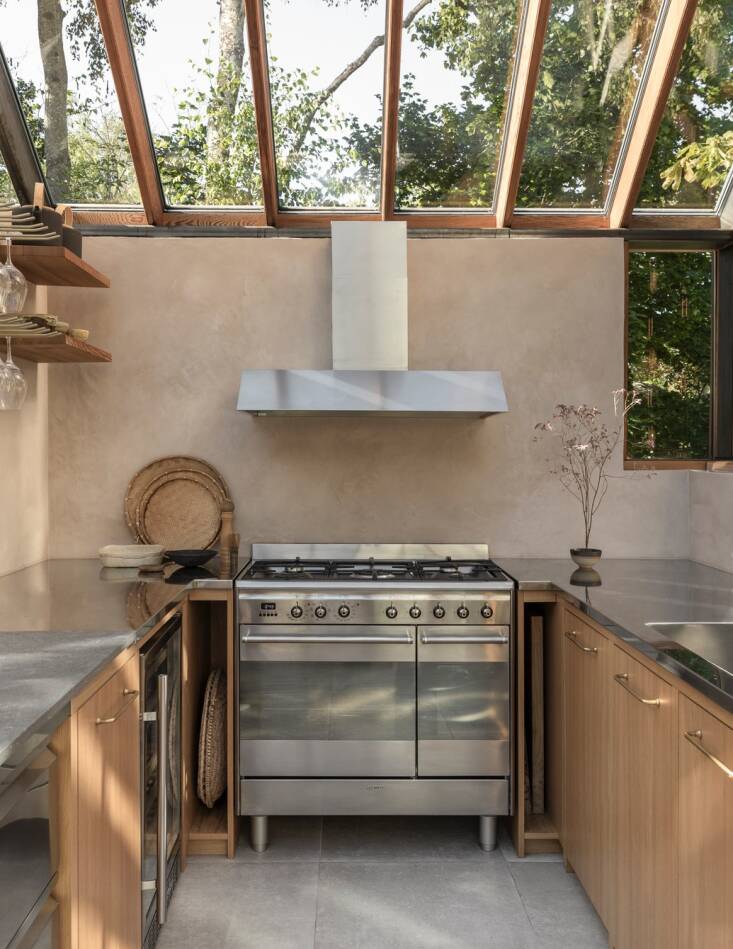
The stove is by Smeg and the range hood is by Fjäråskupan.
Above: The stove is by Smeg and the range hood is by Fjäråskupan.
The walls are finished in tadelakt, a traditional Moroccan plaster.
Above: The walls are finished in tadelakt, a traditional Moroccan plaster.
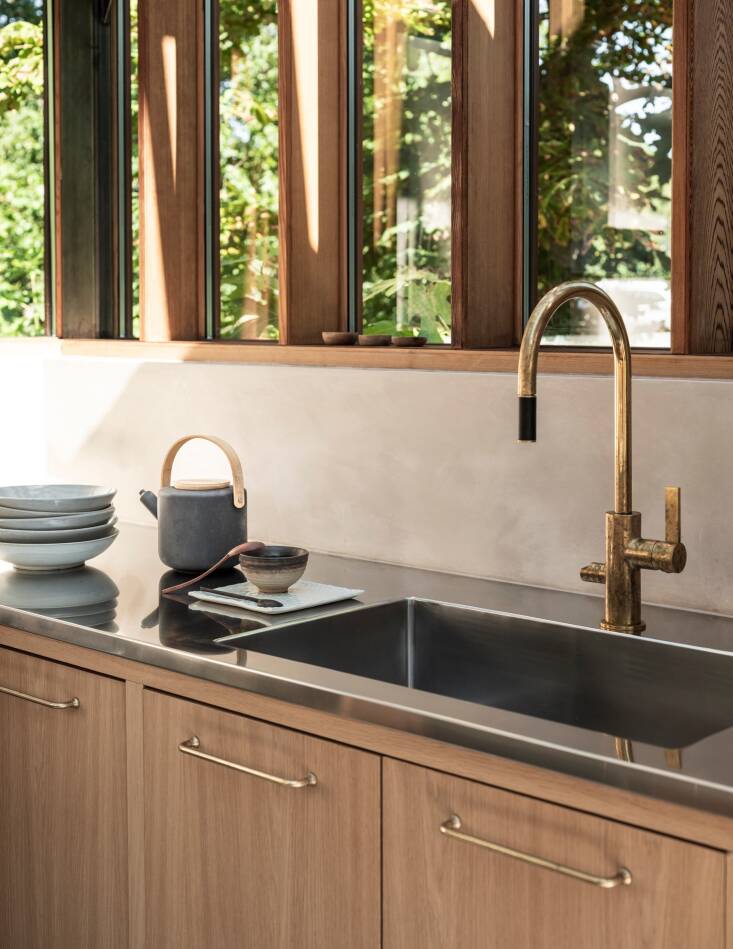
Light oak cabinets, antique brass hardware by Corston, and a brass faucet by Tapwell are a warm counterpoint to the stainless steel countertops and appliances.
Above: Light oak cabinets, antique brass hardware by Corston, and a brass faucet by Tapwell are a warm counterpoint to the stainless steel countertops and appliances.
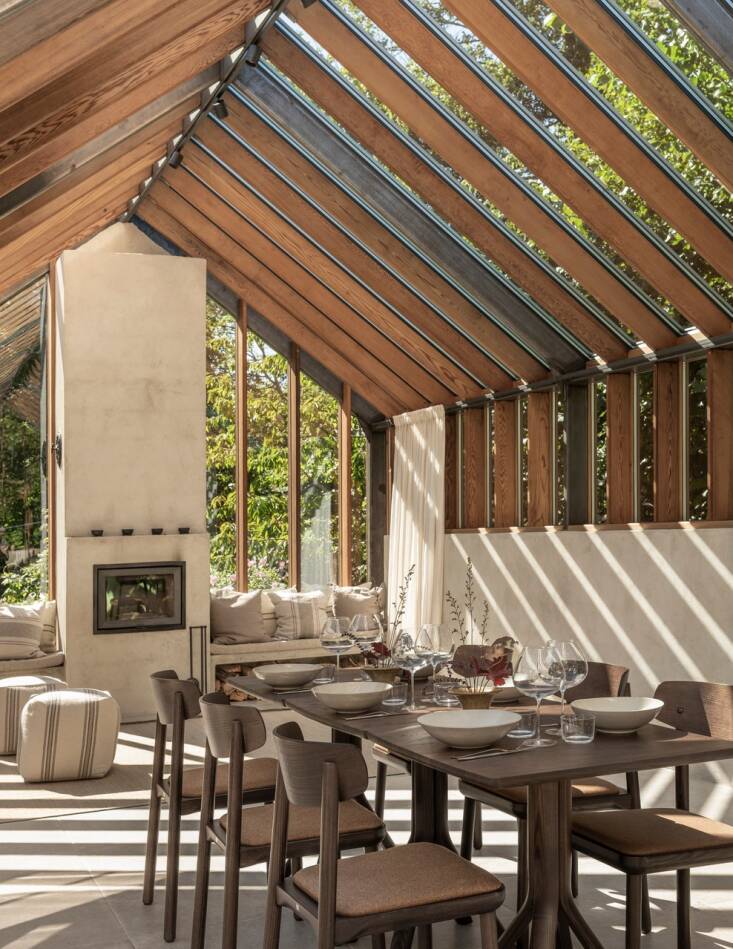
On the other side of the kitchen is the dining and sitting areas. The foundation and plastered parts of the orangery are composed of LECA (Lightweight Expanded Clay Aggregate) blocks, a building material that carries a lower carbon footprint than standard cement.
Above: On the other side of the kitchen is the dining and sitting areas. The foundation and plastered parts of the orangery are composed of LECA (Lightweight Expanded Clay Aggregate) blocks, a building material that carries a lower carbon footprint than standard cement.
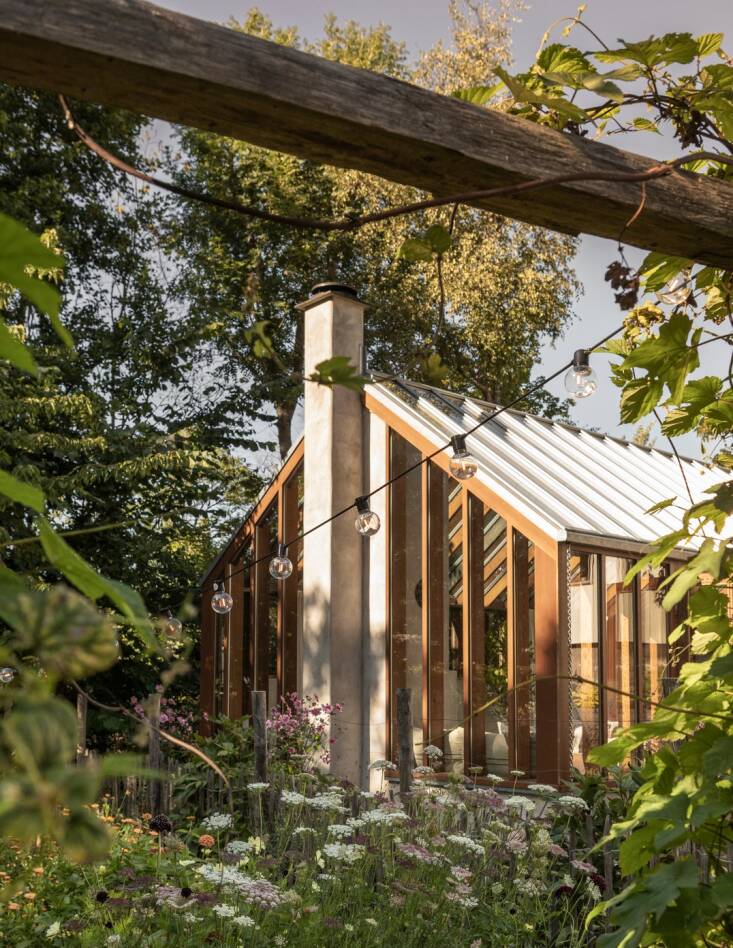
The orangery is surrounded by wildflowers and trees.
Above: The orangery is surrounded by wildflowers and trees.

To learn more about renting Ett Orangeri for a private event (which can accommodate up to 22 guests and include a seven-course meal and live music), visit its website. For more details about the building of Ett Orangeri, check out its Instagram account. And for more on the kitchen cabinets, head here.

See also:

(Visited 100 times, 100 visits today)
You need to login or register to view and manage your bookmarks.

Have a Question or Comment About This Post?

Join the conversation

v5.0