

One of the many ephemeral pleasures of spring is a jarful of magnolia vinegar. To make it, fresh magnolia buds or petals are layered in a jar, topped with vinegar and a spoonful of sugar, and left to infuse for a few days (or a few months). While any magnolia can be used, including summer-blooming North American species, the fat pink buds of Asian saucer magnolias (M. x soulangeana cultivars) are exceptionally welcome and pretty in early spring. Pretty things lift the heart and calm the mind—at least, for a while.
Here’s how to make magnolia vinegar (with a side-benefit of pickled magnolia buds), and what to expect (hint: it doesn’t stay pink forever).
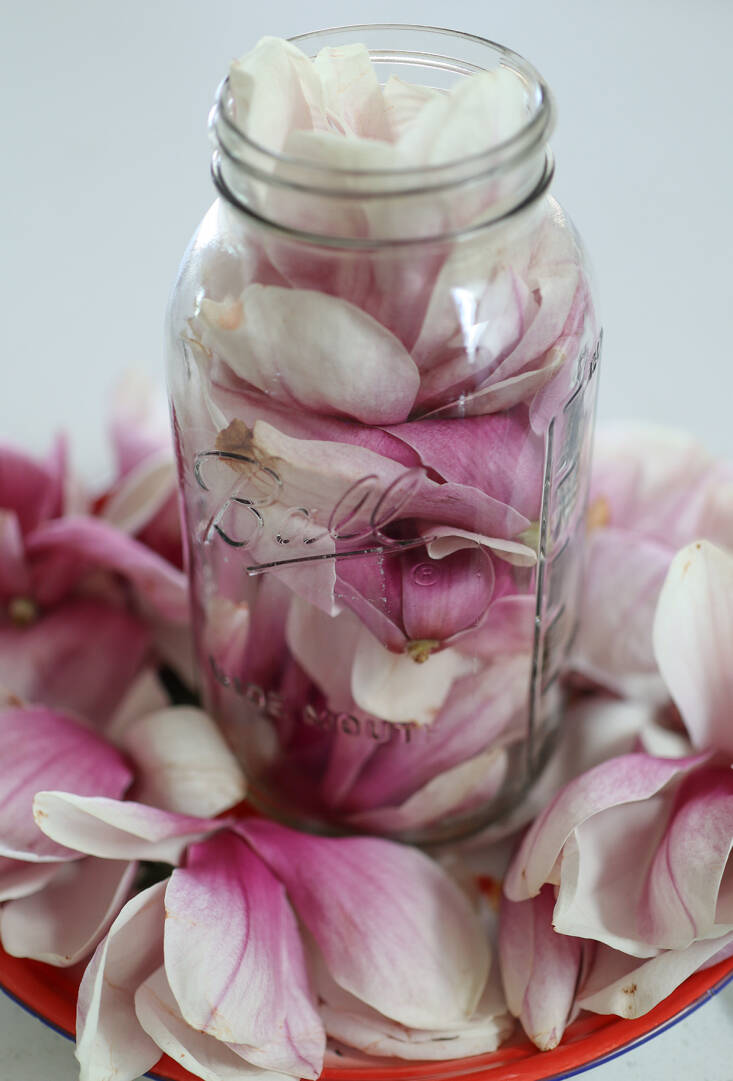
First, find your magnolias. If you do not grow a tree, this is not license to raid one in a botanical garden. But because the trees bloom so prolifically, consider early spring a great time to make friends with your neighbors, or with strangers. Notes under doors and in mailboxes, promises of a jarful in exchange, and buds in return (picked from all around the tree, not just one branch) is all it takes. And I encourage farmers to bring their flowers to local markets, packed upright in blue cardboard boxes—magnolia buds last very well as long as they are kept cold, like any other perishable spring ingredient.
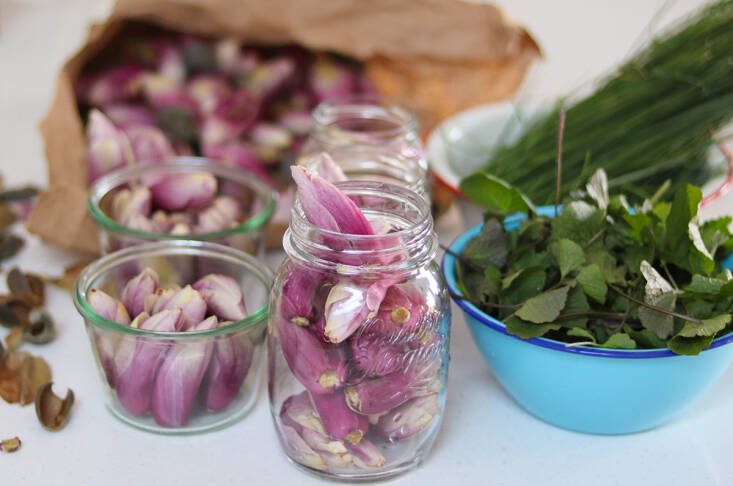
Using magnolias does not have to be limited to making an infused vinegar, of course, and we have written before about the many ways to eat magnolia flowers.
If you have never tasted a fresh petal, brace yourself for impact: this is not a sweet, soft flavor. Magnolia is intense, and combines the punch of fresh ginger with the fragrance—and power—of cardamom.
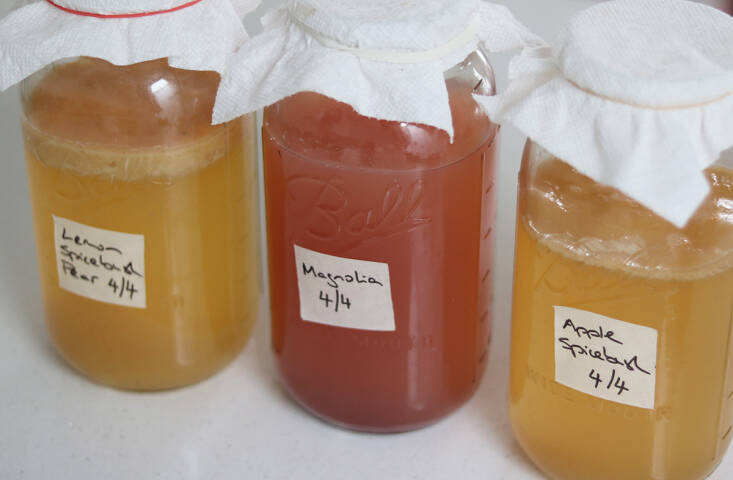
While I like to ferment wild vinegars from scratch (using fruit or flowers, sugar, water, and whatever wild yeasts are floating about naturally), I found years ago that magnolia flowers do not ferment well on their own; it’s probably because of their antimicrobial properties. A few petals in a ferment with other ingredients, like apples or pears, will work. But not a jarful of flowers.
How then, do we arrive at magnolia vinegar? The easy way: An infusion.
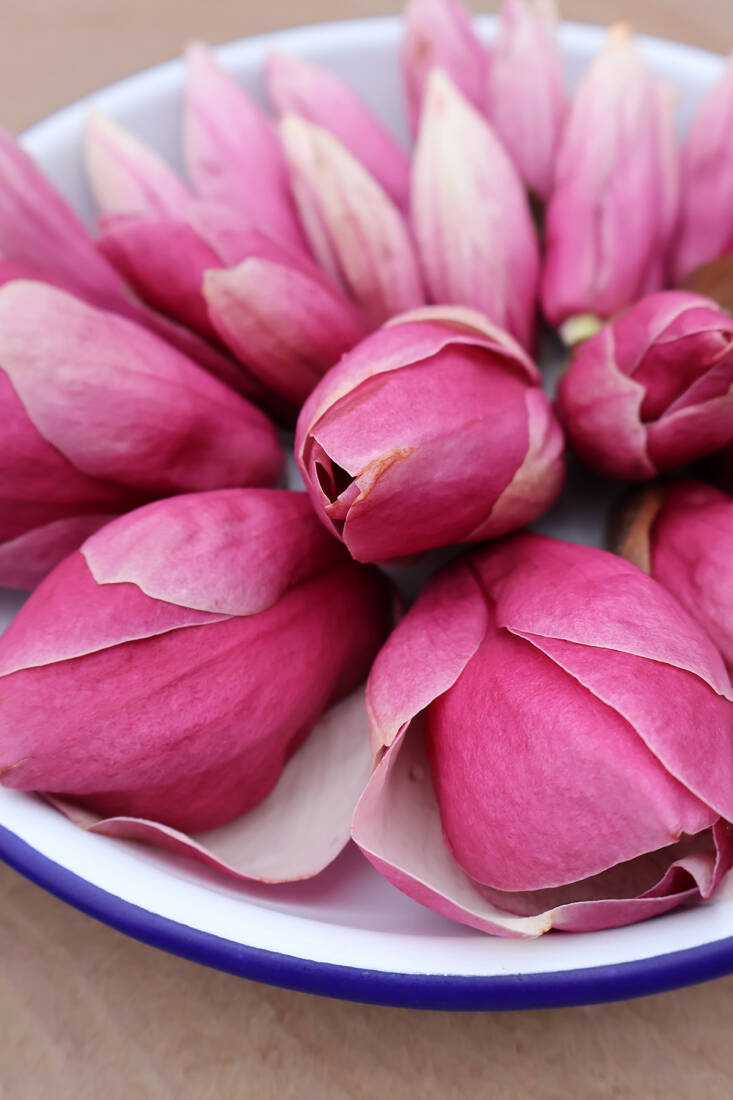
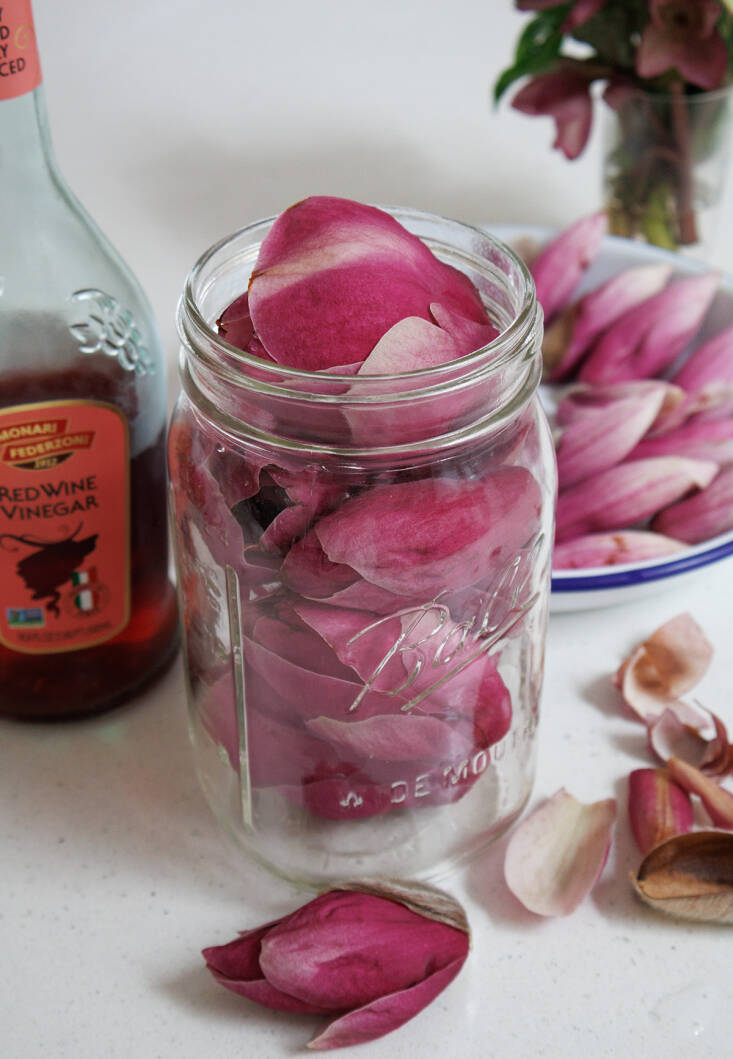
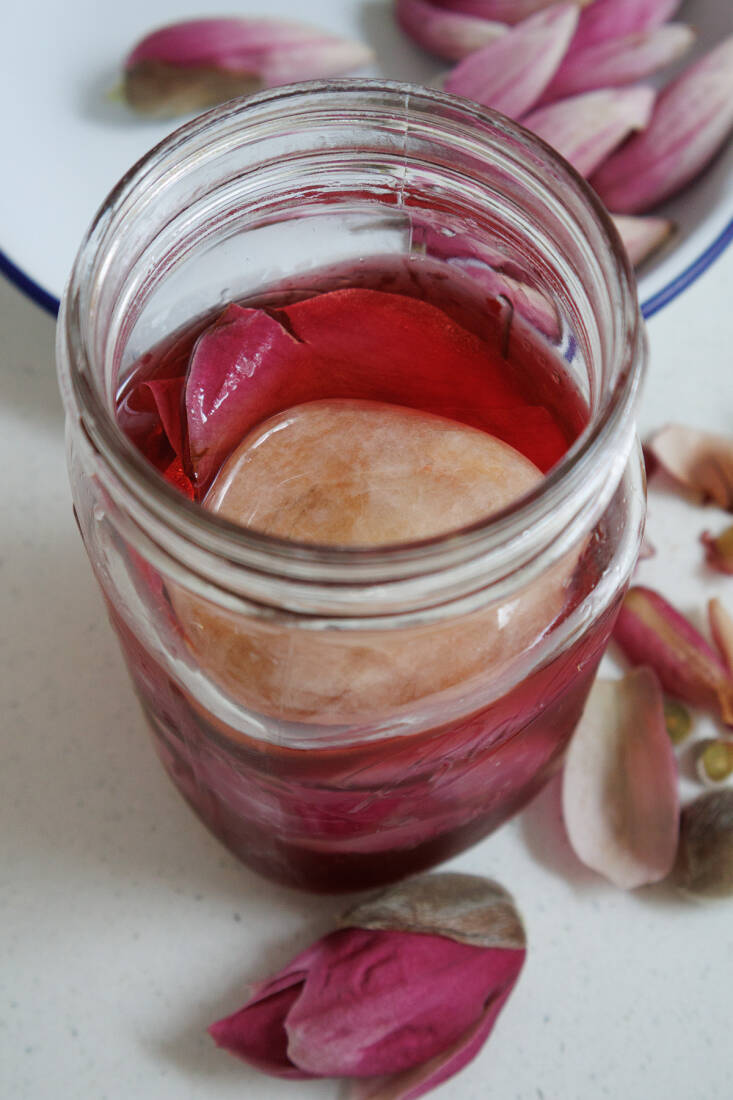
You can use any vinegar to make an infused magnolia vinegar, but the other thing to know about using these flowers is that they oxidize very quickly, turning to sepia as soon as they are bruised or cut. If you have pink petals and buds, red wine vinegar makes that transition less noticeable. Submerging the flowers beneath the liquid delays the process, so I use a weight to push them down. A sterilized river stone works beautifully, or buy a set of pickle weights. (A set of four small-mouth Pickle Pebbles from Masontops is $21.99.)
Once you have it, how do you use magnolia vinegar?
Because of its aroma (ginger, cardamom, sometimes a touch of clove or camphor), I look for flavors that play nicely within that culinary family, but really, it’s an improvisation and a borrowing. Filipino-style adobo, for example, is a happy match for the aromatic vinegar as well as for a bud or petal or two: the braised dish combines vinegar and soy, and sometimes coconut milk, for a long slow simmer, usually with chicken. Duck works very well, too. Or try a riff on our root vegetable adobo. Curries, spring stews—slow-cooked lamb and ramp leaves and a dash of magnolia vinegar belong to spring. For beatific simplicity, stir a spoonful of magnolia vinegar through steamed rice and top with a slivered petal.
As a salad dressing, magnolia vinegar is delicious mixed with soy sauce for salt and with a few drops of toasted sesame oil.
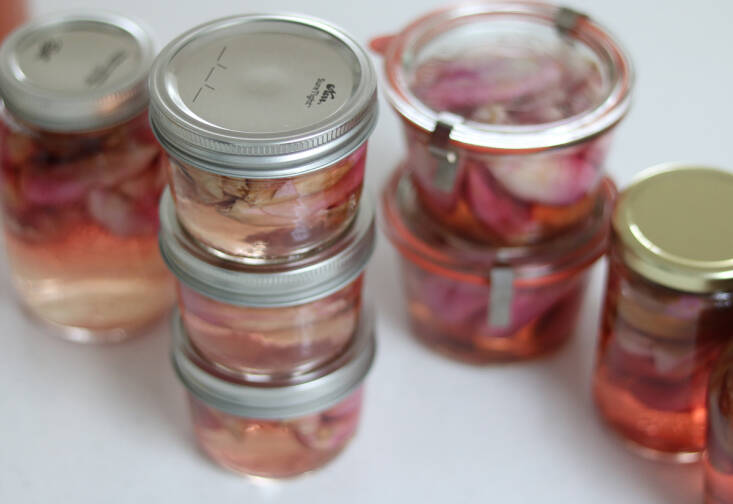
Magnolia Vinegar
Because everyone has a different number of magnolia flowers or buds, this is a simple method, rather than a recipe with fixed quantities. Use clean jars and make sure your hands are washed. Adding wine to my magnolia vinegar is a recent variation: I find it softens the overall flavor, while maintaining high acidity.
- Magnolia buds or open flowers
- Red or white wine vinegar
- A decent rosé or white wine
- A tablespoon of sugar for every cupful of liquid
Whether you have buds or flowers, remove any remaining fuzzy calyces from the base of the flowers. Trim the bottom of the flowers or buds. If using open flowers, pull off the petals, leaving behind the (more bitter) reproductive parts.
Place your buds or petals in a jar. Fill the jar halfway with wine vinegar and the rest of the way with the wine. Add a tablespoonful of sugar for about every cup of liquid. Place the lid on the jar, tighten, and gently tilt back and forth until the sugar has dissolved. Remove the lid. Place your pickle weight on top of the petals or buds to keep them beneath the liquid, return the lid and leave to infuse for at least a week, and as long as a month. Strain and bottle the vinegar, and use the petals or buds sparingly in cooked, braised dishes like adobos, curries, and stews.
See also:
- 11 Favorites: Edible Flowers of Spring
- DIY: Pickled Cherry Blossoms
- Bitter Melon: Like a Cucumber With Attitude




Have a Question or Comment About This Post?
Join the conversation