Icon - Arrow LeftAn icon we use to indicate a rightwards action. Icon - Arrow RightAn icon we use to indicate a leftwards action. Icon - External LinkAn icon we use to indicate a button link is external. Icon - MessageThe icon we use to represent an email action. Icon - Down ChevronUsed to indicate a dropdown. Icon - CloseUsed to indicate a close action. Icon - Dropdown ArrowUsed to indicate a dropdown. Icon - Location PinUsed to showcase a location on a map. Icon - Zoom OutUsed to indicate a zoom out action on a map. Icon - Zoom InUsed to indicate a zoom in action on a map. Icon - SearchUsed to indicate a search action. Icon - EmailUsed to indicate an emai action. Icon - FacebookFacebooks brand mark for use in social sharing icons. flipboard Icon - InstagramInstagrams brand mark for use in social sharing icons. Icon - PinterestPinterests brand mark for use in social sharing icons. Icon - TwitterTwitters brand mark for use in social sharing icons. Icon - Check MarkA check mark for checkbox buttons.
You are reading

Garden Visit: A Pesticide-Free Landscape with ‘Layered Texture’ in Westchester, NY

Search

Garden Visit: A Pesticide-Free Landscape with ‘Layered Texture’ in Westchester, NY

August 19, 2025

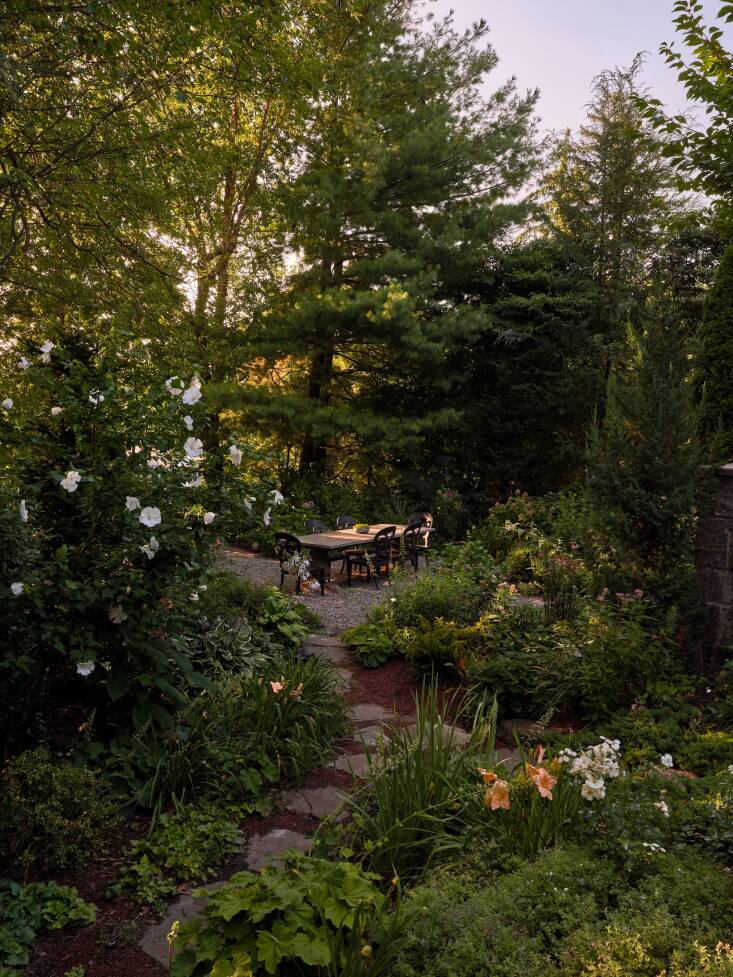
Oftentimes landscape designers are called in to execute a one-time overhaul or to create an instant landscape for a site that’s been ravaged by construction. Every once in a while, though, they’re enlisted for more nuanced work, such as when a mature garden needs a new steward and editor. The “before and after” results may not be as dramatic, but the process of refinement can take a garden from good to great. Such was the case when landscape designer and ISA-certified arborist Ashley Lloyd, of Lloyd Landwright, was brought in to usher a garden in lower Westchester into its next chapter.

The garden had been lovingly designed and tended by a fine gardener for many years, but after his departure, weeds had overtaken the property and much of the perennial layer had been lost during construction projects, including a new retaining wall. “The goal was to create layered texture, seasonal contrast, and movement—and to design with the garden’s future evolution in mind,” Lloyd says.

Arriving as the homeowners were in the midst of rethinking the garden, ended up being a gift. “I had time to observe the land—its microclimates, light shifts, drainage patterns—and respond accordingly,” Lloyd says. Building on the existing palette of shrubs and evergreens, she brought in more native and pollinator plants and created moments that would consistently surprise and delight the clients. She also designed dozens of seasonal planters and new outdoor lighting.

Through her years of working on this garden, Lloyd learned that “the best design happens in relationship and collaboration with the land and not from a fixed plan,” she says. Lloyd recently relocated to the West Coast, handing this garden off to its next steward in much better shape than she found it.

Take a tour of the resulting garden, a layered landscape that evolves through the seasons.

Photography by Kyle J Caldwell.
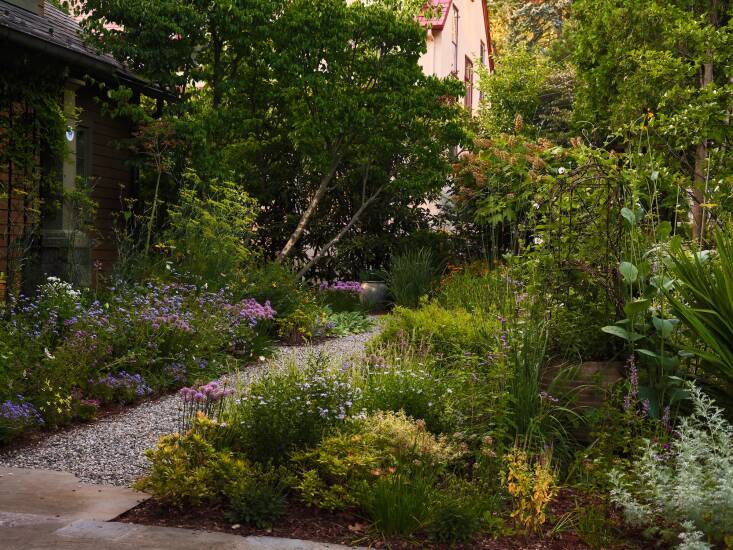
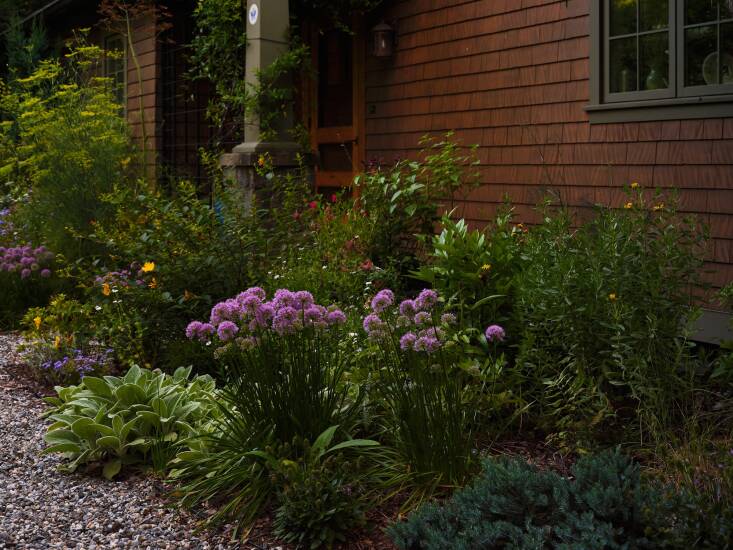
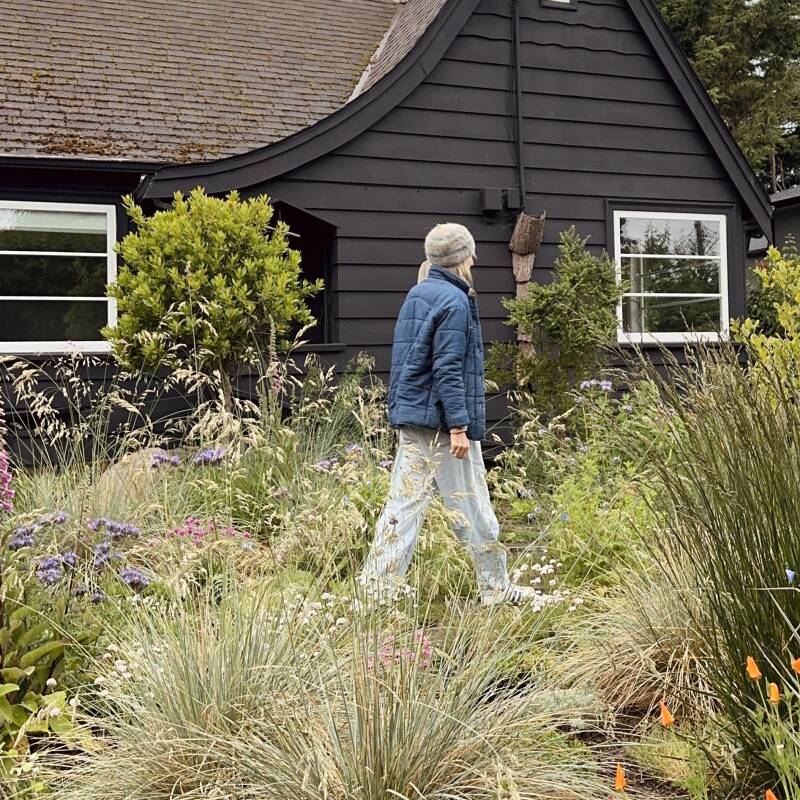
“This wasn’t a &#8\2\16;look but don’t touch&#8\2\17; garden,” says Lloyd. Rather, it was designed to invite interaction, with the client choosing to leave the front garden unfenced, so neighbors could enjoy it too. However, no fencing meant intense deer pressure, so Lloyd focussed her plant palette on those that were unpalatable to deer, including floss flower and allium. “Grasses, including sesleria, really knit everything together there,” she says.
Above: “This wasn’t a ‘look but don’t touch’ garden,” says Lloyd. Rather, it was designed to invite interaction, with the client choosing to leave the front garden unfenced, so neighbors could enjoy it too. However, no fencing meant intense deer pressure, so Lloyd focussed her plant palette on those that were unpalatable to deer, including floss flower and allium. “Grasses, including sesleria, really knit everything together there,” she says.
Lloyd says she tries to place plants that deer don’t like around plants they prefer; for example, lamb&#8\2\17;s ear and allium are positioned to protect asters. As part of a local Pollinator Pathway, the garden is pesticide-free and designed to support bees, birds, and butterflies.
Above: Lloyd says she tries to place plants that deer don’t like around plants they prefer; for example, lamb’s ear and allium are positioned to protect asters. As part of a local Pollinator Pathway, the garden is pesticide-free and designed to support bees, birds, and butterflies.
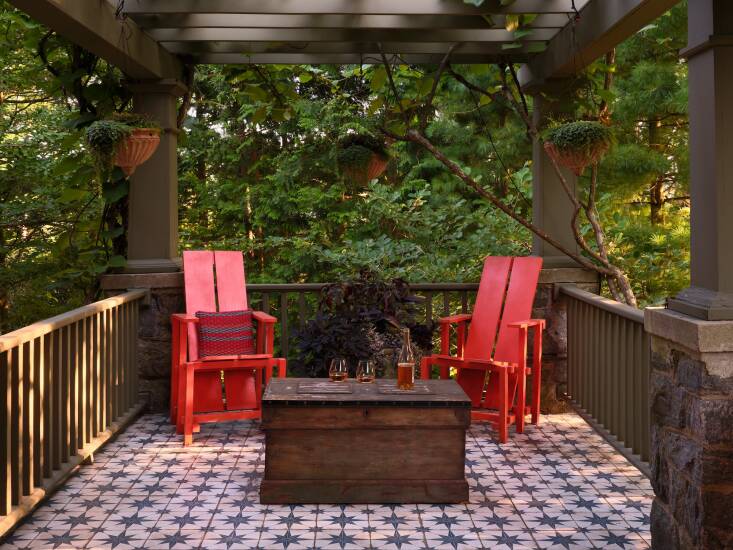
Two Wave Hill Chairs painted in a bright shade of red add their own moment of surprise and delight on the patio. (For more on these chairs, see The Wave Hill Chair: Minimalist, Timeless—and You Can Make It Yourself!)
Above: Two Wave Hill Chairs painted in a bright shade of red add their own moment of surprise and delight on the patio. (For more on these chairs, see The Wave Hill Chair: Minimalist, Timeless—and You Can Make It Yourself!)
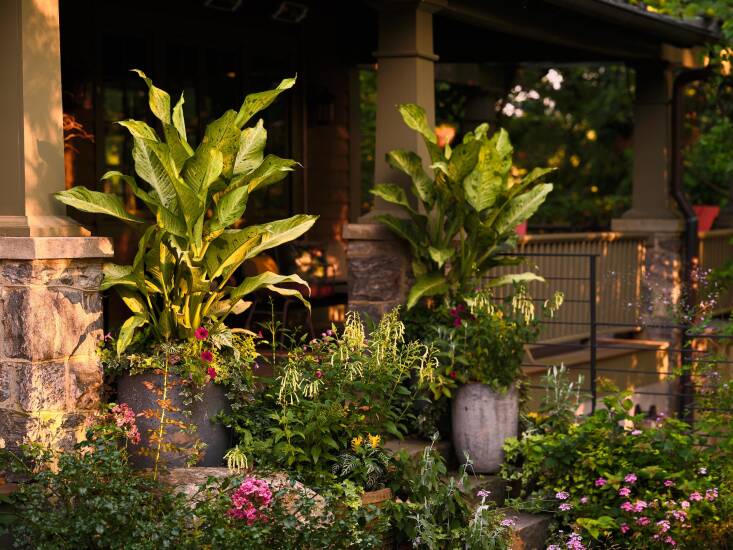
Lloyd believes containers can be a powerful piece of a landscape design. “Containers allow for creative freedom and emotional punctuation,” she says. Treat your containers like sculptural moments, like Lloyd did here with a pair of Dieffenbachia framing the steps.
Above: Lloyd believes containers can be a powerful piece of a landscape design. “Containers allow for creative freedom and emotional punctuation,” she says. Treat your containers like sculptural moments, like Lloyd did here with a pair of Dieffenbachia framing the steps.
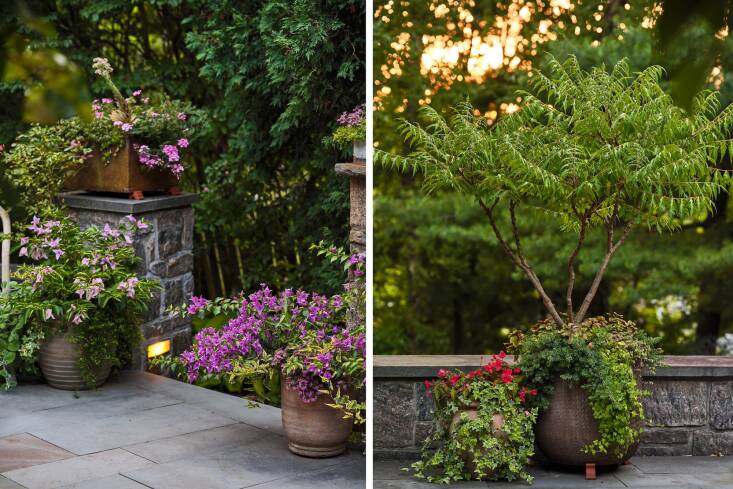
“Most people underestimate how large a container needs to be until it’s in place,” cautions Lloyd, who says small pots often feel dwarfed by their surroundings. Lloyd also prefers larger containers, so she can include small shrubs or trees, like this staghorn sumac at right, and then build around them. “It allows the container to evolve without starting from scratch each time,” she says.
Above: “Most people underestimate how large a container needs to be until it’s in place,” cautions Lloyd, who says small pots often feel dwarfed by their surroundings. Lloyd also prefers larger containers, so she can include small shrubs or trees, like this staghorn sumac at right, and then build around them. “It allows the container to evolve without starting from scratch each time,” she says.
Lloyd says that this garden persuaded her to stop creating rigid planting plans, especially for perennials. “Instead, I develop a flexible framework grounded in site conditions and design goals, and allow the right plant to find the right place. I still map trees and shrubs—the structure and bones of the design—but herbaceous layers evolve on-site,” she says
Above: Lloyd says that this garden persuaded her to stop creating rigid planting plans, especially for perennials. “Instead, I develop a flexible framework grounded in site conditions and design goals, and allow the right plant to find the right place. I still map trees and shrubs—the structure and bones of the design—but herbaceous layers evolve on-site,” she says
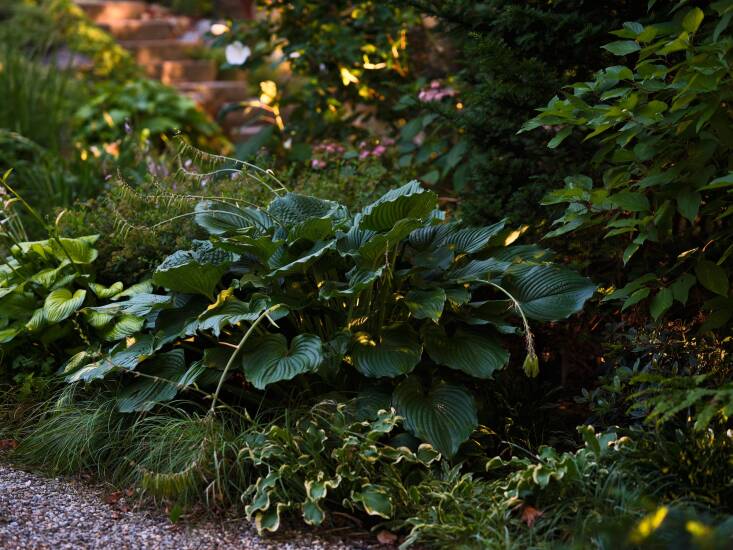
Lloyd’s clients loved plants with big leaves, including hostas, which Lloyd interspersed them with grasses and carexes. Not only do the rich layers of this garden look great, the groundcovers and grasses fill out the design and reduce maintenance by squeezing out weeds.
Above: Lloyd’s clients loved plants with big leaves, including hostas, which Lloyd interspersed them with grasses and carexes. Not only do the rich layers of this garden look great, the groundcovers and grasses fill out the design and reduce maintenance by squeezing out weeds.
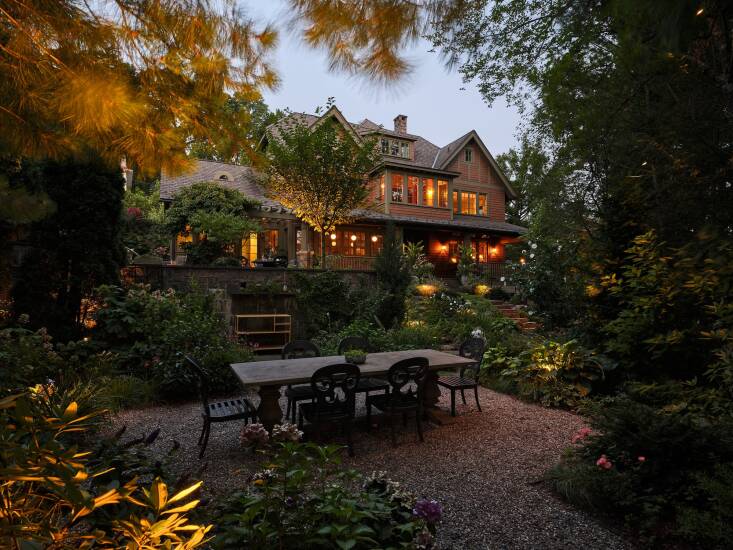
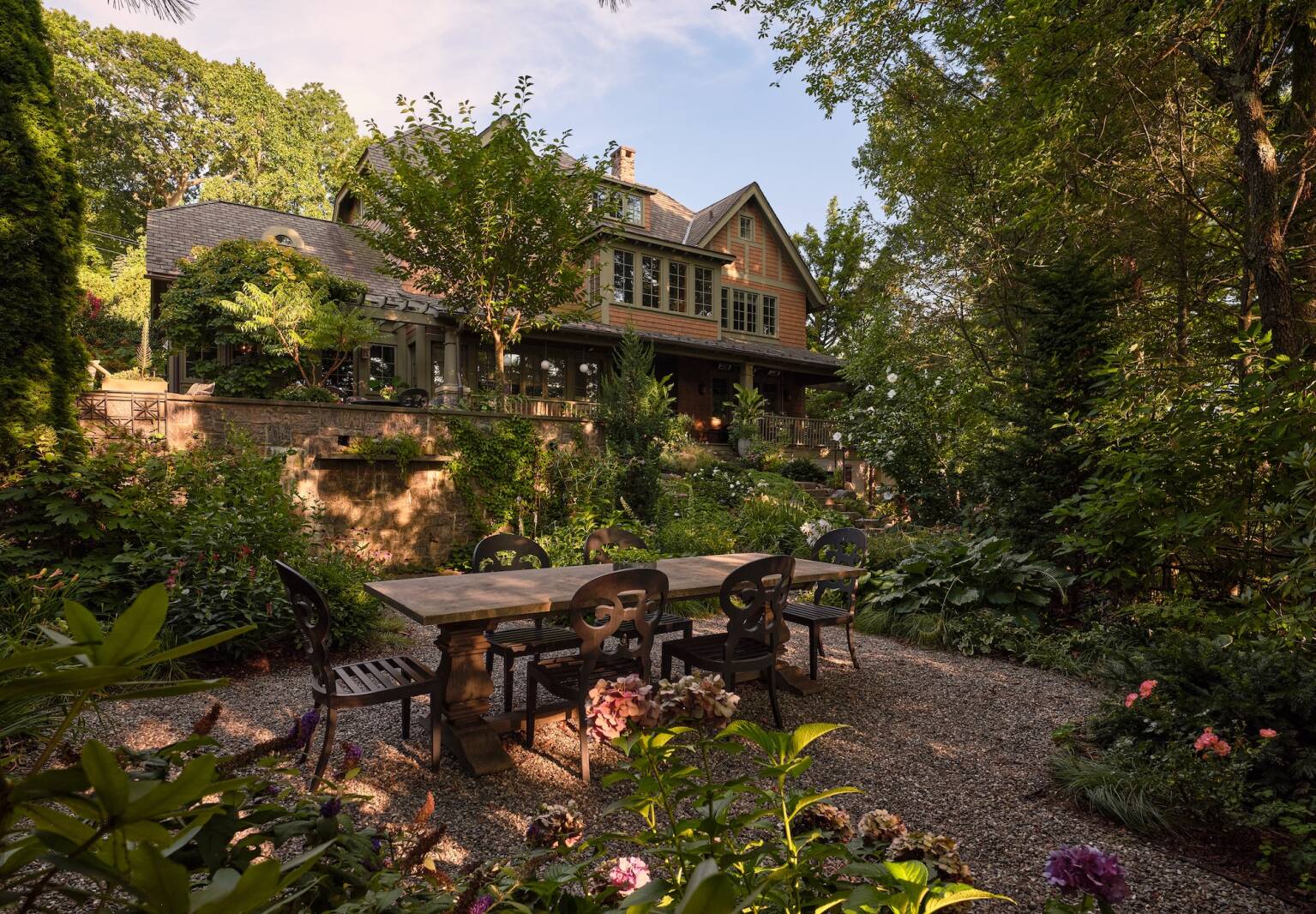
Lloyd re-shaped this gravel area and adjusted the plantings to better accommodate outdoor dining.
Above: Lloyd re-shaped this gravel area and adjusted the plantings to better accommodate outdoor dining.

See also:

(Visited 10,961 times, 1 visits today)
You need to login or register to view and manage your bookmarks.

Have a Question or Comment About This Post?

Join the conversation

v5.0