



I was at a curator’s talk on the current show at the Ashmolean, Oxford’s art museum, yesterday. The exhibition is called In Bloom: How Plants Changed Our World, and at the end there were some peppery questions and comments from the audience, including: “The show has the wrong title. It should be: ‘How We Exploited Plants To Change Our World.'” It’s not the fault of the opium poppy (represented in the show, along with an opium pipe) that we have loaded it with notoriety; it didn’t choose that. In her response, the co-curator said, “Plants are not beings,” to which the questioner shouted “That’s just it, they are!”
This got me thinking: gardeners grow Papaver somniferum despite its “reputation”; it has a very natural desirability that goes beyond exploitation. Like Papaver rhoeas, the Flanders poppy, it brings new life to disturbed ground (my newly de-brambled garden is full of opium poppy foliage), and from glaucous leaves to bud, not to mention the unfurling flower, there is beauty at every stage.

Opium poppy is happily self-seeding, aided by the well-designed seed shaker that develops from the dried fruit. It also hybridizes easily during pollination. If you are growing from selected seeds, you can hope for rich and jewel-like colors; otherwise they are unpredictable and need to be edited. This is part of the fun.
Yet it is illegal to own poppy seeds in some countries—even when they’ve been cooked; a person in the United Arab Emirates was imprisoned for owning seeds that he got from a bread roll. Even Monticello in Virginia was raided in the 1980s by the DEA (Drug Enforcement Administration) and the poppies, grown there since Thomas Jefferson’s time, were escorted out, and heirloom seeds were removed from the gift shop. It turns out that Jefferson was an opium user, like other intellectuals in the western world. He was also a gardener.
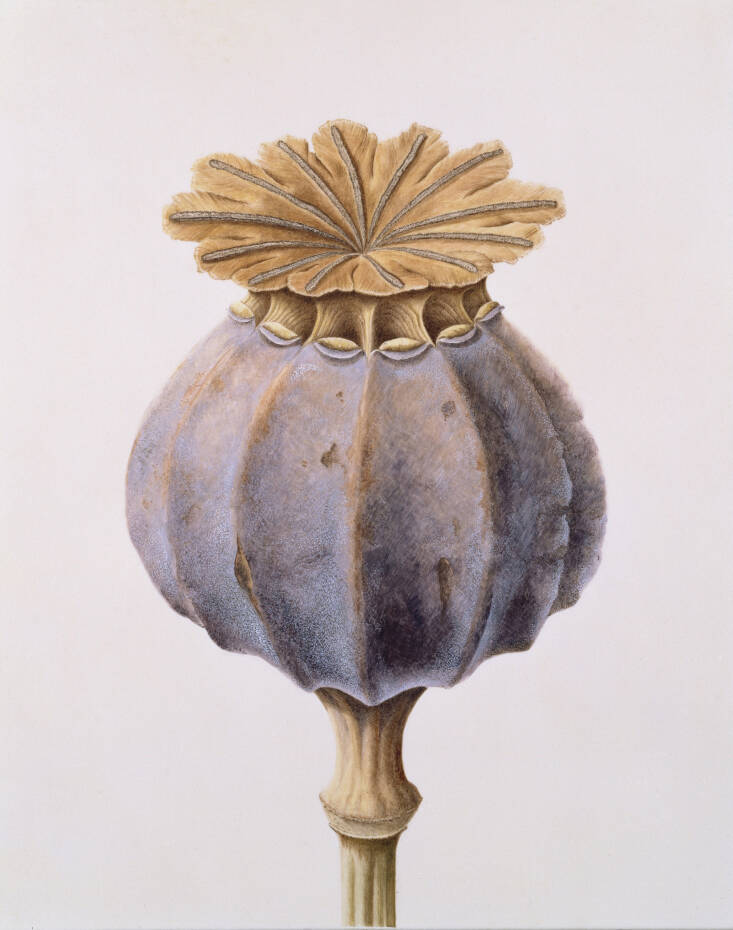
People have been extracting opiates from the latex scratched from an opium poppy’s fruit (developing seed head) for at least 5,000 years. In his naming and classification of plants, 18th century Carl Linnaeus named Papaver somniferum after the Latin for “sleep” and “to bring,” drawing on its sedative qualities. This was simply one distinguishing characteristic, from, say, Papaver nudicaule, the Iceland poppy, so-called because of its naked or leafless stems. One of the curators of the Ashmolean show, Dr Shailendra Bhandare, a former pharmacist, described the effects of opium as “having vivid and impossible dreams.” In other words, pipe dreams.

Micro-dosing of opium was a middle-class pursuit in the 18th and 19th centuries. George Eliot’s characters do it without apology in Middlemarch, and William Wordsworth and his sister Dorothy would walk with friends in the Lake District, taking opium to enhance the experience. Samuel Taylor Coleridge was a frequent visitor and the drug took its hold on him, as well as their friend Thomas de Quincey, who had become addicted in London after suffering a toothache. De Quincey moved into the Wordsworth’s cottage at Grasmere after they moved out, and was allegedly so irritated by their goody-two-shoes image, and Wordsworth’s overbearing fame (he had great success in his lifetime) that he took a certain amount of pleasure in turning Wordsworth’s study into his opium den. Laudanum—a tincture of opium, mixed with alcohol—was his preferred method. On one occasion he took an axe to his landlords’ beloved garden, attacking their rustic gazebo and chopping down trees. A plant-based incident, with a human conductor.
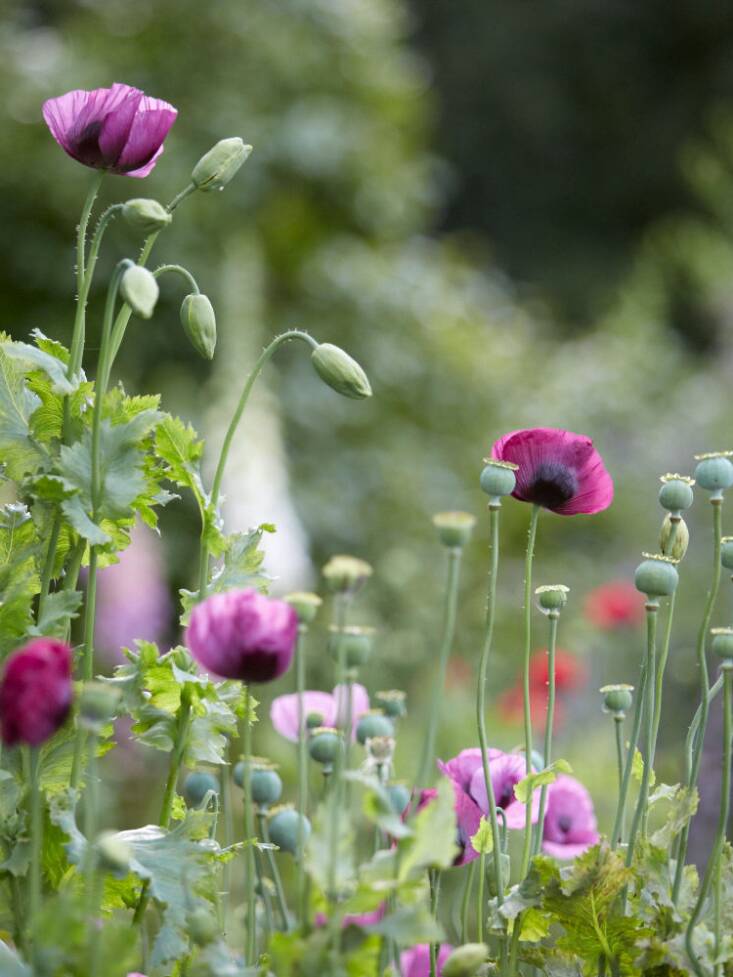
Opium poppies can be the transient stars of a garden. Landscape designer James Alexander-Sinclair‘s garden is a showcase of jewel-like color, populated with opium poppies that are grown from seeds that were originally passed down from a friend’s garden in Northamptonshire. These original opium poppies had been carefully selected; the garden was designed by Dan Pearson when he was a student. They are edited for color every year when in flower, and the seeds are passed to friends who either garden or bake, or both.

The exhibition In Bloom: How Plants Changed Our World, at the Ashmolean Museum, Oxford, is on until 16 August, 2026.
See also:




Have a Question or Comment About This Post?
Join the conversation