

This year, the British garden show circuit is making room for Badminton, home of the Duke and Duchess of Beaufort. It’s in a horsey part of the country, and the estate park has long been home to the Badminton Horse Trials. Delightfully located in Gloucestershire, it’s also very garden-y, and the Duchess (Georgia Beaufort) has been gently steering the trees-and-shrubs pleasure gardens toward a more seasonal display, while maintaining the kind of restraint that a house of this stature requires.
Happily, the gardens have been documented through the seasons by our friend, Britt Willoughby. Earlier this week the Duchess took time out to talk to us about the Badminton way with bulbs.
Photography by Britt Willoughby.
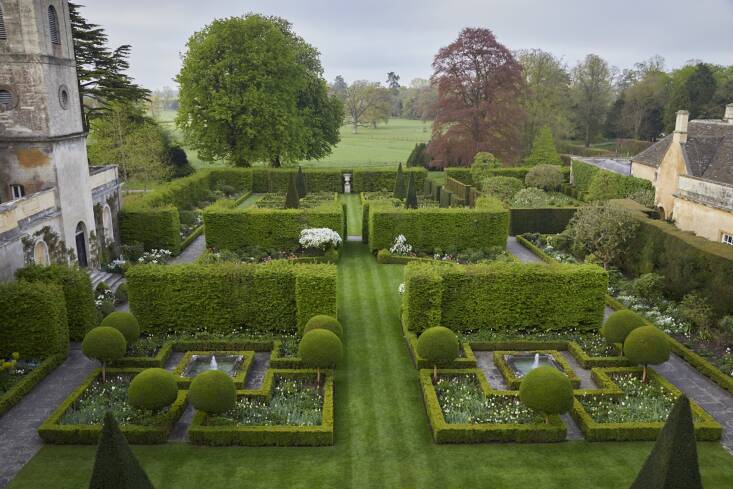
The gardens that surround the 17th century house were designed for walking through. The landscape set pieces by Capability Brown and Charles Bridgeman, influential 18th century English landscape designers, were further into the park. Back then, Badminton’s occupants, explains the Duchess, “were mostly just interested in hunting.” Her late father-in-law, the 11th Duke, with his first wife, hired the French designer François Goffinet to add some garden elements closer to the main building. In this south-facing rear part of the house, hornbeam walls make garden rooms, and boxwood-edged parterres with lollipop topiaries are filled with tulips.
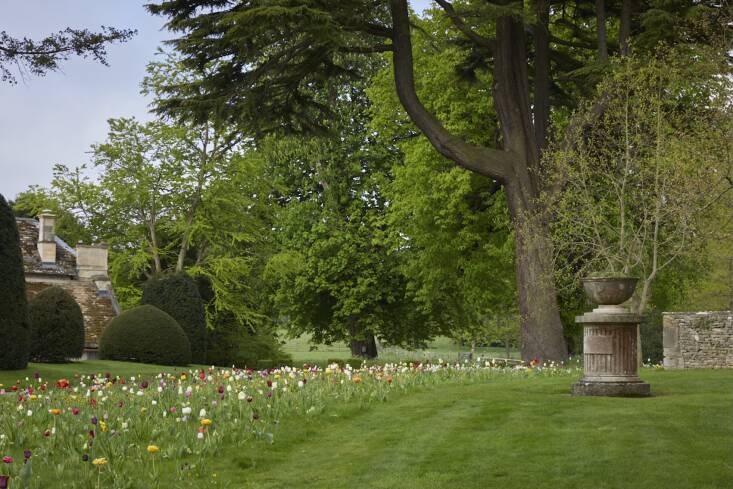
The effect of short grass and Cotswold stone, mixed with tulips in uncut grass, combines beautifully to highlight the venerable trees and shrubs—once the main event of the gardens.
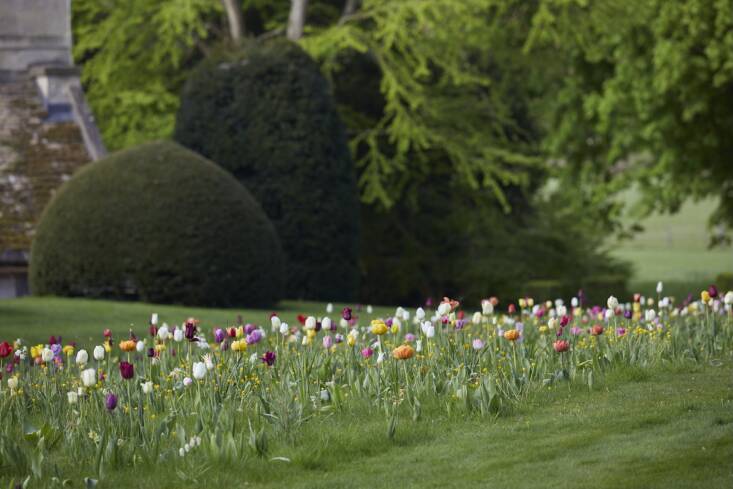
Most gardeners treat tulips as annuals and throw them away after blooming. Left in a bed, they lose vitality after their initial year of flowering, and soon they start sending up nothing but leaves. Other gardeners move their spent tulips to informal areas, so that they can provice some greenery to a verge or driveway. Georgia Beaufort adds fresh bulbs each year; generally, they are leftovers from her annual bulb orders for the formal gardens. The glittering tulip meadows have an air of spontaneity since the colors and shapes are unplanned.
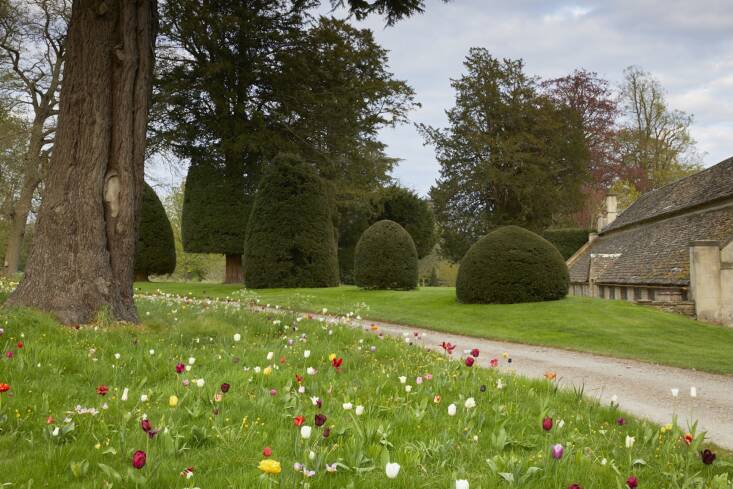
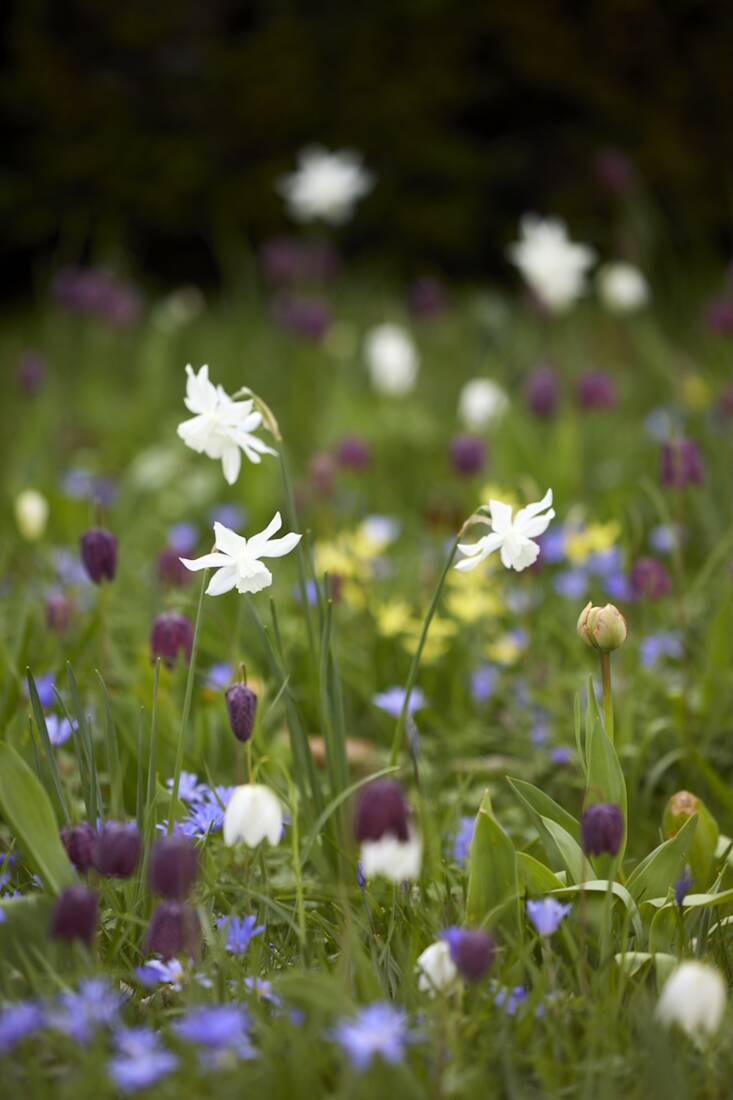
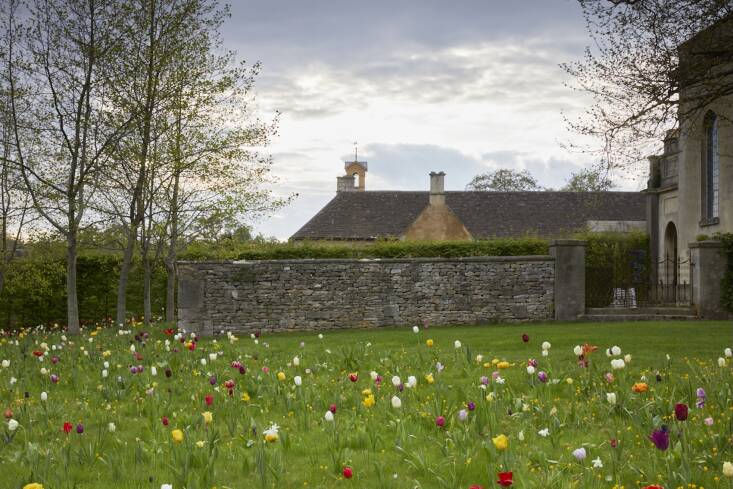
The tulips on the property are a mix of smaller, species tulips, which self-seed and go on and on, and fading hybrids. The green-streaked Viridiflora types, such as Tulipa ‘Spring Green’, are among the longer-lasting hybrids.
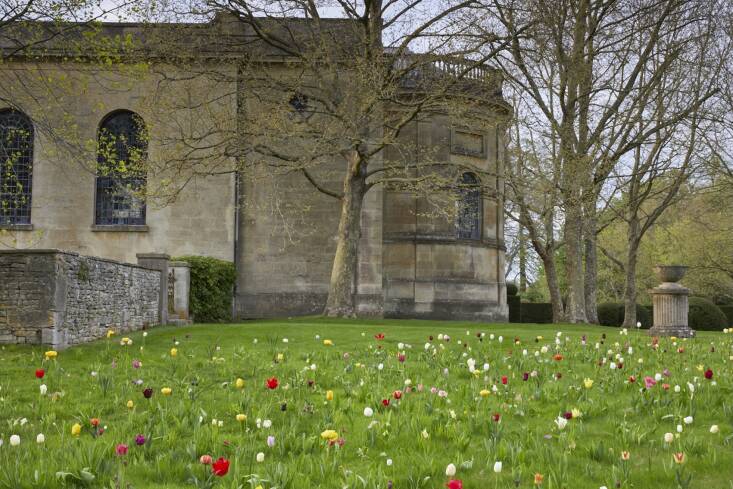
Because there aren’t many constructed gardens close to the house, tulip meadows are a way of bringing creative gardening into the landscape. They are spread out in the Church Grass, the Dog Graves, and the Shell Garden—a walled garden with fruit trees and a fountain made from three carved shells fixed to the the wall.
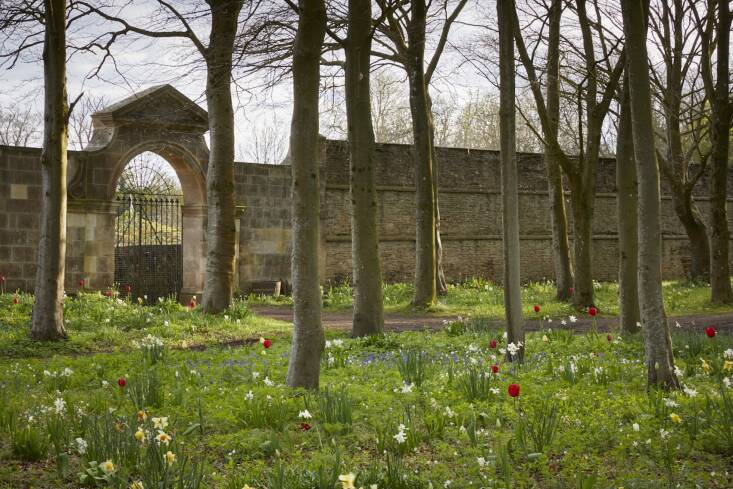
“What I really like about tulips,” concludes the Duchess, “is that you can play around a bit, and be more nimble in displays and design.”
See also:
- Confessions of a Tulip Addict: Britt Willoughby on the Appeal of Cultivating Super-Rarefied Tulips
- How to Grow Tulips That Come Back Year After Year, With Polly Nicholson
- Gardening 101: Growing Tulips the New Dutch Way



Have a Question or Comment About This Post?
Join the conversation