Icon - Arrow LeftAn icon we use to indicate a rightwards action. Icon - Arrow RightAn icon we use to indicate a leftwards action. Icon - External LinkAn icon we use to indicate a button link is external. Icon - MessageThe icon we use to represent an email action. Icon - Down ChevronUsed to indicate a dropdown. Icon - CloseUsed to indicate a close action. Icon - Dropdown ArrowUsed to indicate a dropdown. Icon - Location PinUsed to showcase a location on a map. Icon - Zoom OutUsed to indicate a zoom out action on a map. Icon - Zoom InUsed to indicate a zoom in action on a map. Icon - SearchUsed to indicate a search action. Icon - EmailUsed to indicate an emai action. Icon - FacebookFacebooks brand mark for use in social sharing icons. flipboard Icon - InstagramInstagrams brand mark for use in social sharing icons. Icon - PinterestPinterests brand mark for use in social sharing icons. Icon - TwitterTwitters brand mark for use in social sharing icons. Icon - Check MarkA check mark for checkbox buttons.
You are reading

Before and After: From Yard to Garden, London Edition

Search

Before and After: From Yard to Garden, London Edition

January 30, 2026

Susanna Grant is a garden designer and co-director of Care, Not Capital, with the irrepressible John Little (we wrote about him here). With help from “lots of excellent gardeners and ecologists,” they offer a free program that helps to equip trainees with the skills needed for “modern gardening.” Susanna explains: “The main idea is shifting the emphasis and some of the budget away from hard landscaping and infrastructure towards planting, habitat creation—and gardeners.”

This little yard in North London was transformed by Susanna for a like-minded client, who had already successfully campaigned with his Islington neighbors to get the local authorities to install some planters on a sad stretch of sidewalk. He asked Susanna to make a wildlife garden there; then asked her to help them with his own disused backyard.

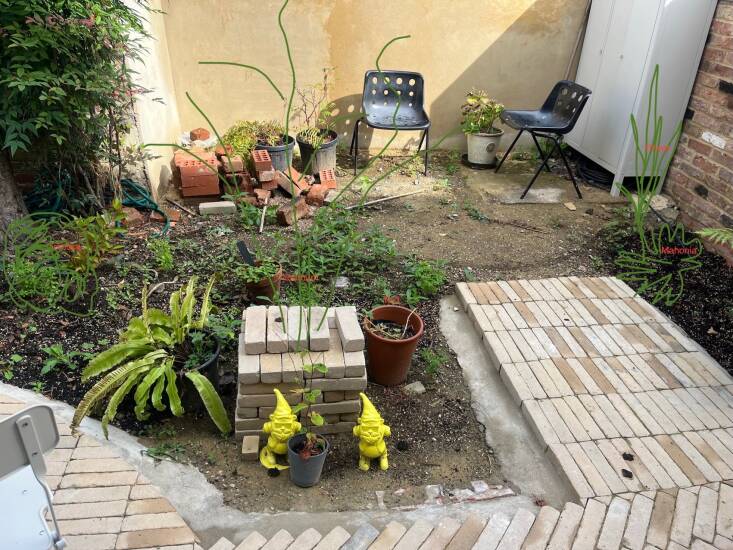
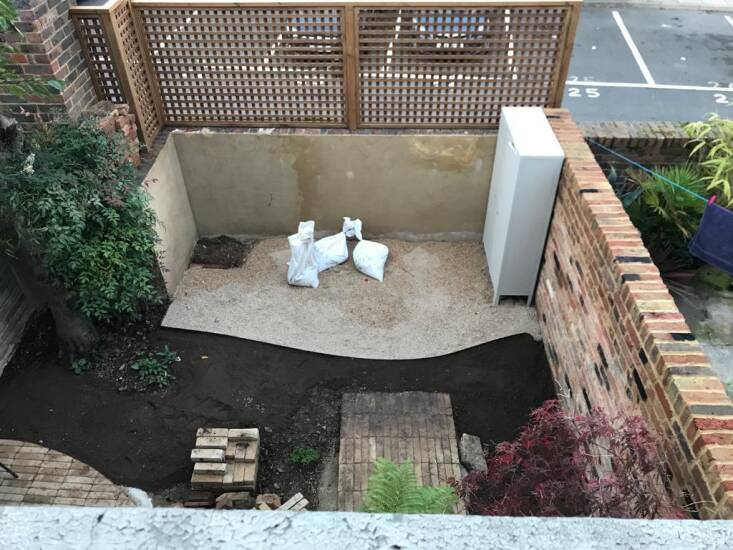
Let’s take a closer look at the transformation:

Photography by Susanna Grant.

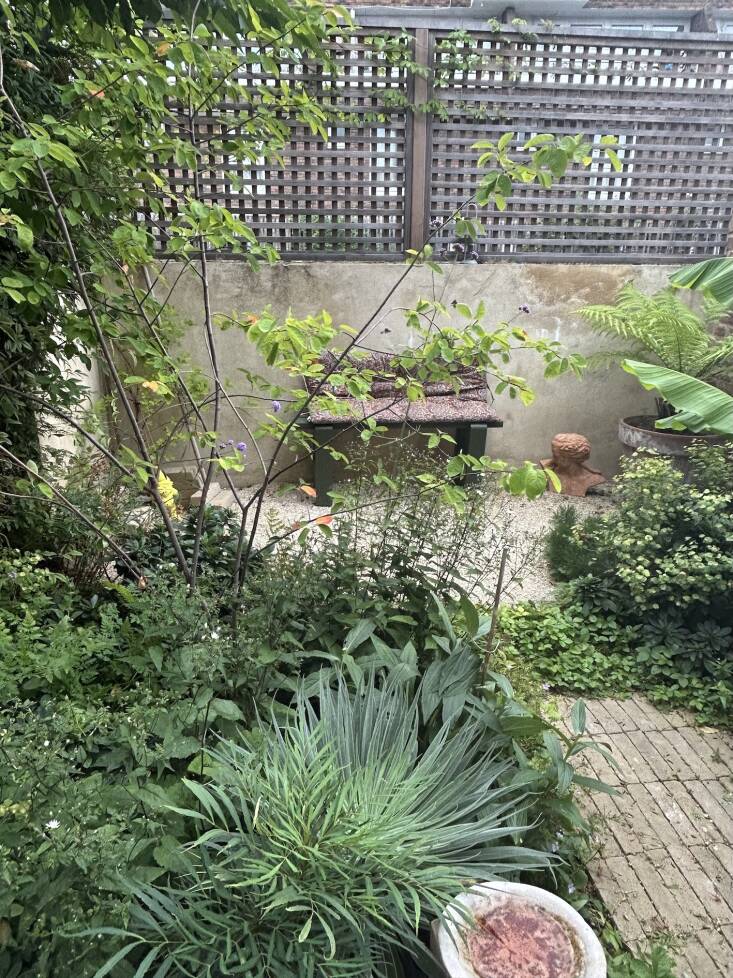
Above: The more planting, the bigger a space can look. “It was a tough brief as the owner wanted interesting plants: lots of planting plus room. I think it shows what you can fit in a space.”
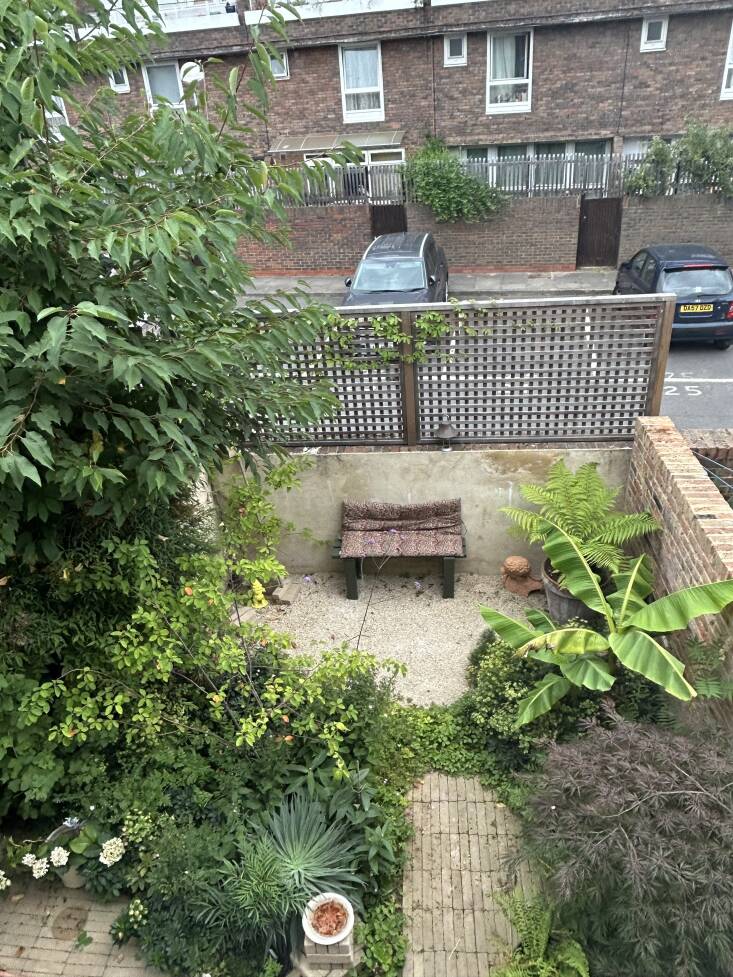
Above: “The back garden is tiny, north-facing and quite boxed in,” says Susanna. “It backs onto flats, and rather than try to pretend they weren’t there, I wanted to ensure the view from the house focused the eye on the planting. Not up and beyond.”
Above: “The client wanted interesting plants.” 

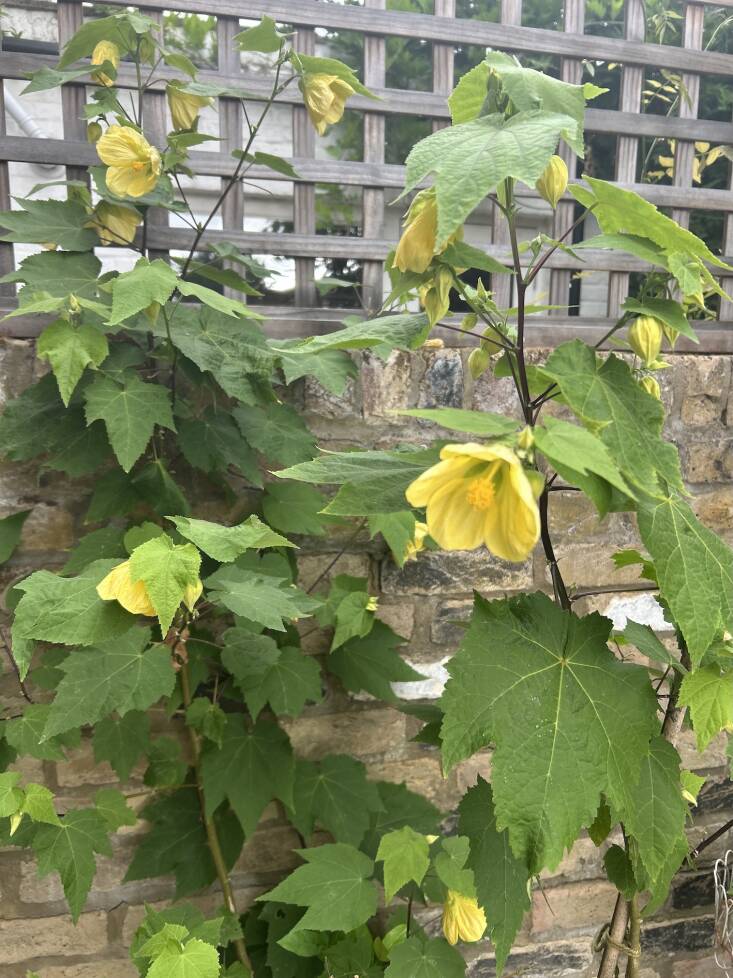
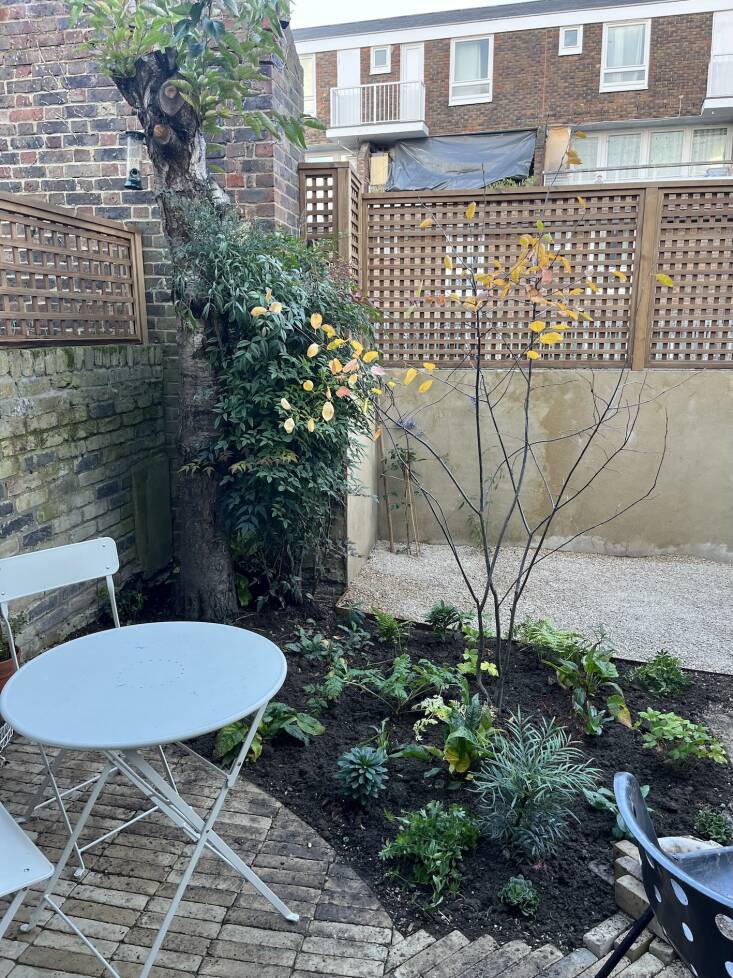
“Although my scheme was predominantly woodland because of the aspect, there was an existing banana, Nandina domestica (heavenly bamboo) and an Acer palmatum which I needed to work around. I added an Abutilon ‘Canary Bird’ right next to the house as it flowers for most of the year and picks up on the vibe of some of the existing plants.”
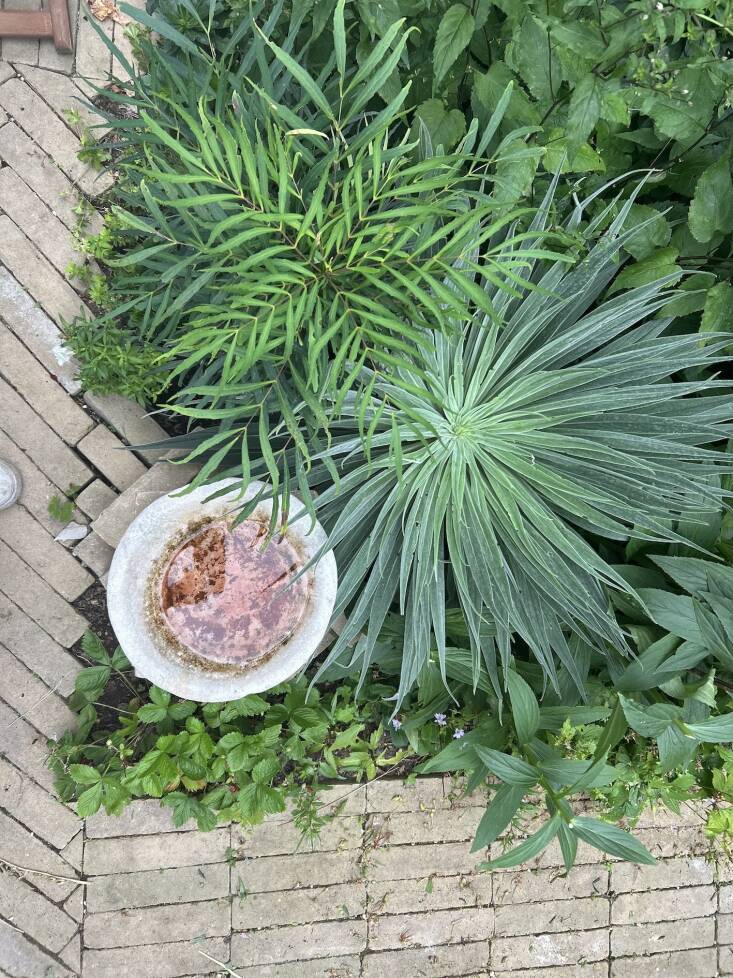
Above: Next to the water dish, an Echium wildpretii is about to shoot skywards. “The Echium wildpretii is obviously going to be massive but it will look great when it flowers.” If it self-seeds Susanna will try to move the seedlings to the communal planting beds on the street, which already feature Echium pinninana.
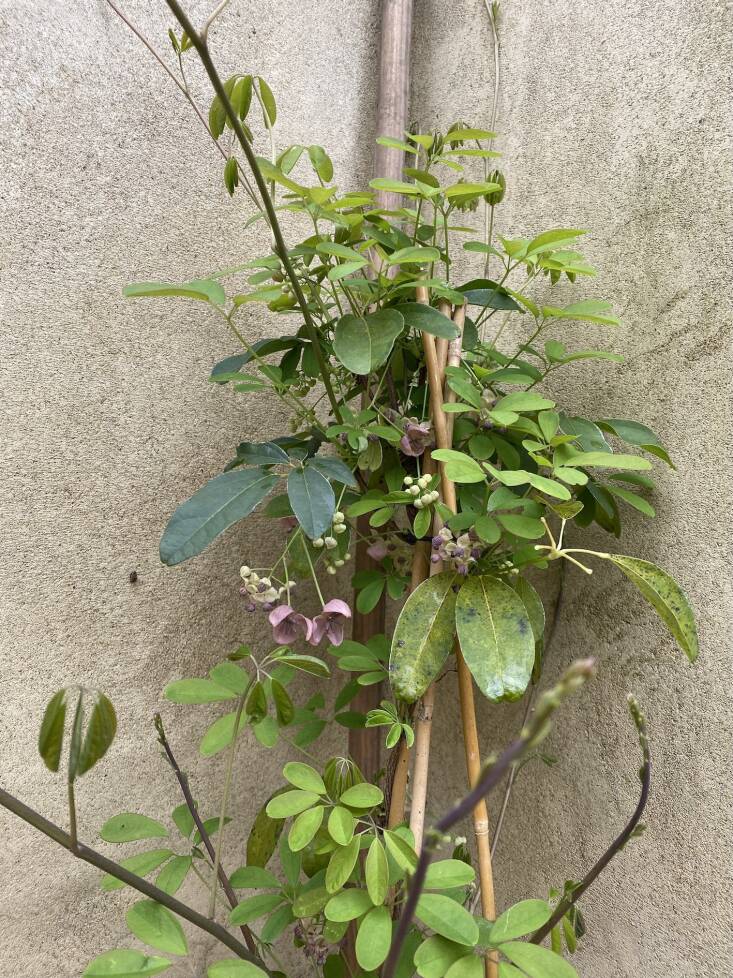
Above: In the back left corner, Akebia quinata begins to climb. In the right corner, “I’m thinking of adding a Cedrus atlantica glauca pendula [those anthromorphically droopy cedars that resemble druids]. It’s a slightly bonkers garden and I think that would work well.”
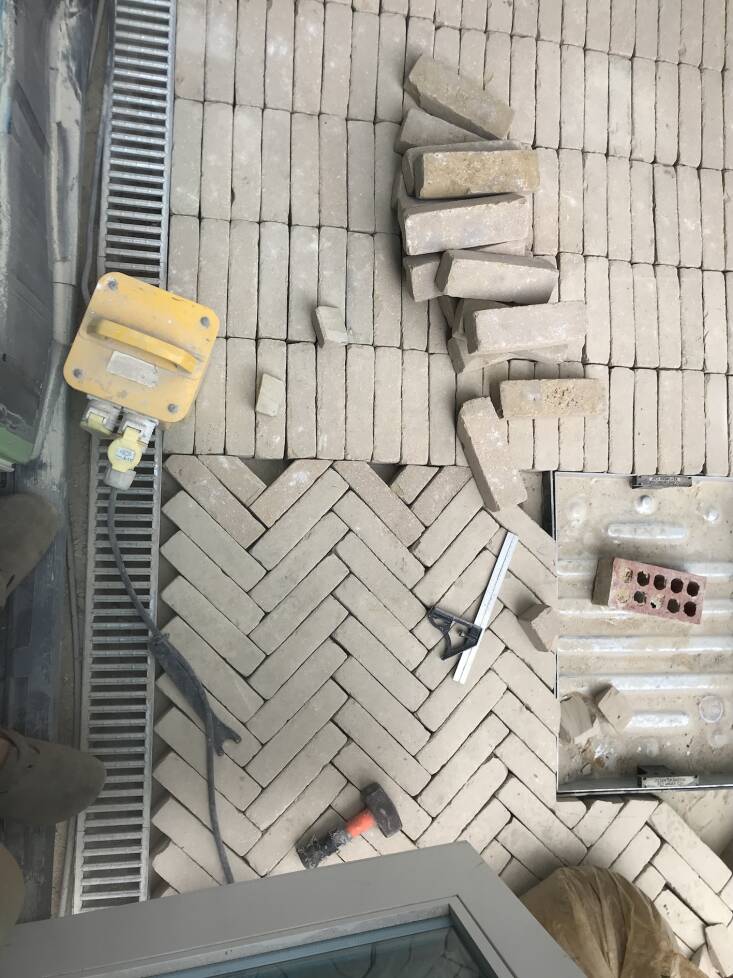
Above: Pavers, sourced from Allgreen, laid in traditional herringbone and contemporary stack bond.
Above: New bricks on the ground plane interact with the garden’s walls. The back is lime-rendered over brick, with materials from Mike Wye.
Above: The landscaping and planting were carried out two years ago, in the late fall. “The Ikea wardrobe was already in the garden and the clients contemplated using it as a tool shed but changed their minds!”
Above: “Having the planting bed cut through the space in the middle may seem counter-intuitive, but it brings the planting much closer to the house, semi obscures the boundaries, and provides two different small but functional seating areas.” 
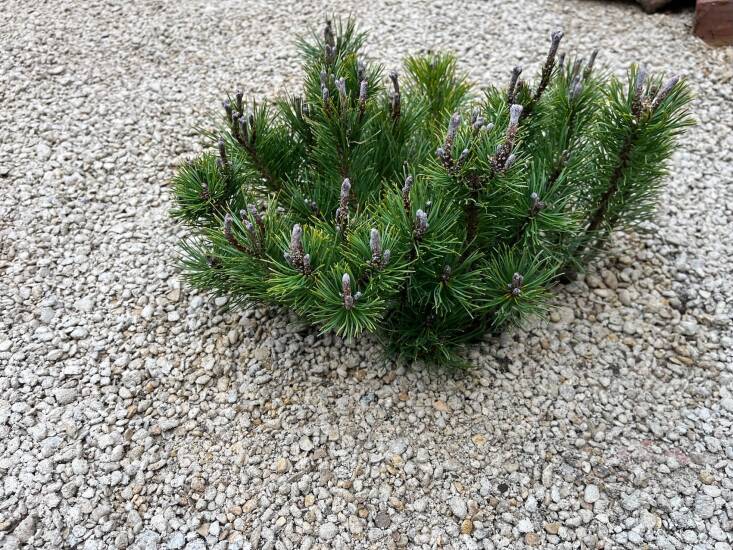
Above: “The layout also gives a sense of breathing space at the back, which I tried to emphasize by the little Pinus mugo ‘Mops’ planted straight into the self-binding gravel. There’s also a small artemisia in there that was a self-seeder from Derek Jarman’s garden, when I was there for a working weekend.”
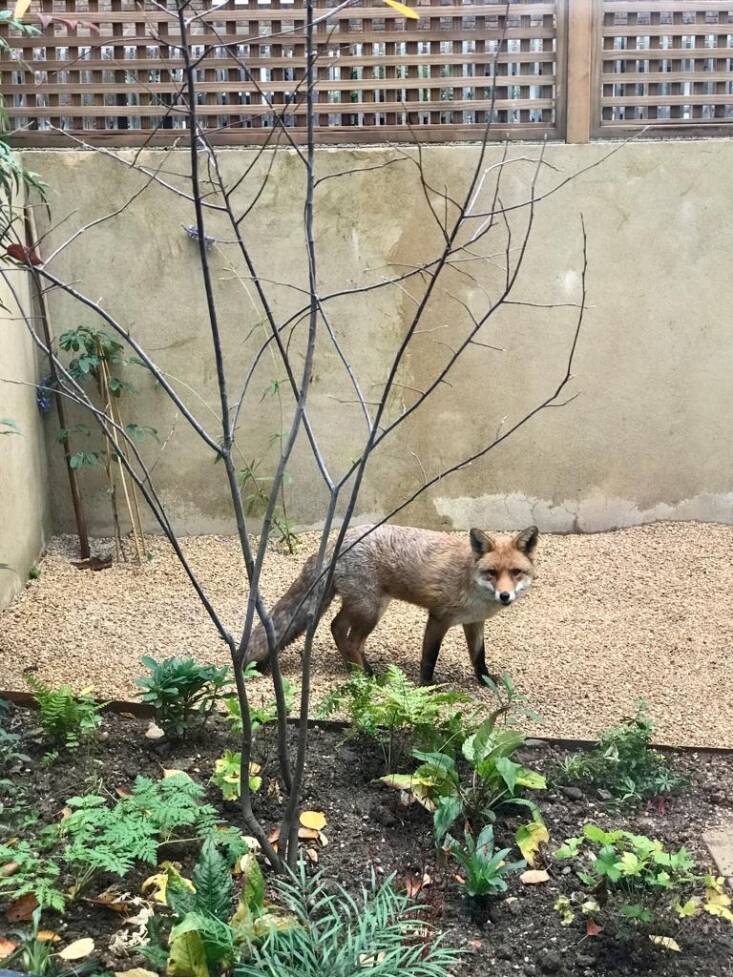
Above: However small, no urban garden is complete without a fox. “The skinny amelanchier (shown here) is good for some seasonal interest and height. Although it looks like it’s planted with predominantly foliage plants in the pictures, there are lots of Digitalis lutea, Geranium nodosum, Valeriana officianalis, Eurybia divaricata and Myrrhis odorata.” For groundcover: Gallium odoratum, Fragaria vesca and Saxifraga x urbium.
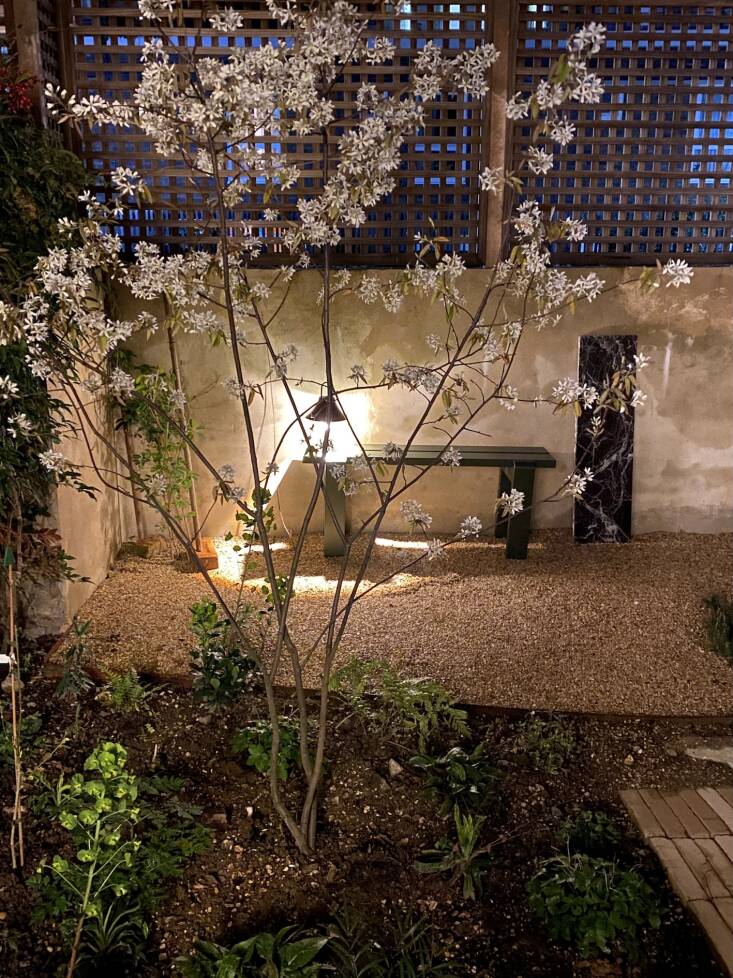
Above: The amelanchier, or serviceberry, in spring.

And what do the owners think? “They love it as the view from the ground floor is straight onto the garden, and it’s always changing. They now use it in all seasons.” Susanna’s clients generally find her on Instagram or via word of mouth. Don’t be confused by her company name, Hello There Linda, originally named on a whim after a friend’s dog.

See also:

(Visited 92 times, 92 visits today)
You need to login or register to view and manage your bookmarks.

Have a Question or Comment About This Post?

Join the conversation

v5.0