

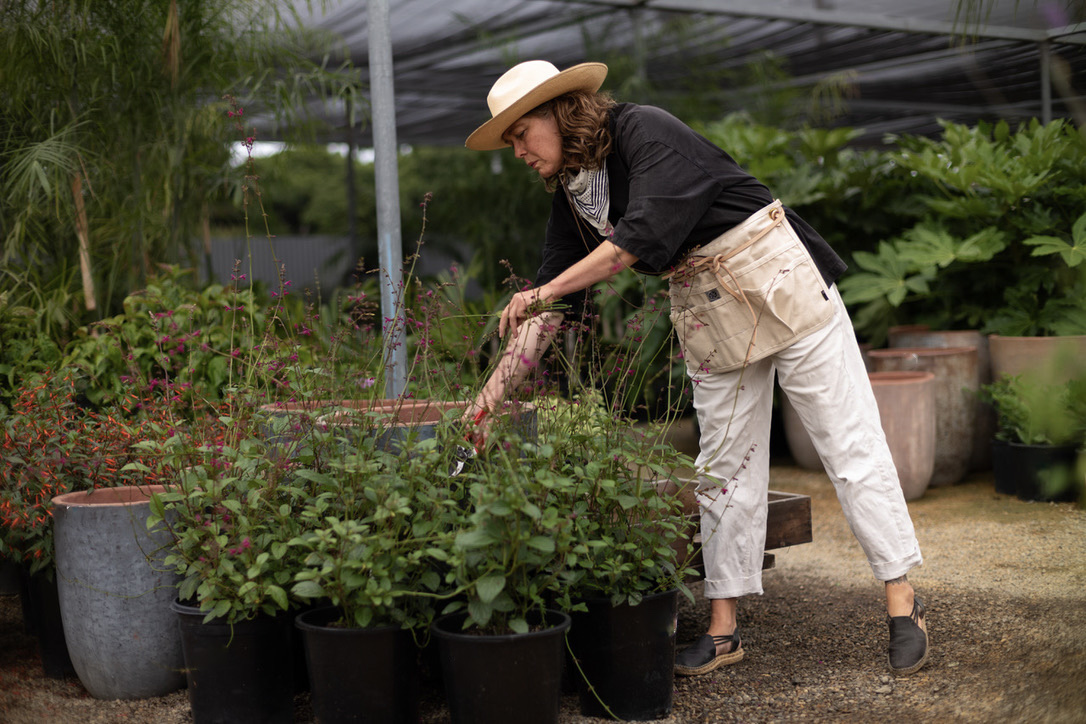
This is part of a series with Perfect Earth Project, a nonprofit dedicated to toxic-free, ecological gardening, on how you can be more sustainable in your landscapes at home.
“I have a nightmare where I’m in the afterlife dragging around every plastic pot I ever sold—for eternity,” says Flora Grubb, the co-owner of Flora Grubb Gardens in San Francisco and Los Angeles. “Plastic pots are a really troubling reality of our industry.” According to the Association of Professional Landscape Designers (APLD), 95 to 98 percent of plastic plant pots end up in landfills. And yet 81 percent of global consumers want environmental solutions.
There are economic reasons behind this. Plastic pots cost mere cents to produce while biodegradable materials cost more. They also have a relatively short shelf life. Clay pots (which is what some nurseries used in the not-too-distant past) can cost dollars to produce. They also weigh more than plastic and can break. Easy to ship, plastic is cheap, lightweight, and durable—too durable. It can take up to 500 years to decompose, breaking down into harmful microplastics.
“There is cause for optimism. The industry is well aware that consumers don’t want single-use plastic,” says Eliot A. Wadsworth, owner of White Flower Farm in Connecticut. “And I believe we’ll get to a better status quo in the near future.” But we’re not there yet. Here are some things we can do right now.
Raise awareness.
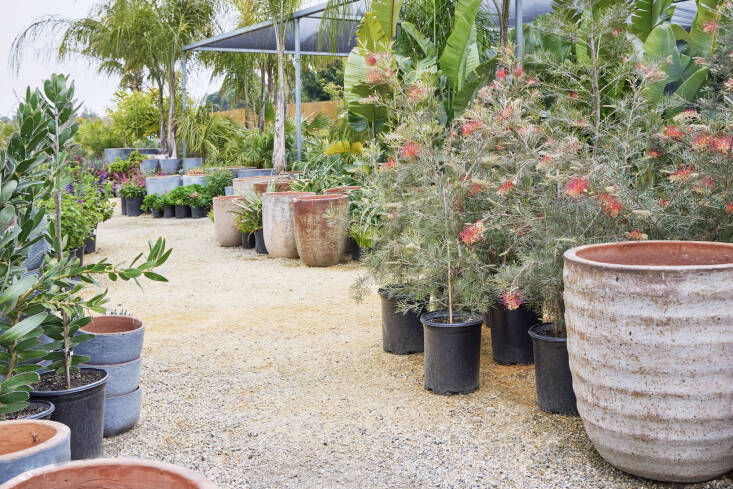
Sign up for APLD’s Healthy Pots, Healthy Planet initiative. Their mission is to “reduce the use of petroleum-based plastic plant containers by advocating for and promoting sustainable alternatives.” Then start talking to your nurseries. “One thing I would emphasize is for folks to inquire at their local garden centers about their plastic use, recycling options, and/or alternative materials,” says Alexis Doshas, the nursery manager of Native Plant Trust’s Nasami Farm Nursery in Massachusetts. “Show demand for plastic reduction, reuse, recycling.” Consumers hold the power to create change.
Request biodegradable alternatives.

There are a number of compostable pots on the market, made from a range of materials from cow manure to newspapers to bioplastics. Some can be planted directly into the ground while others require the intense heat of industrial composters to break down. Since biodegradable pots decompose with sun and water, they can fall apart after extended use. However, nurseries are making them work with certain types of plants and they are the most sustainable option we have now.
At New York City’s The High Line, gardeners are potting up their garden-propagated plants in Cowpots, biodegradable containers made from endlessly renewable cow manure, for their spring “Rooted in Resilience: A High Line Plant Market” sale this May (check thehighline.org for more details soon). At Nasami Farm Nursery, Doshas uses a combination of coir and Ecogrow pots, which are made from newspaper, for quick-growing annuals like partridge pea and lupines. Since you can plant them directly into the ground, these are especially helpful for plants, like lupines, which don’t like their roots disturbed, she says. White Flower Farm has been using Fertilpots, made from the natural fibers of spruce trees, for some plants at their nursery. And native plant wholesale nursery NorthCreek uses Packnatur biodegradable netting for their plugs. (Consumers can purchase them through mail-order sites like Izel Native Plants.) “It has been such a positive change for us that we are happy to pay a little extra for it,” says Josiah Gregory, their customer service and sales support manager. Ask your local nursery to swap plastic for these alternatives when they can.
Encourage reuse.
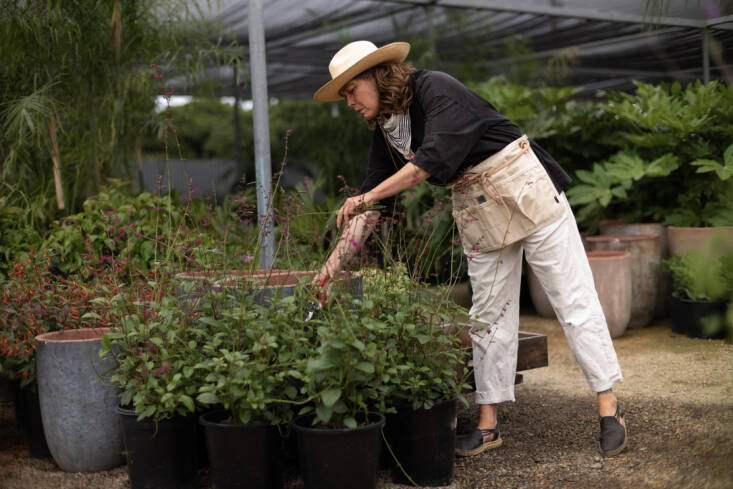
Shoppers: here’s a call to action. Talk to your nursery and see if they will accept pot returns. Then actually return them. “We happily take back plastic containers to reuse,” says Grubb, as will all the nurseries mentioned in this story. “Although we don’t actually see very many of them from customers.” Nurseries can clean, sanitize, and reuse them, extending the pot’s life a bit. Or skip the return trip and see if you can BYOP (Bring Your Own Pot) when you purchase so you can simply leave the plastic pot with them. Perfect Earth Project Founder Edwina von Gal recalls plant sales in England where the gardens encouraged people to leave the pot and wrap their plants in newspaper to bring home. Check with your nursery if you can wrap your plant in newspaper or burlap to bring home.
Ask about real recycling.

Many municipalities won’t accept black plastic nursery pots to recycle. (And even when they do, many of these just end up in the landfill anyway.) There are several companies around the country that will actually recycle these pots to make new ones. Nasami Farms teams up with a larger nursery in New Hampshire, bringing them the pots they can no longer use at the nursery. When there is critical mass to fill a truck, Michigan-based East Jordan Plastics will send a truck to pick up the stash so they can be recycled to make more pots. Healthy Pots, Healthy Planet initiative lists several other companies that offer this service. But this is only a partial solution. According to the APLD, “Plastics generally do not get recycled more than one or two times before the polymers begin to break down.”
Support innovation.
With all the technology we have at our fingertips—AI, 3-D printers creating vessels out of clay, and alternative materials using natural substances like mushrooms and seaweed—we must be able to come up with something. Grubb wonders if there is a university or company that would sponsor a design contest to encourage a new kind of nursery pot or pot system that can put an end to our reliance on plastic.
“While raising awareness is great, we need to do more,” says Richard Hayden, the senior director of horticulture at The High Line. “We need to take action. Nurseries should. Consumers should. Let’s find an answer.”
See also:
- 5 Quick Fixes: Plastic-Free Ways to Start Seeds
- Quick Takes With: Flora Grubb
- Quick Takes With: Richard Hayden
- Trend Alert: Hyper-Local Native Plant Nurseries





Have a Question or Comment About This Post?
Join the conversation