

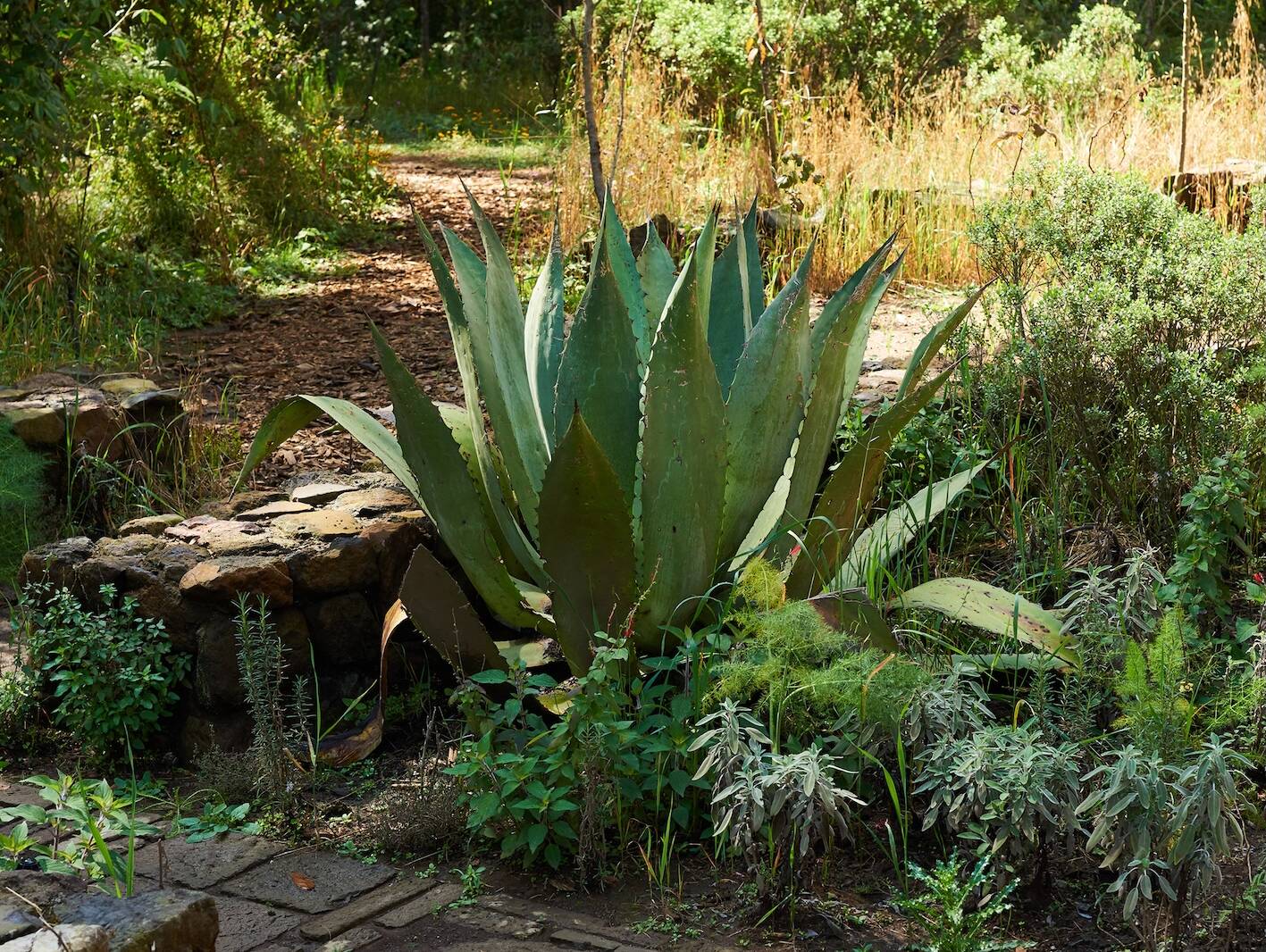
The word solastalgia refers to loss of the familiar, the sense of missing home even though you still live there. It could be caused by dismay over the way your neighborhood with slightly ragged front gardens has been gentrified, with greenery traded for car ports. More commonly, it describes a reaction to environmental degradation caused by climate change, made more distressing because it’s right there, in the place you call home.
In Gardens That Can Save the World, publishing in the U.S. next month, British landscape designer Lottie Delamain shows how good things can happen for the environment when people are more imaginative in their approach to their immediate surroundings. These small actions have a cumulative effect. In the book, Lottie documents 65 international gardens and green spaces, with varying experiences of climate change. Born out of local concerns, they are contributing to what Lottie describes as “a global tapestry of positive change,” which, she notes, is well under way.
One of our favorite land interventions in the book is in Mexico; its response to drought is persuasively beautiful. Let’s take a closer look at The Ruins, in Valle de Bravo, designed by Estudio Ome.
Photography courtesy of Estudio Ome.
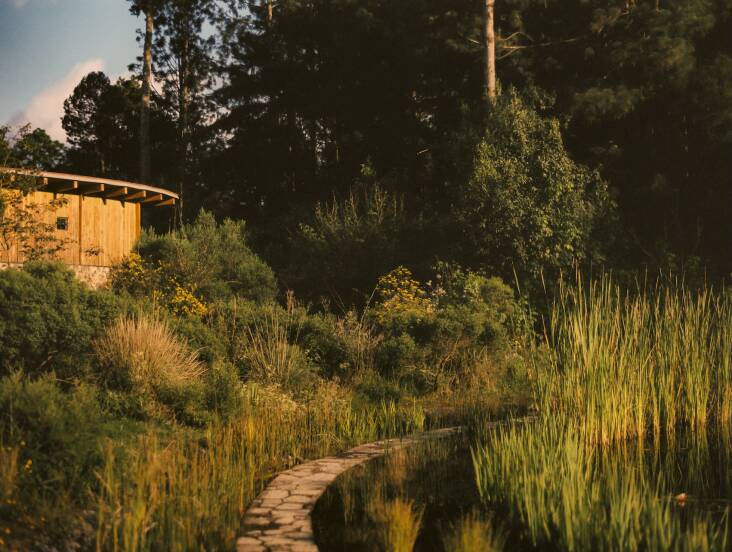
The residential garden is the work of Franco-Mexican landscape design duo Estudio Ome. The principal protagonists here are female, with Hortense Blanchard and Susana Rojas Saviñón of Estudio Ome collaborating with architects Rozana Montiel and Claudia Rodriguez. The project’s “mastermind,” as Lottie describes him, is the regenerative land developer, Alberto Kritzler. The garden’s circles-centered design was inspired by Moray, an ancient farming landscape in Peru made by the Incas. It features indented, concentric circles that create different microclimates as the ground gets deeper at each level.
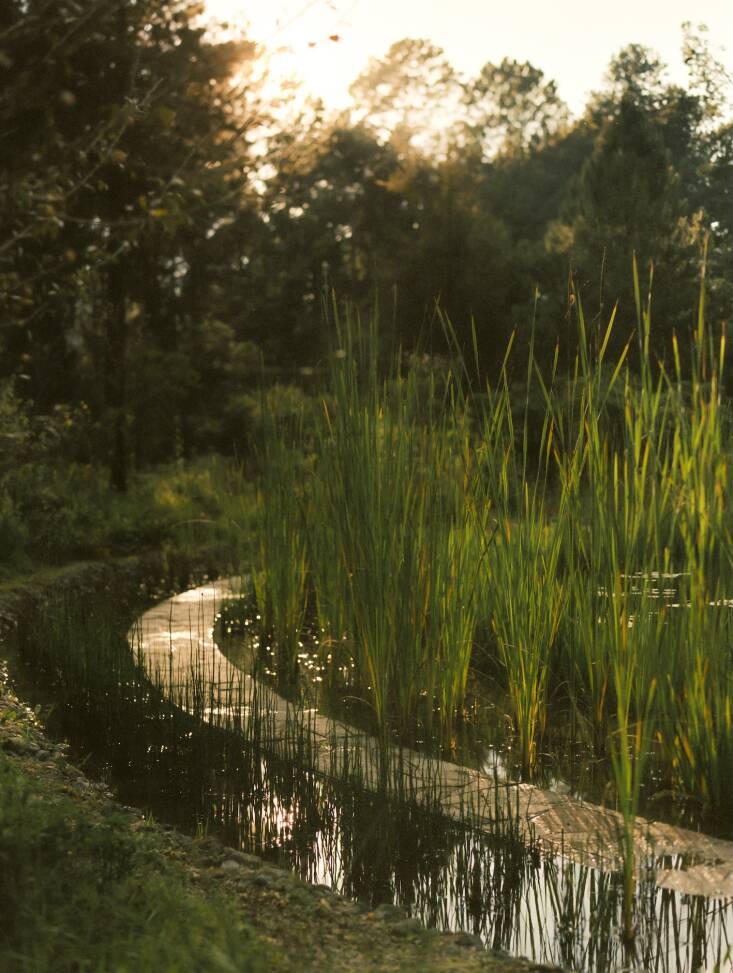
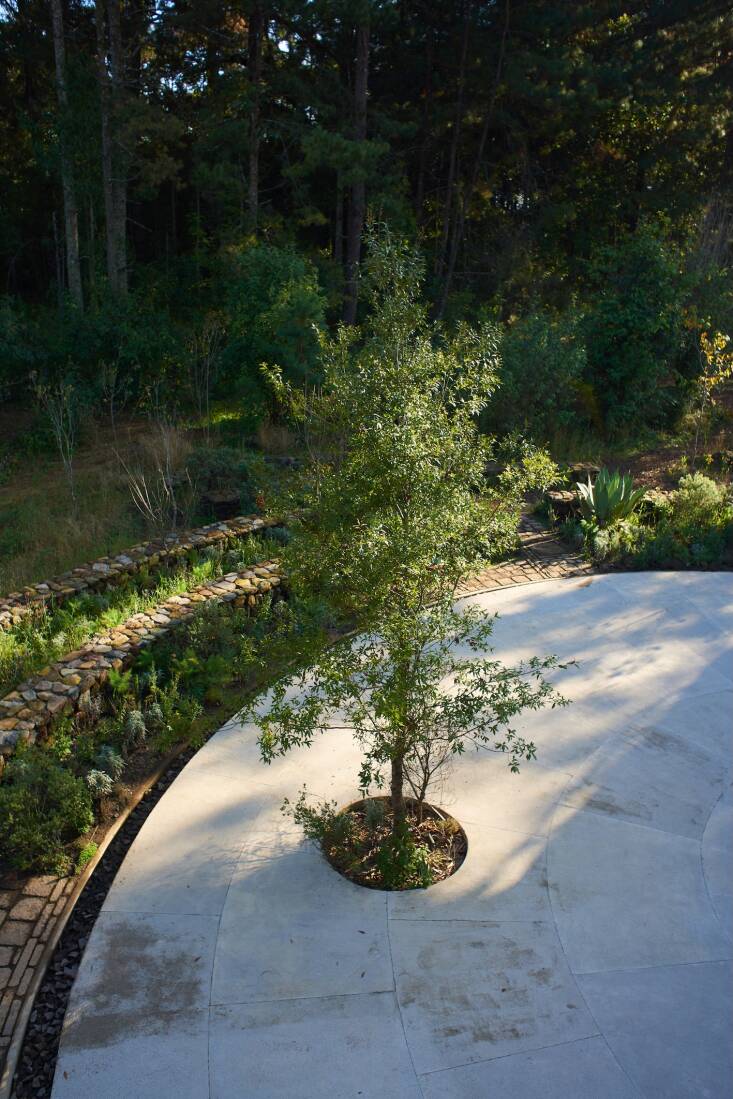
Situated on an ecological reserve 100 miles from Mexico City, The Ruins was designed with water and stone to look as ancient as Moray, and to be just as functional. In the rainy season, the round pool garden fills up, acting as a cistern for the rural collective based there. As it drains, lower water gardens are revealed, with their own beauty. It can be used for swimming at every stage; the lowest one just involves a bit more climbing. “Like ripples, the lake features circular paths that slowly emerge during the dry season,” says Estudio Ome. They wanted to examine how good a landscape could look, post-evaporation.
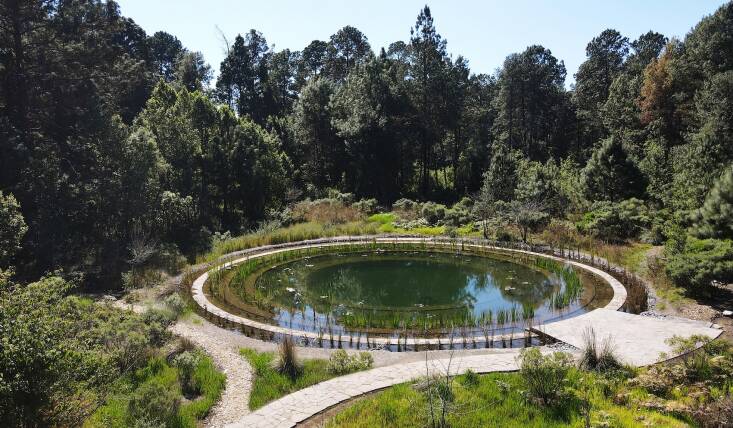
Hidden in a cloud forest 7,000 feet above sea level, The Ruins is part of an ecological reserve, Reserva Peñitas, which has water autonomy across the site and in this particular garden. Although the land is not irrigated, the soil is richer because the planting is regenerative: berrying shrubs and fruiting trees help to nourish the soil, promoting the growth of further water-storing vegetation. Blueberries are natural companion plants to Andean alder, both preferring slightly acidic soil. Biodiversity is increased with native and migratory birds using the site.
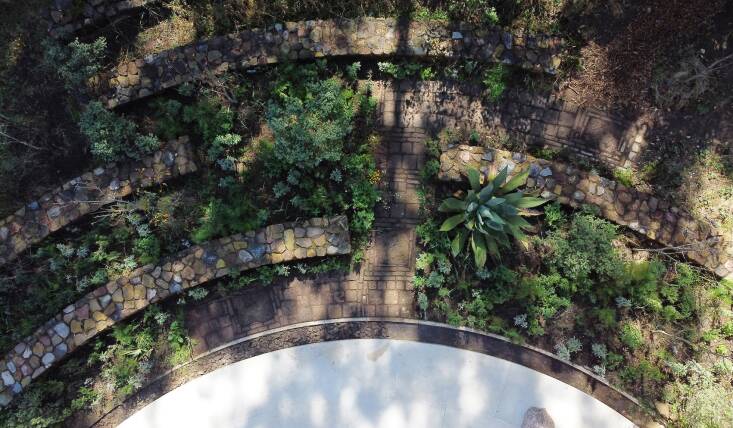
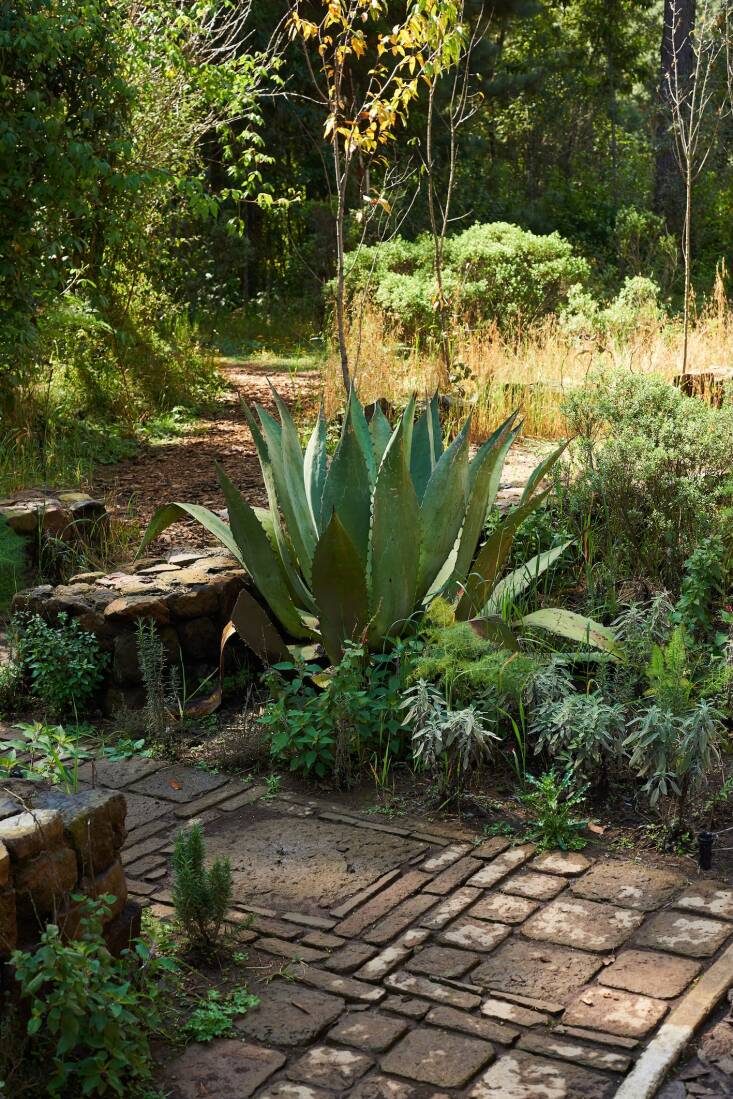
The circular water garden is overlooked by another circle, a semicircular house completed with a semicircular terrace. The rounded walls and paths between the house and pool garden were placed carefully with hand-cut stone, giving an impression of antiquity and encouraging their cracks and crevices to be inhabited by flora and fauna. The effect would be like finding a ruin-garden in the forest.
“Today’s gardens and green spaces are at the vanguard of positive change, modern-day crucibles for ideas and innovation,” writes Lottie. “At last, gardens are being championed for what they can do—reverse the biodiversity crisis, save water, prevent drought…” the long list continues. Chapters are titled Repair, Empower, Nourish, Heal and Reimagine.
Gardens That Can Save the World by Lottie Delamain is published on April 14 in the US by Thames & Hudson.
See also:
- Ask the Expert: Regenerative Organic Gardener Emily Murphy on How to Rewild Your Landscape
- Let It Grow: Re-wilding and Regenerating Denton Reserve
- Trend Alert: Beautiful Low-Impact Pathways



Have a Question or Comment About This Post?
Join the conversation