

Catkins and cones are the blooms of trees and shrubs whose flowers are sorted in a binary fashion—male and female. They are the quiet pleasure of those who notice botanical details, and they reward close attention. Many catkins and cones appear weeks, even months, before the loud shouts of forsythia, the effusion of cherry blossom, and the waxy confectionary of magnolia. Some catkins are as familiar as spring itself (hello, pussy willow), while others require pause to identify (sweetfern catkins, swamp cypress cones).
Here are some of our favorite catkins and cones, to grow or to contemplate on a spring walk.
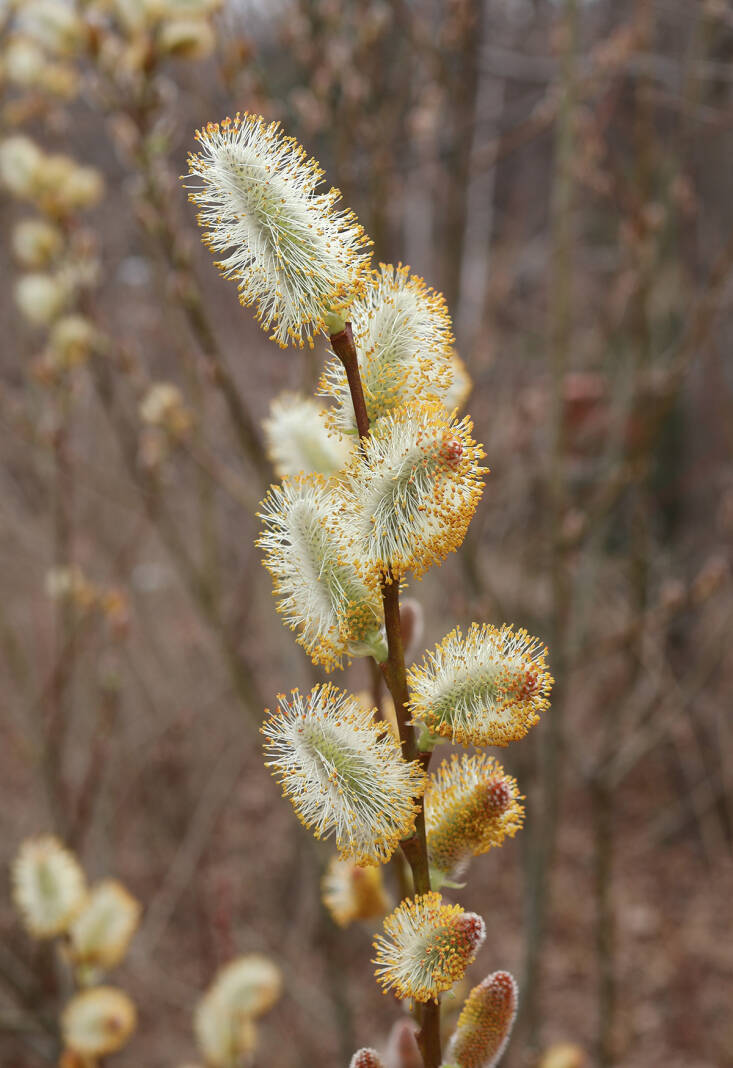
Pussy willows belong to the Salix, or willow genus. (Salicylic acid, from which aspirin is derived, takes its name from the genus, where it was first identified.) Male and female flowers appear on different plants, and it is the males that produce the showiest pussy willow catkins.
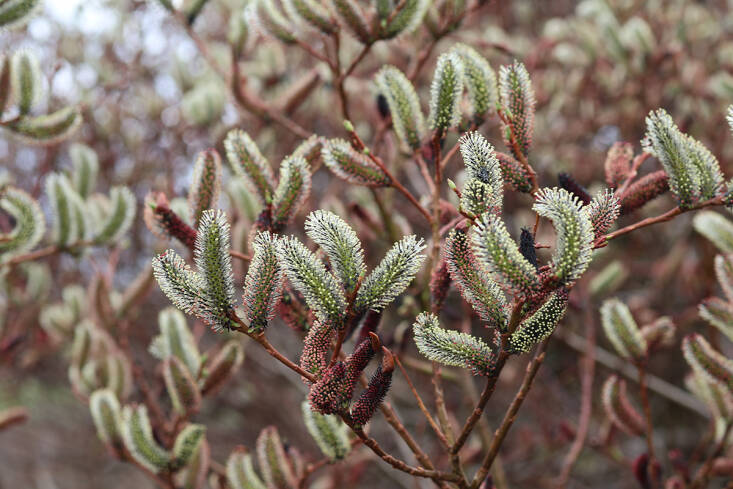
A dramatic iteration is a cultivar of an East Asian pussy willow, Salix gracilistyla ‘Melanostachys’, whose catkin buds are black, then an intermediate burgundy, before heir anthers ripen and lighten with pollen against a rich green background within each catkin. The effect, with thousands, is dizzyingly mesmerizing.
Tip: Do not plant pussy willow where their shallow and very dense roots can creep into and disrupt septic fields, foundations, water lines and paving. Give ’em room.
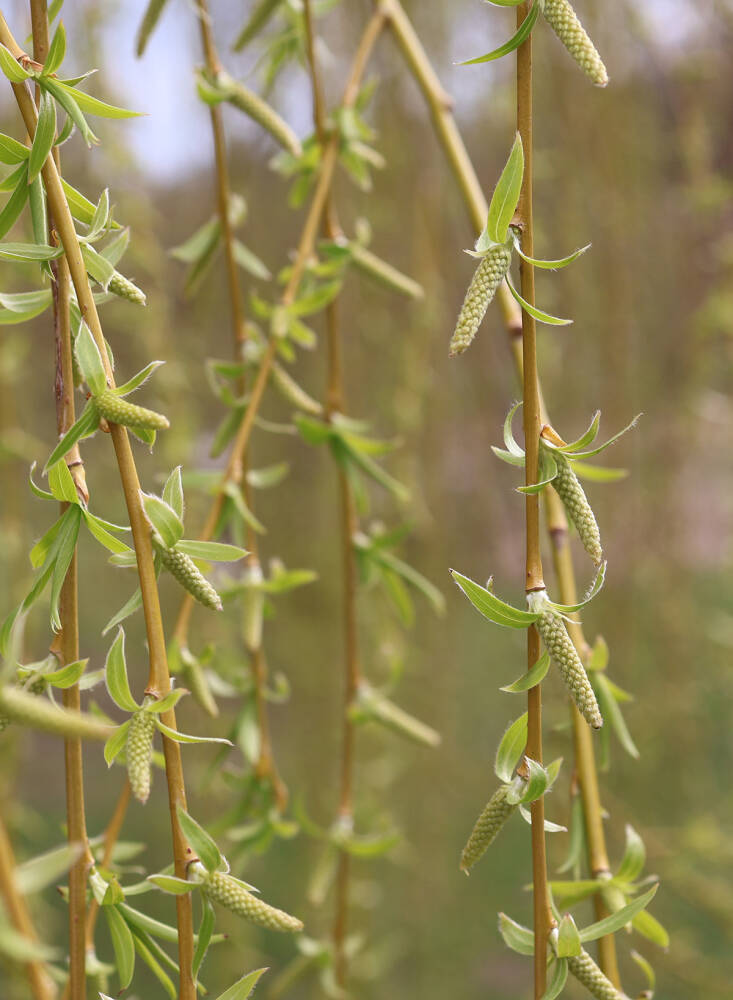
While the flowers of weeping willow, Salix baylonica, are usually described as “nondescript” their catkins are vividly pretty in early spring, their lime hue a shade brighter matching the tree’s whippy branches and a shade lighter than its new leaves.
Like pussy willow, non-native weeping willow roots will head towards water, which is fine if that is a pond or stream, but destructive when it is sewer or water line.
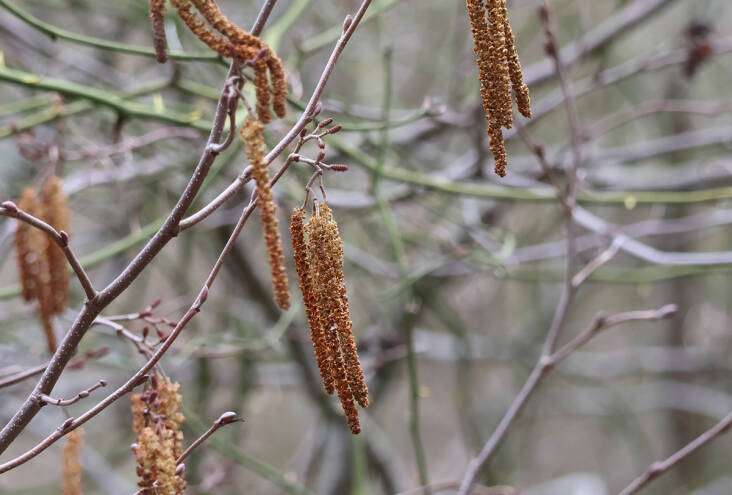
If your habit is to walk in cold-climate wetlands, you may have met clonal thickets of alder (Alnus species), crowding stream and pool edges. Before the native landscape has woken into green, alder catkins are a coordinated ballet in the lightest breeze. The long catkins are male, while the petite, redder catkins are female, on the same plant.
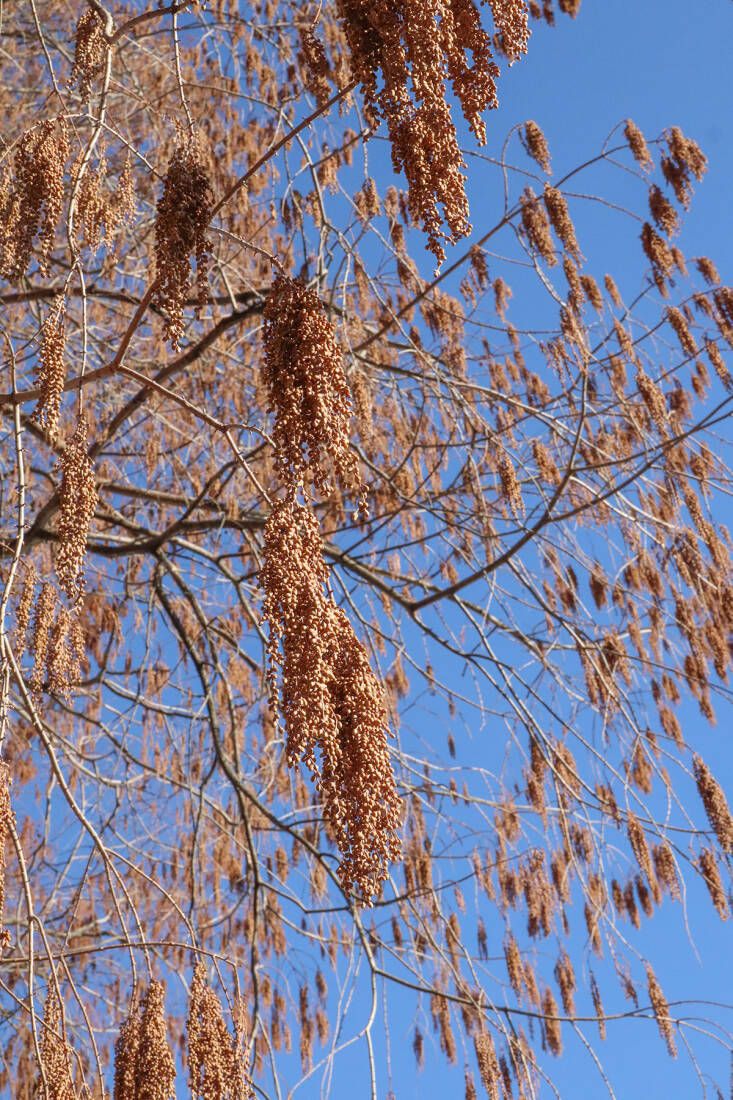
In a light breeze, pendulous catkins and cones flow in unison, as male flower clusters slowly ripen to shed pollen, which is usually wind-dispersed.
Towering Dawn redwoods (Metasequoia glyptostroboides) are festooned with male pollen cones from late winter through late spring. The tasseled clusters are packed with pollen that ripens as the weather warms, to be released and dispersed by the wind. By late summer the green female cones appear on the same tree, and mature the same season, releasing their seeds when their cones dry and split in late autumn or the following spring.
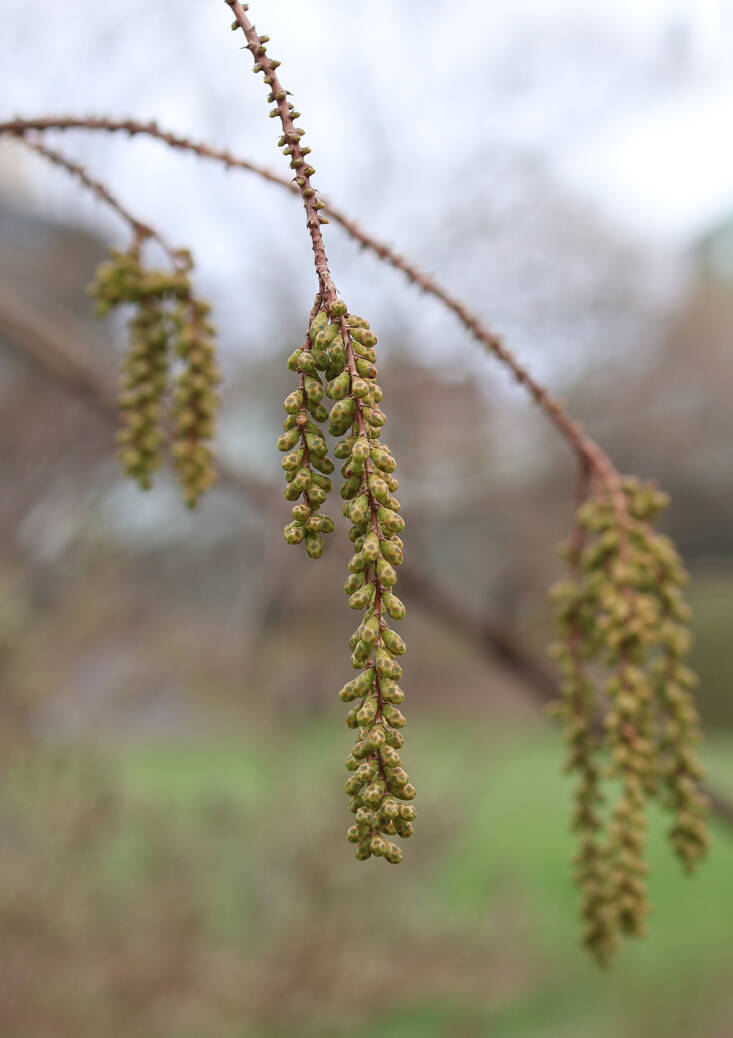
We did say subtle pleasures. Leafless in spring, pond cypress (Taxodium distichum var. imbricarium) and swamp cypress trees (Taxodium distichum) are festooned with pollen cones from winter through spring. Like Dawn redwoods, their female cones mature late the same year.
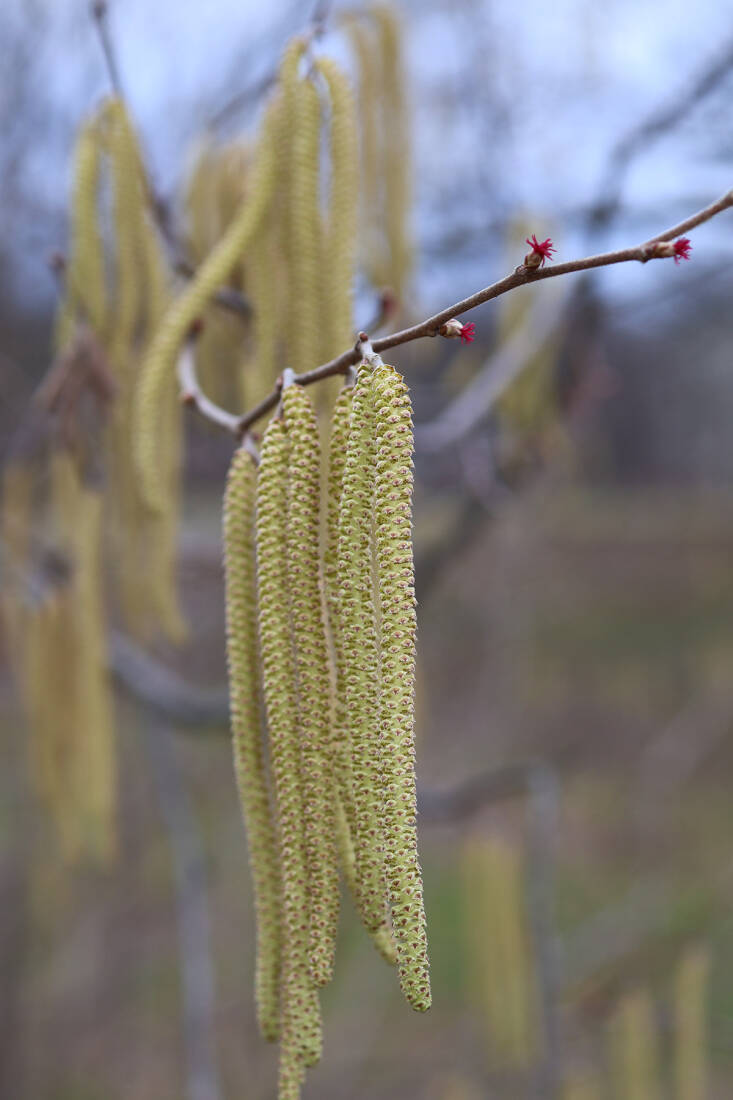
American hazel, or filbert, is Corylus americana. Its male catkins are especially long, maturing in early spring to a pale, glowing yellow beneath tiny, starlike red female flowers. You have to be within a foot of these miniature delights to notice them.
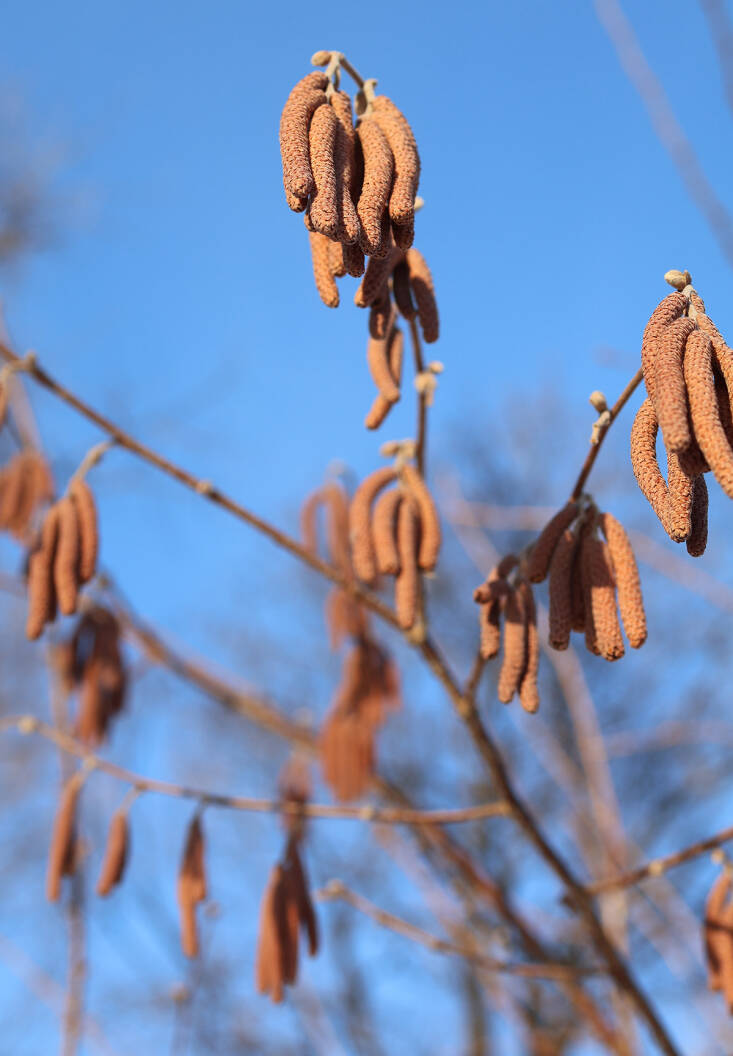
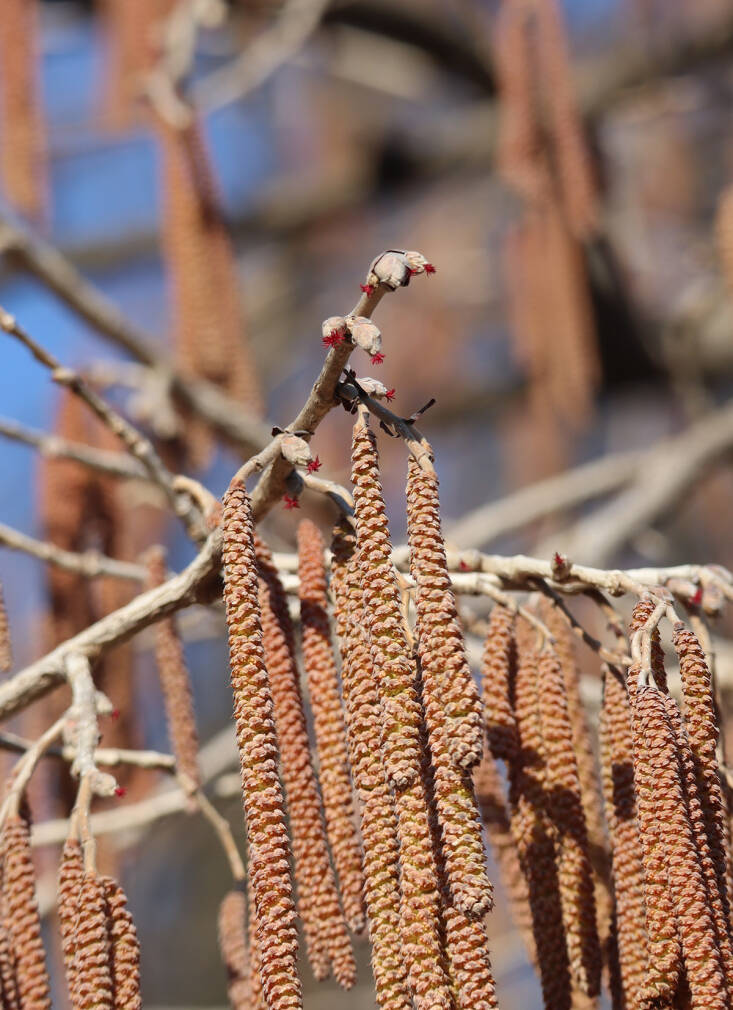
Statuesque Turkish hazel (Corylus colurna) is ornamentally interesting from the last months of winter, when its male catkins begin to form. Like American hazel, minute red female flowers appear above the catkins in early spring.
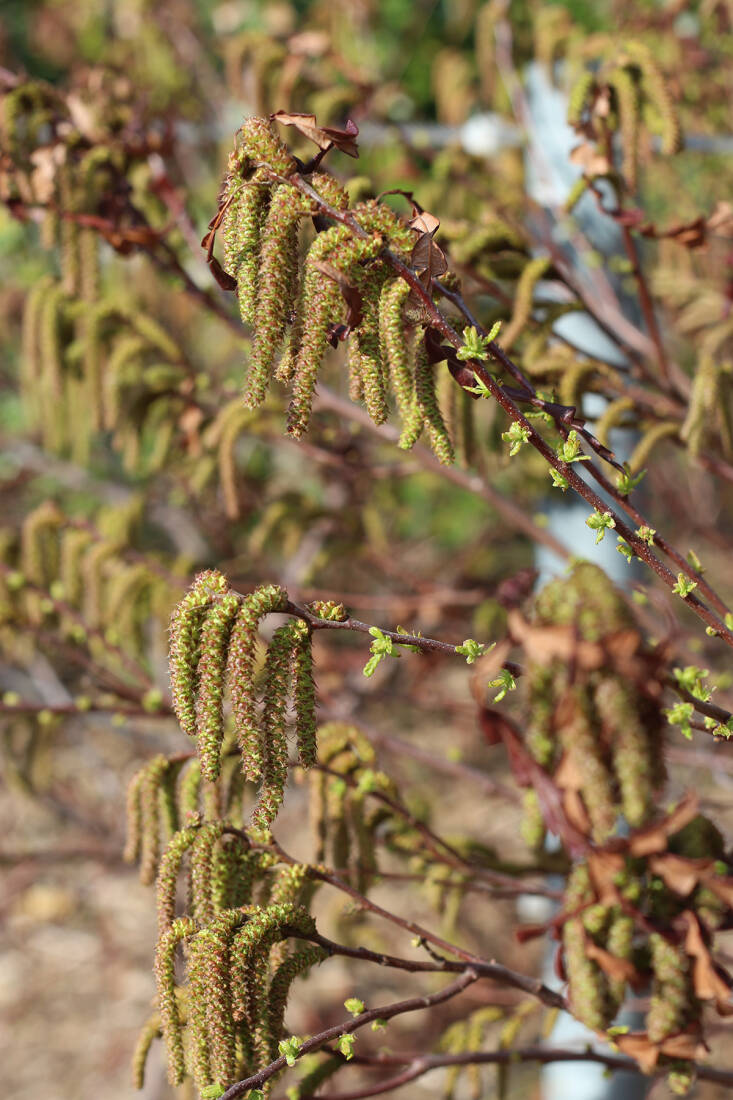
Native Comptonia peregrina is sweetfern, a small shrub with highly fragrant leaves. It bears its male and female catkins on the same plant, where they show up just before the branches leaf out. Their burlike fruit ripens in summer.
Read more: Sweetfern 101
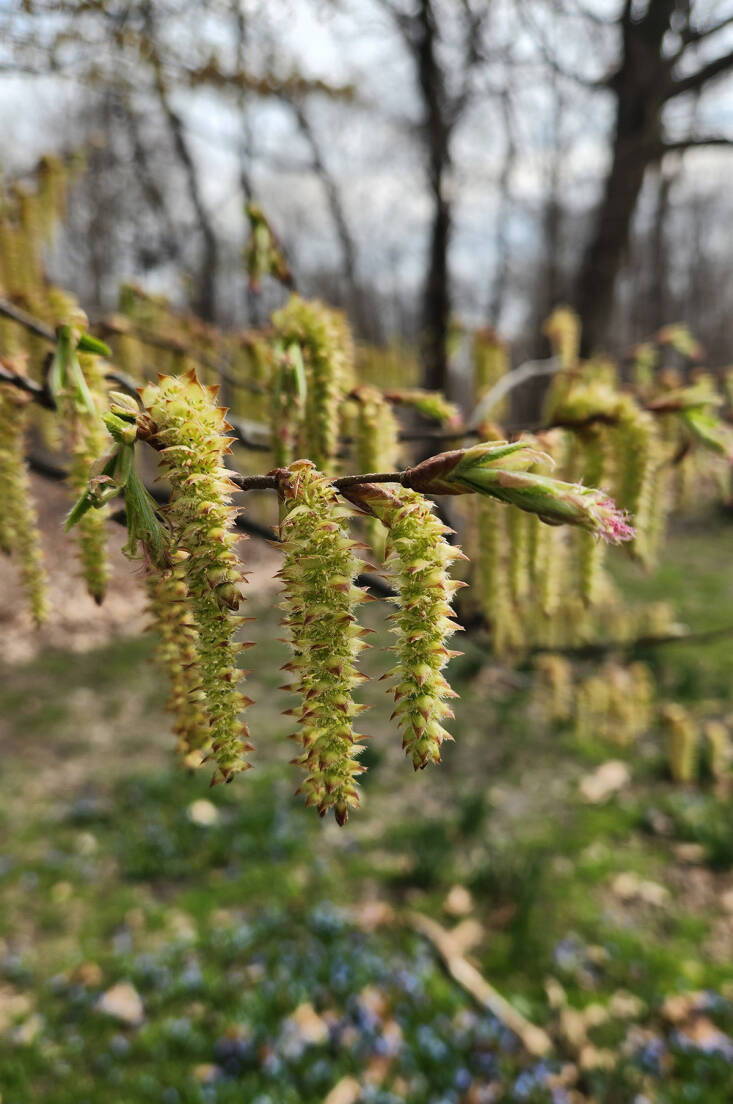
As spring progresses and nights warm, beech trees (Fagus species) begin to bloom, their small male catkins like chartreuse ornaments on bare branches. The smaller red flowers are the females, which develop into beech nuts.
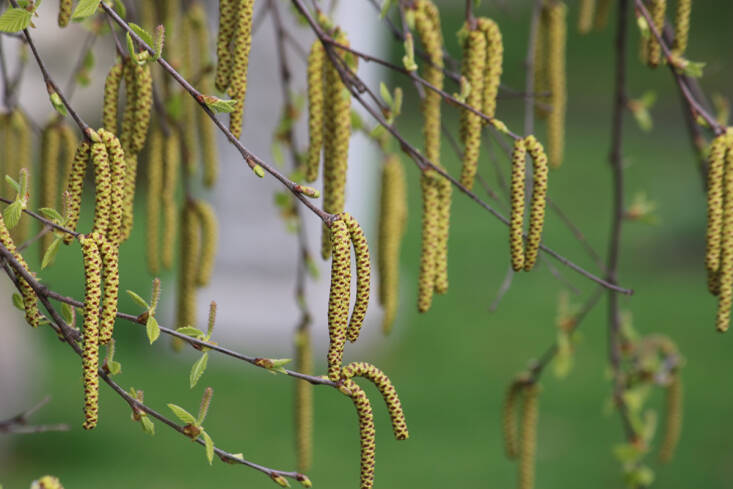
Birch trees begin to bloom from early to mid spring, with electric-hued male and quiet green female flowers on the same tree.
See also:
- First Witch-Hazel, Then Spring: The Wonder of Asian-Witch Hazels
- Trees With White Flowers: 14 Favorites for Cold Climates
- Spring Gardening: 5 Common Shrubs to Prune Right Now (and 5 Not to Prune)



Have a Question or Comment About This Post?
Join the conversation