

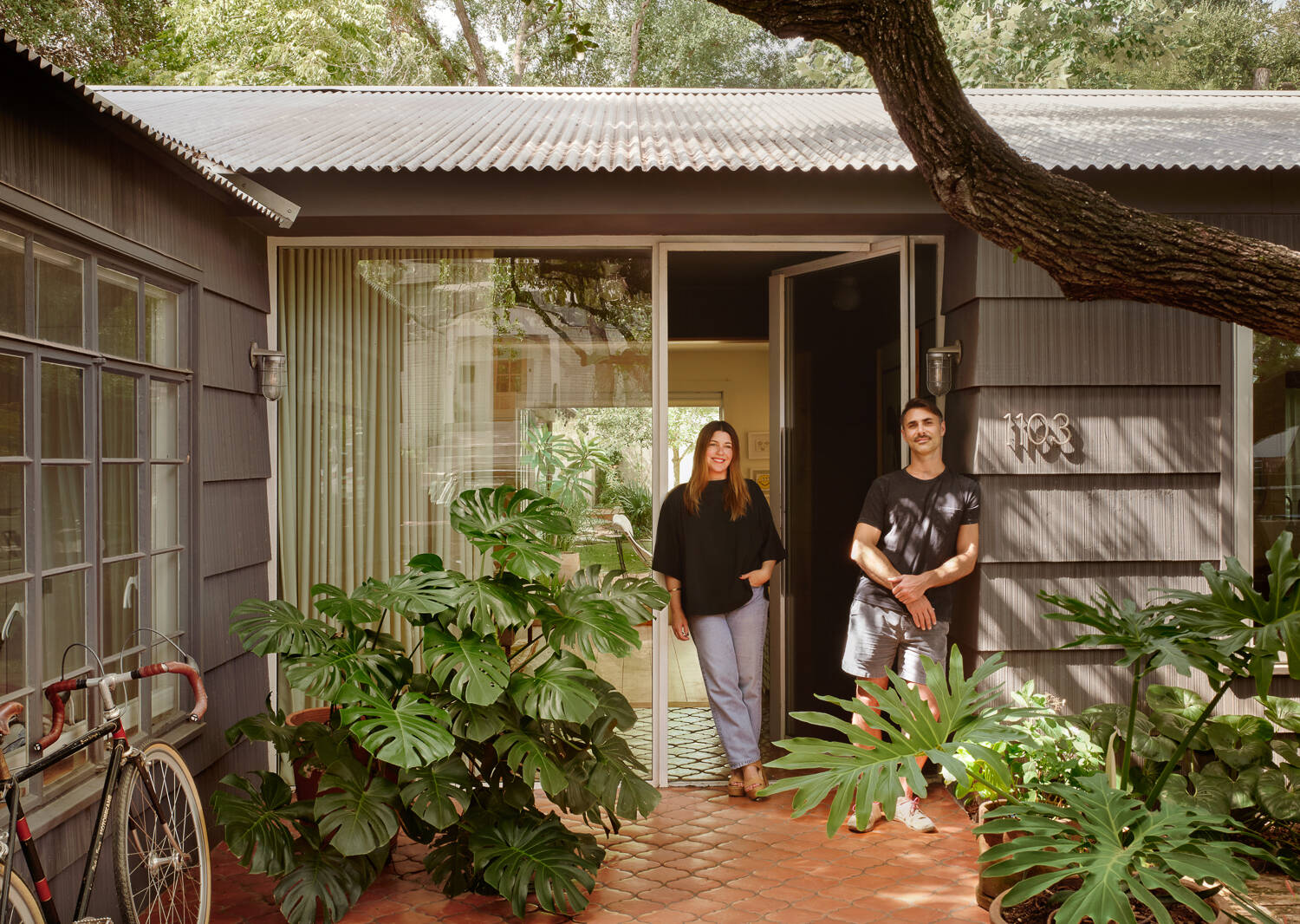
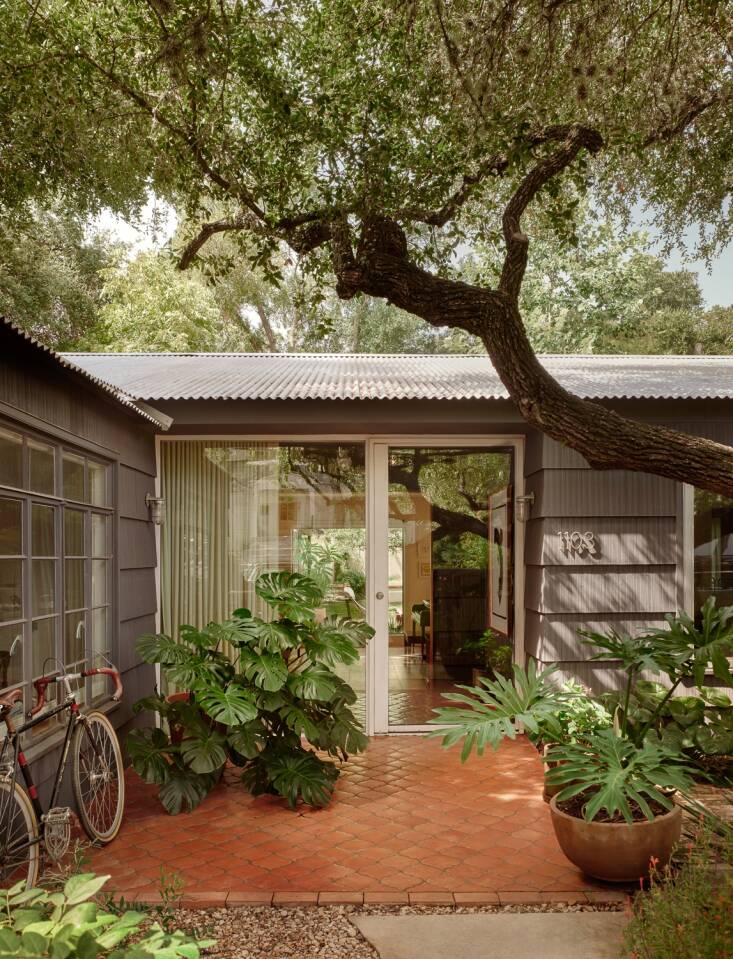
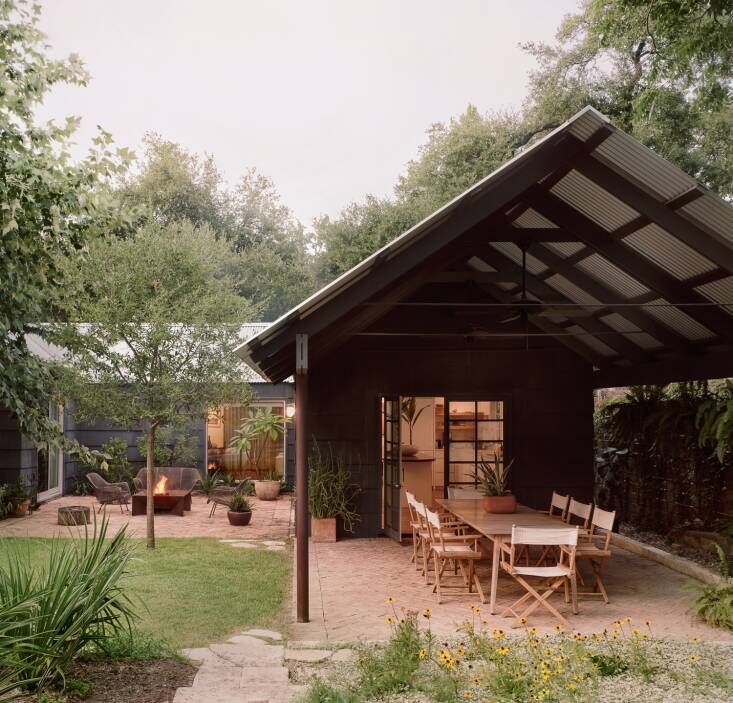
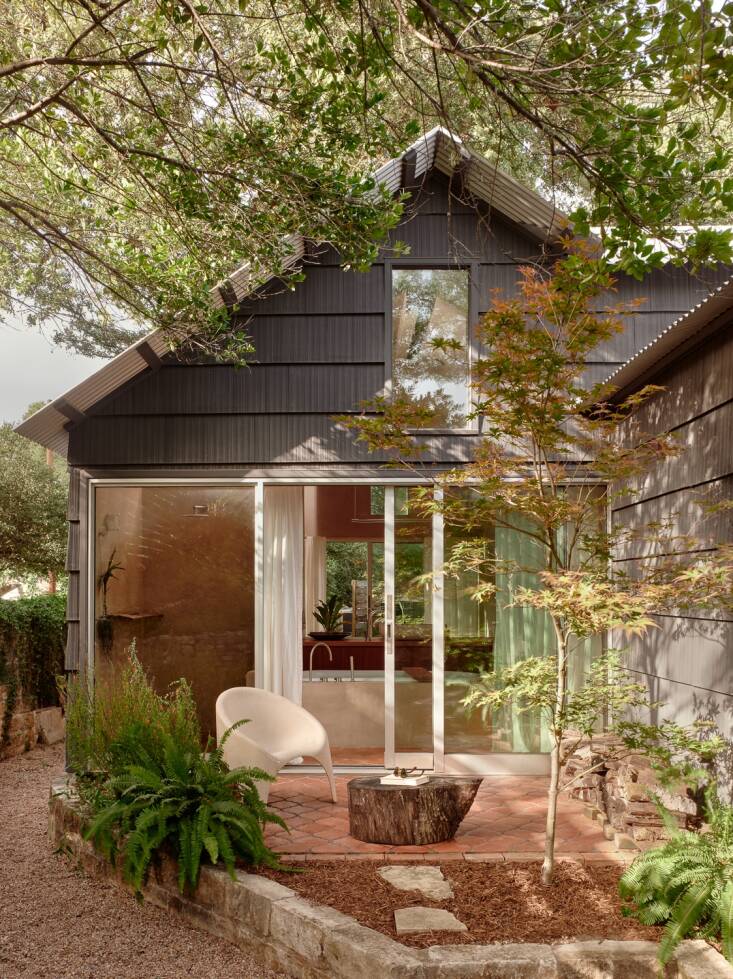
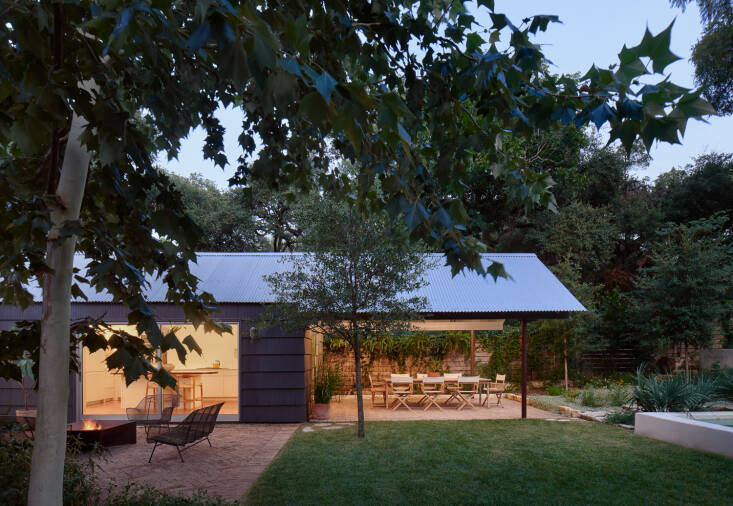
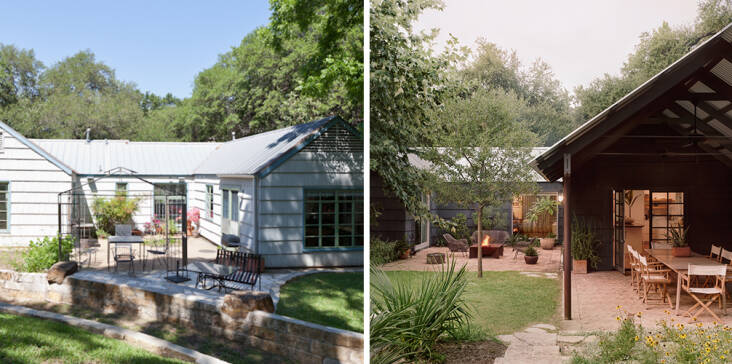
As soon as architects Annie-Laurie Grabiel and Arthur Furman (pictured above), the couple behind the firm Side Angle Side, completed the renovation of their 1939 Austin bungalow, they turned their attention to the outside. “It was almost like the day we finished the renovation, we realized we needed to have outdoor dining,” says Grabiel. The couple loved the H-shaped footprint of their house, and how it created intimate indoor-outdoor connections, especially with the patio between the two back wings. Inspired by the home’s emphasis on outdoor living, they extended the roof of one wing to create a dining pavilion off of the kitchen.
The rest of the yard, however, was a bit of a puzzle. Located in the path of a drainage easement, the yard had a moat-like channel, for managing stormwater runoff, crossing the sloped yard. The architects developed a plan to fit a pool, but they called on their friend landscape architect Cameron Campbell to give them a second opinion on what they’d designed.
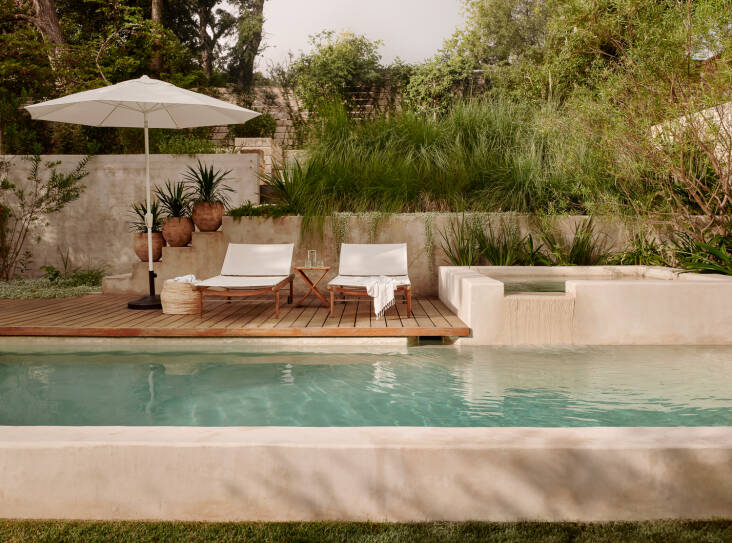
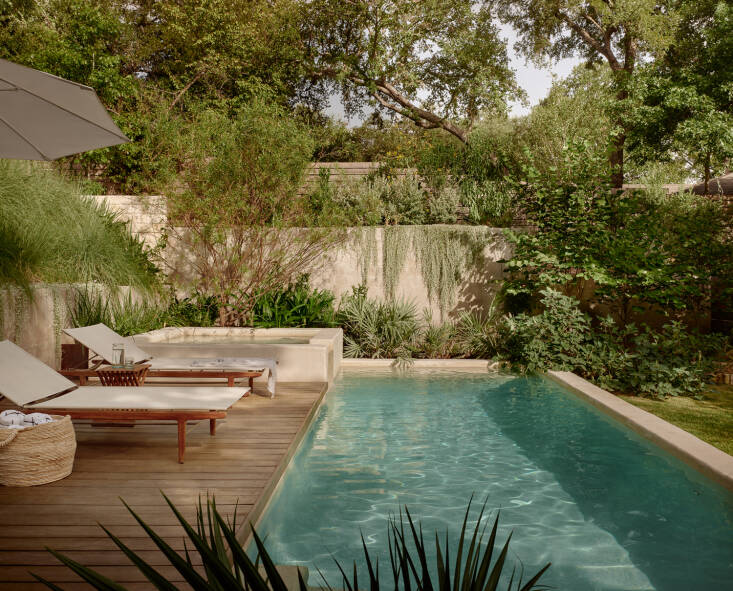
Campbell saw possibilities that Furman and Grabiel had not. He drew up a new plan that completely reimagined the contours of the yard, building the pool into the slope through a series of terraces. “It was so much better than what we were thinking about that we had to do it,” says Grabiel. While Campbell’s design would require significantly more site work, the couple knew it would ultimately improve the flow and increase usable space.
Campbell designed the terraces, which are built from reinforced concrete masonry blocks that have been covered in chukum, a type of Mexican plaster, so that the stormwater travels through four levels, slowing down and filtering into the planting beds as it does. “He designed it in such a way that there are a lot of planting areas that soften everything,” says Grabiel. He also recommended native and climate-adapted plants—like native dwarf palmetto, bamboo muhly, and silver pony foot—that could create the lush, layered feeling Grabiel craved. In the area closest to the dining area, Grabiel sowed native Texas wildflowers, including coneflowers, black-eyed Susans, and sunflowers to attract pollinators.
While Furman and Grabiel love how much more use they get out of the new yard, Grabiel is perhaps even more excited about how alive the garden is, buzzing with birds and bees. “Every little move we made, every plant, every tree–everything we did was a little invitation to insects and bees,” says Grabiel. “It just blows my mind how much better it got. Before it was just a hill of grass.”
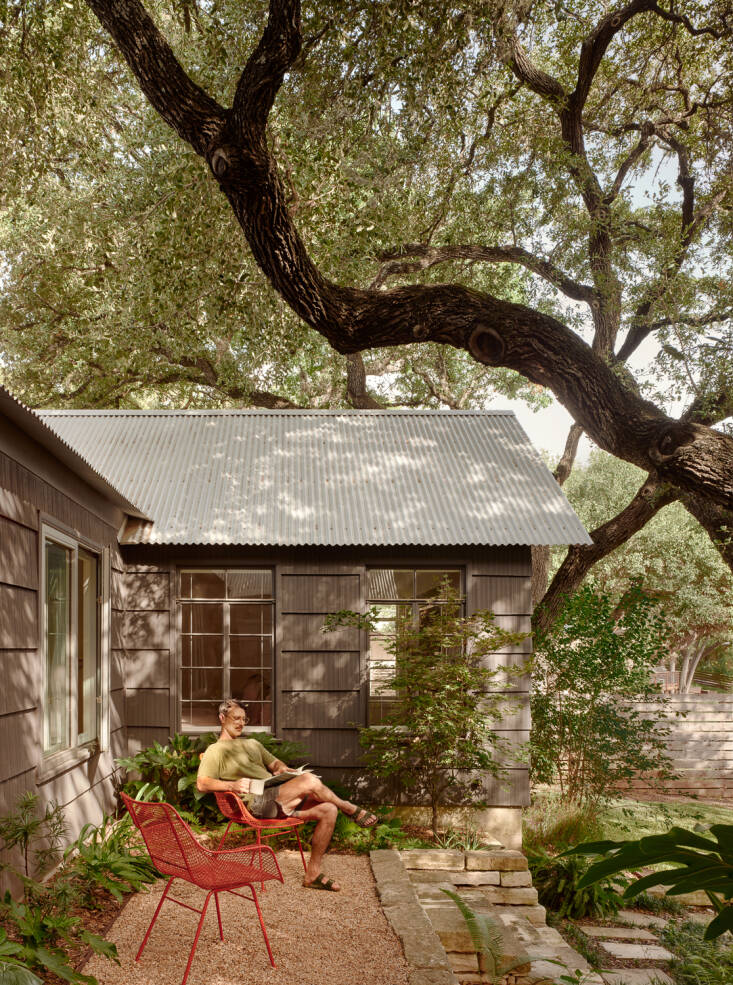
Below, a tour of the reimagined, re-enlivened landscape.
Photography by Casey Dunn, courtesy of Side Angle Side.
See also:
- Before & After: A Modern Landscape Design for a Traditional Washington, D.C., Home
- Before & After: Removing a Pool to Unlock a Garden’s Potential
- Before & After: A Modern Courtyard Garden for a Historic Home




Have a Question or Comment About This Post?
Join the conversation