

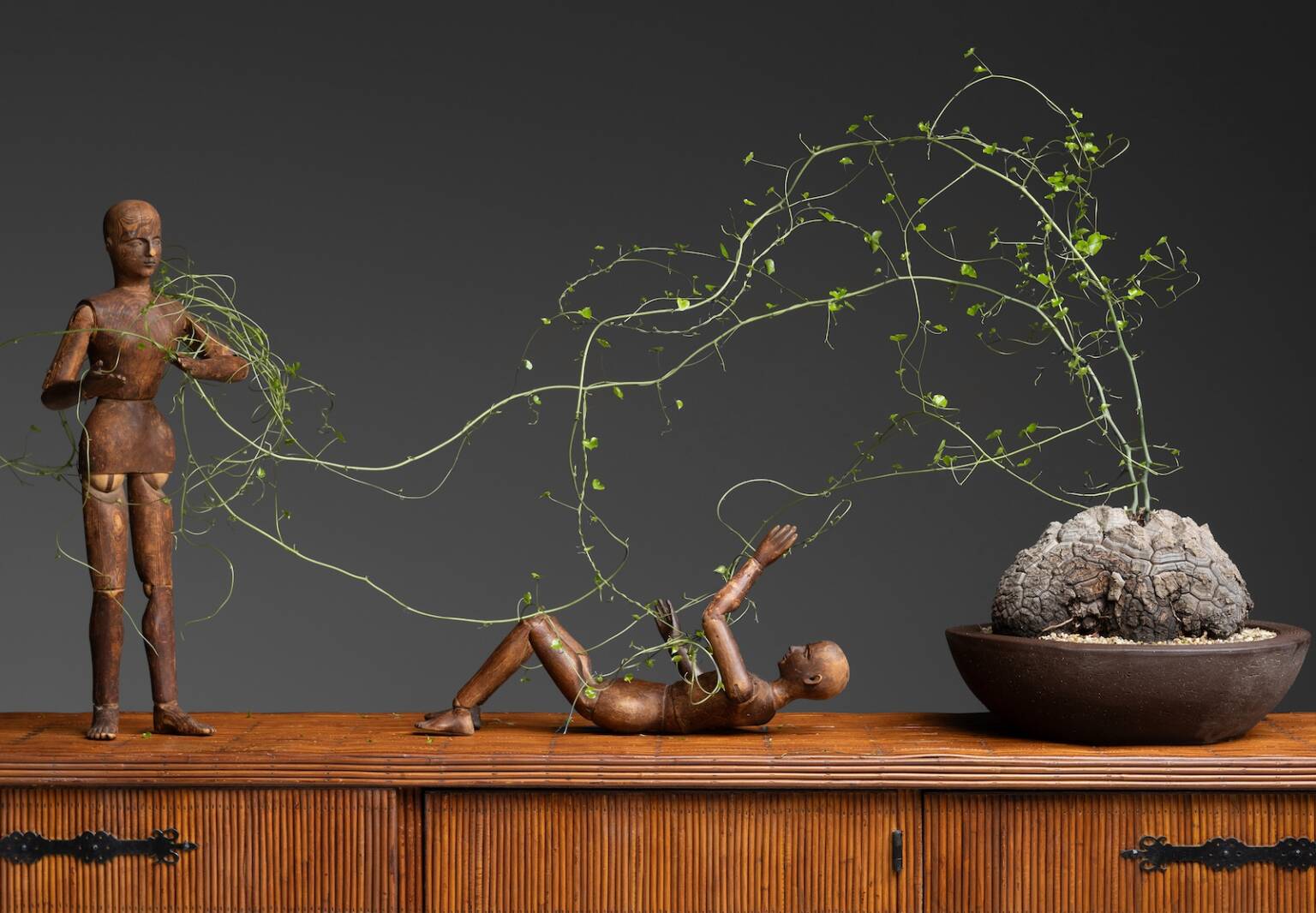
If the phrase “houseplant stylist” leaves you scratching your head, one look at The Haus Plant’s Instagram account (@thehausplant) will help you understand what Rob Moffitt does. Based in Los Angeles, Moffitt transforms unusual plants into something more like sculpture–and it is a skill that all houseplant lovers can cultivate. “Plants can just get thrown in a corner as a space filler, but I really like to view plants as a piece of art or an object that can stand alone and complement a space,” says Moffitt.
A former nurse, Moffitt began selling houseplants at Los Angeles farmer’s markets during the pandemic. From the beginning, customers were drawn to the unique ways he potted and styled plants. As his side hustle grew, Moffitt decided to give up his work as a nurse and focus on his budding business, which he christened The Haus Plant.
Today, Moffitt has a studio on 3rd Street in Los Angeles, with plans to expand into a larger space next door in 2026. The studio space, which is open for visits by appointment, takes Moffitt’s botanical aesthetic and turns it into a whole immersive, biophilic world. Moffitt has also delved deep into rare and unusual plants as his business has grown.
The Haus Plant has also expanded beyond selling individual plants. Moffitt now offers whole-house consultations for houseplant styling and ongoing maintenance care for its larger clients. The studio even rents out its houseplants to real estate professionals for staging their listings. With the forthcoming larger space, Moffitt is adding a photography studio, a kitchen, a space for private events, and a two-story art gallery. Moffit has also just launched an online store that sells vintage and artisan pots and vessels. “I started this because I wanted a hobby on my days off from the hospital,” Moffitt says. “Now we have a team of 15. It’s really grown far beyond anything I ever could have imagined.”
Gardenista recently spoke with Moffitt about his plant styling. He shared tips for how to elevate even the most humble houseplants to something more akin to art. Here’s how:
Photography by Henry Crouch, courtesy of The Haus Plant, unless otherwise noted.
Know your growing conditions.
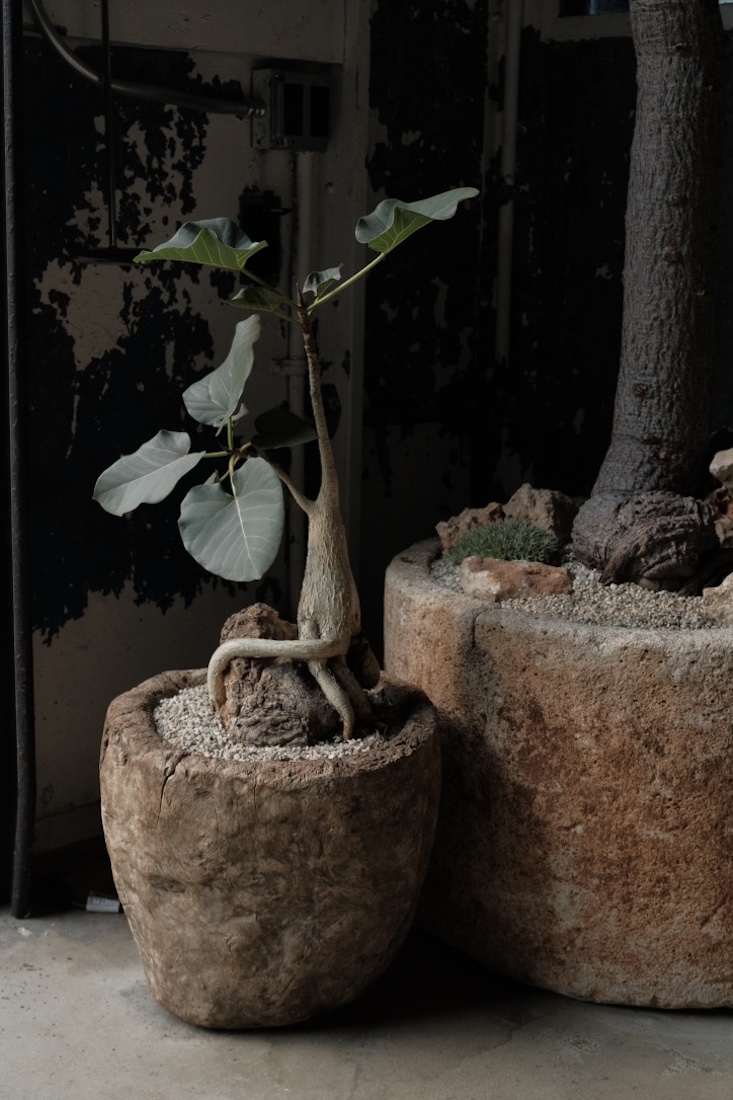
Moffitt says the hardest part of his job is setting realistic expectations for clients about what kind of plants they can grow in their conditions. Make an honest assessment of how much light you have before thinking about what plants might work. “Figuring out what’s realistic in the space is really important because at the end of the day, you want a happy plant,” he says.
Look for plants with unique structure.
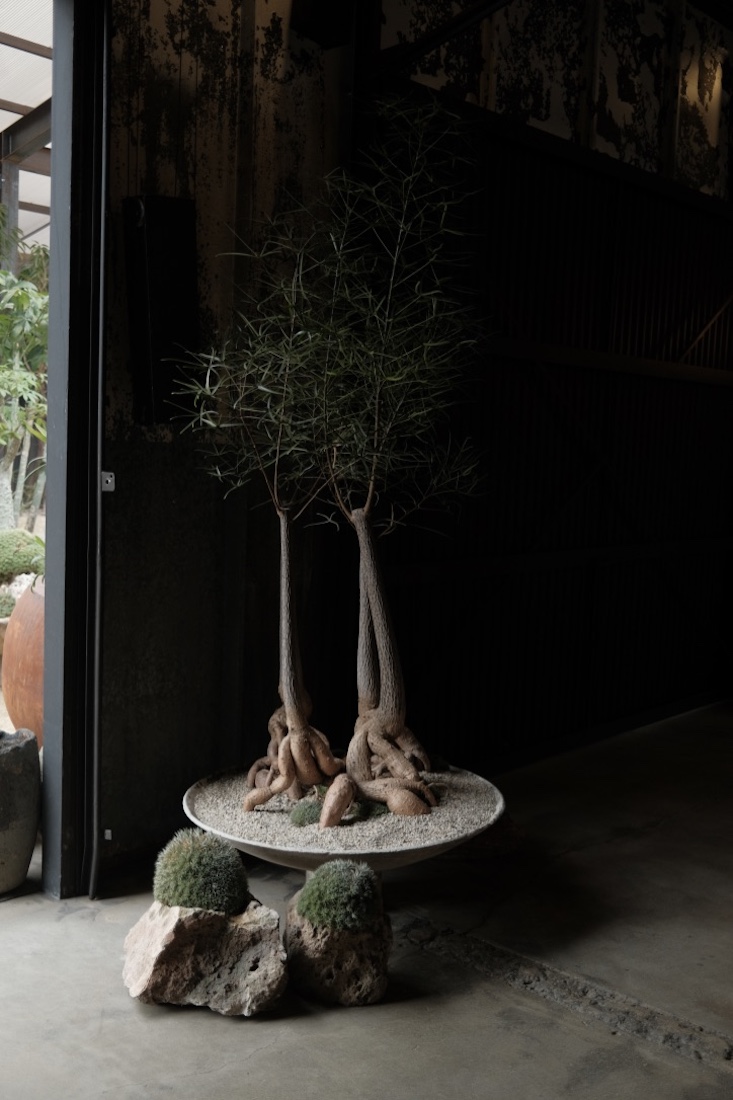
Part of what makes Moffitt’s plant stylings stand out are the plants’ unusual shapes and forms. He says he looks for plants that can “stand alone in a space.” Some of his favorites are:
- Australian bottle tree. Moffitt says, “They always have a really interesting root structure underneath the soil and they’ll tend to get bulbous and twist around themselves.”
- Pseudobombax. “Those form this caudex that we like to show in the shallow dish and expose a little bit more of that,” says Moffitt.
- Dragon tree. “These are a pretty common plant, but when you find ones that are overgrown and really interesting—things that we find at estate sales or on Facebook Marketplace,” Moffitt adds, “They tend to have this wild sculptural look to them.”
- Snake plants. Moffitt says not to overlook this common plant, noting “there are some really interesting ones that require very little light and little watering.”
- Aloe trees. In 2026, Moffitt says he is experimenting more with aloe trees. “Place them indoors with enough light, and they stay green year-round,” he notes.
Hunt down older plants.
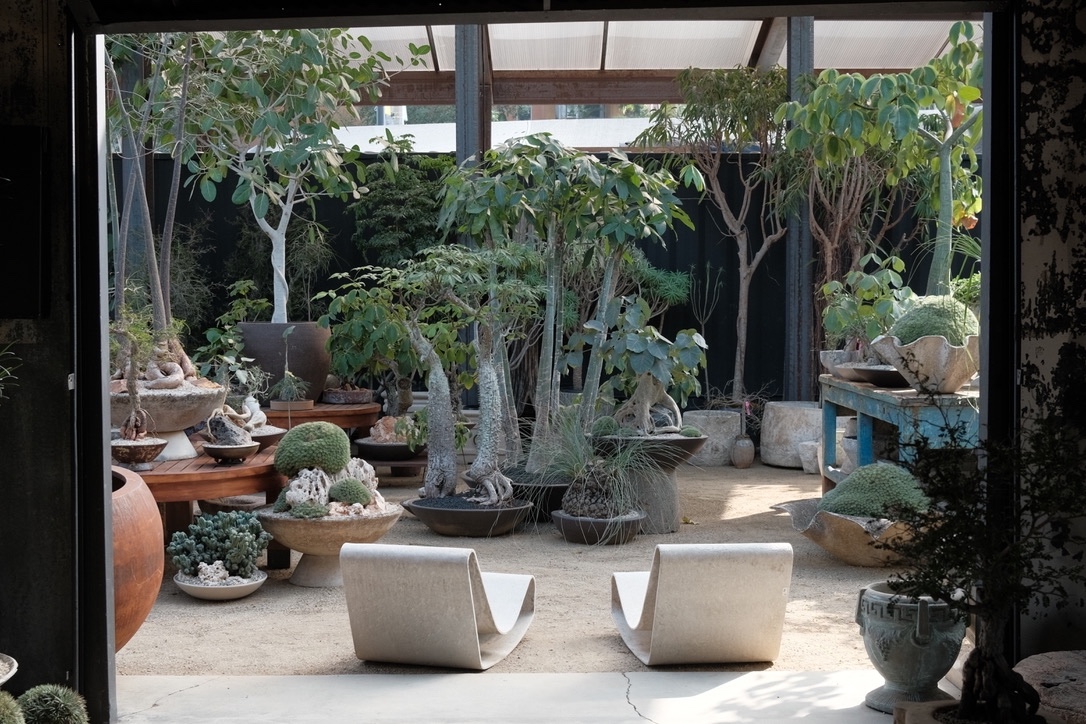
Moffitt says much of his signature look can be chalked up to sourcing older plants. He recommends digging around at the back of plant shops and nurseries, noting, “They typically have some interesting ones in the back that are older or have more of a story.” He also recommends searching on Facebook Marketplace and at estate sales to find older specimens at good price points.
Invest in beautiful containers.
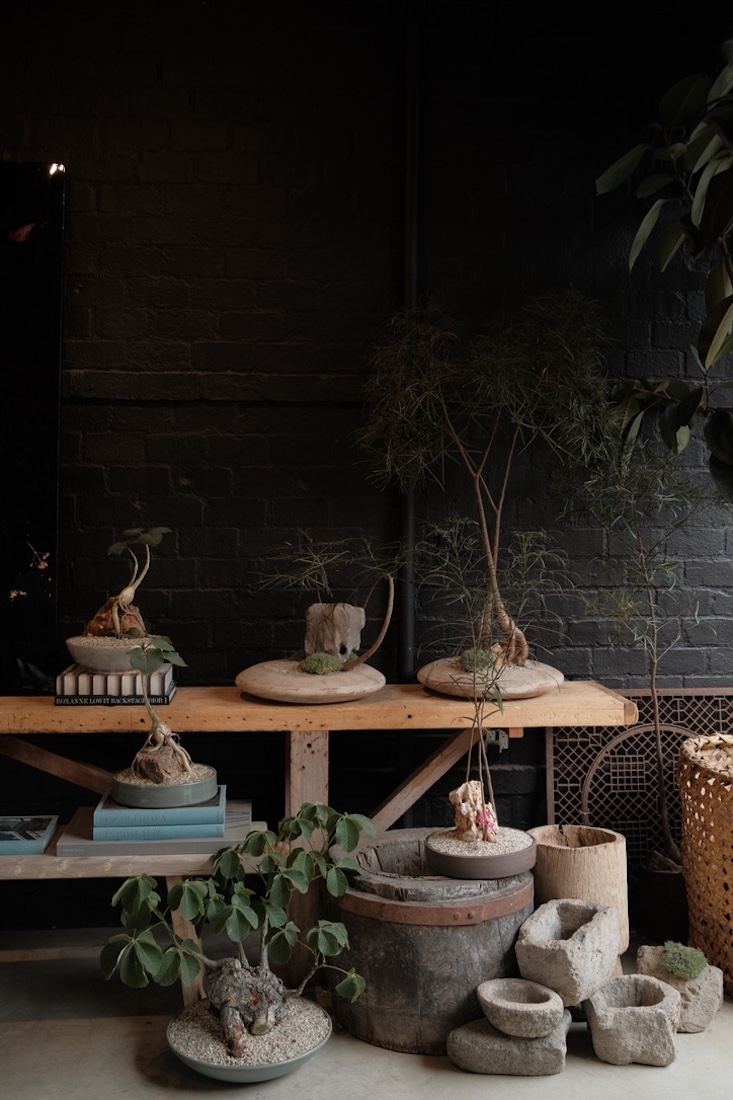
The other key to Moffitt’s styling is to find containers that are beautiful in their own right. “We work with different ceramic artists. We’re sourcing antique containers from all over the world,” he says. “The containers are just as important as the plants.”
Moffitt is personally drawn to vessels with age and patina, but he’s always looking to have his creations harmonize with their surroundings. “Plants are pretty universal and I think all spaces need plants, but containers can really change the aesthetic to compliment the vision that the interior designer has been working on,” he notes.
Consider a shallow dish.
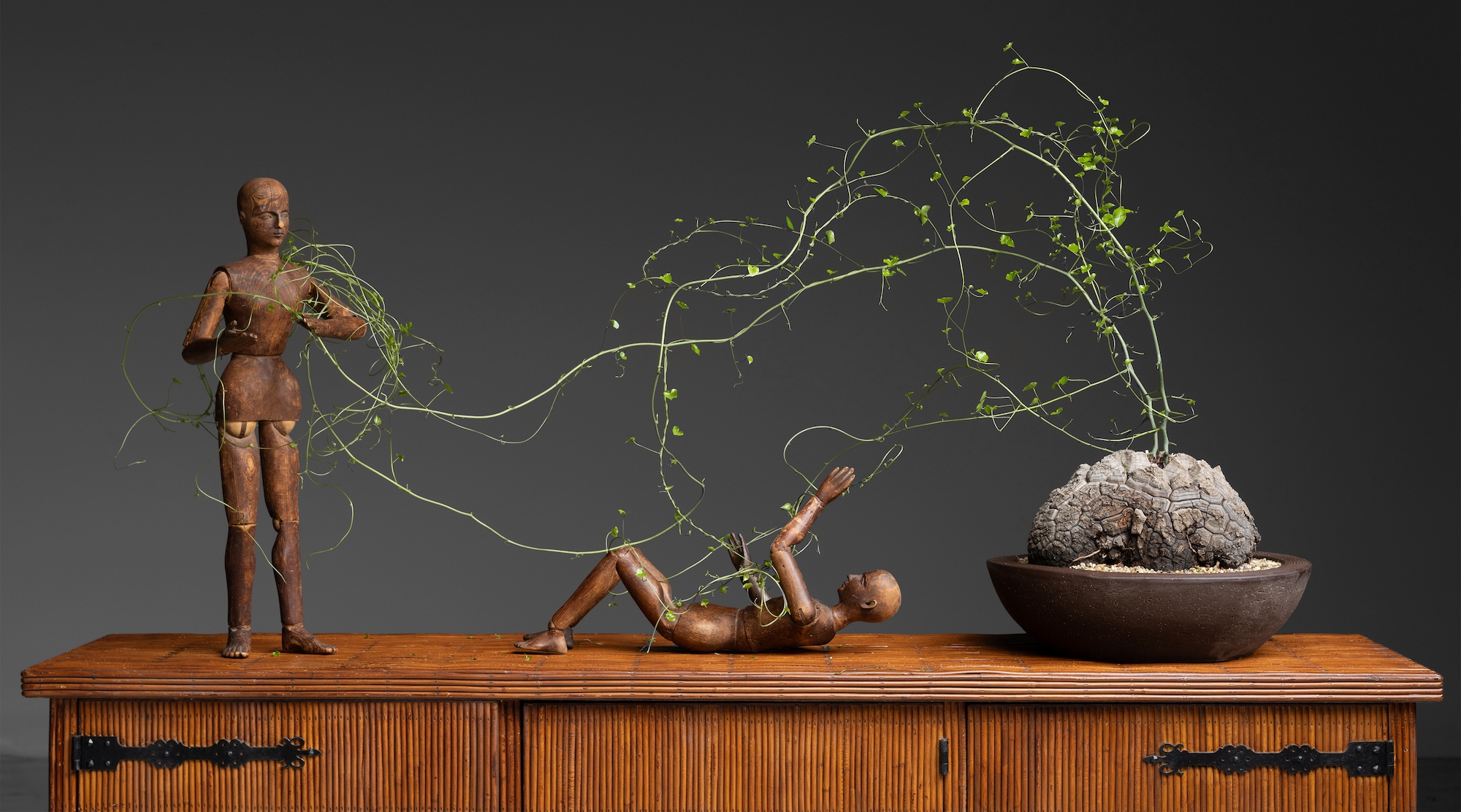
Moffitt is particularly fond of shallow containers. “I love doing these tabletop pieces with smaller plants,” he says. “I think they can really take center stage in a room and give so much character.” However, he notes it’s not for all plants, especially not deep-rooted ones. Bottleneck trees and those with more bulbous root plants, like a Fockea edulis will allow you to plant in a shallow dish and place larger, interesting stones to support them. Moffitt says in a shallow, non-draining container you must always check drainage and moisture levels. “It’s a bit tricky and there’s definitely some technique to it,” he adds.
Prune for a strong shape.
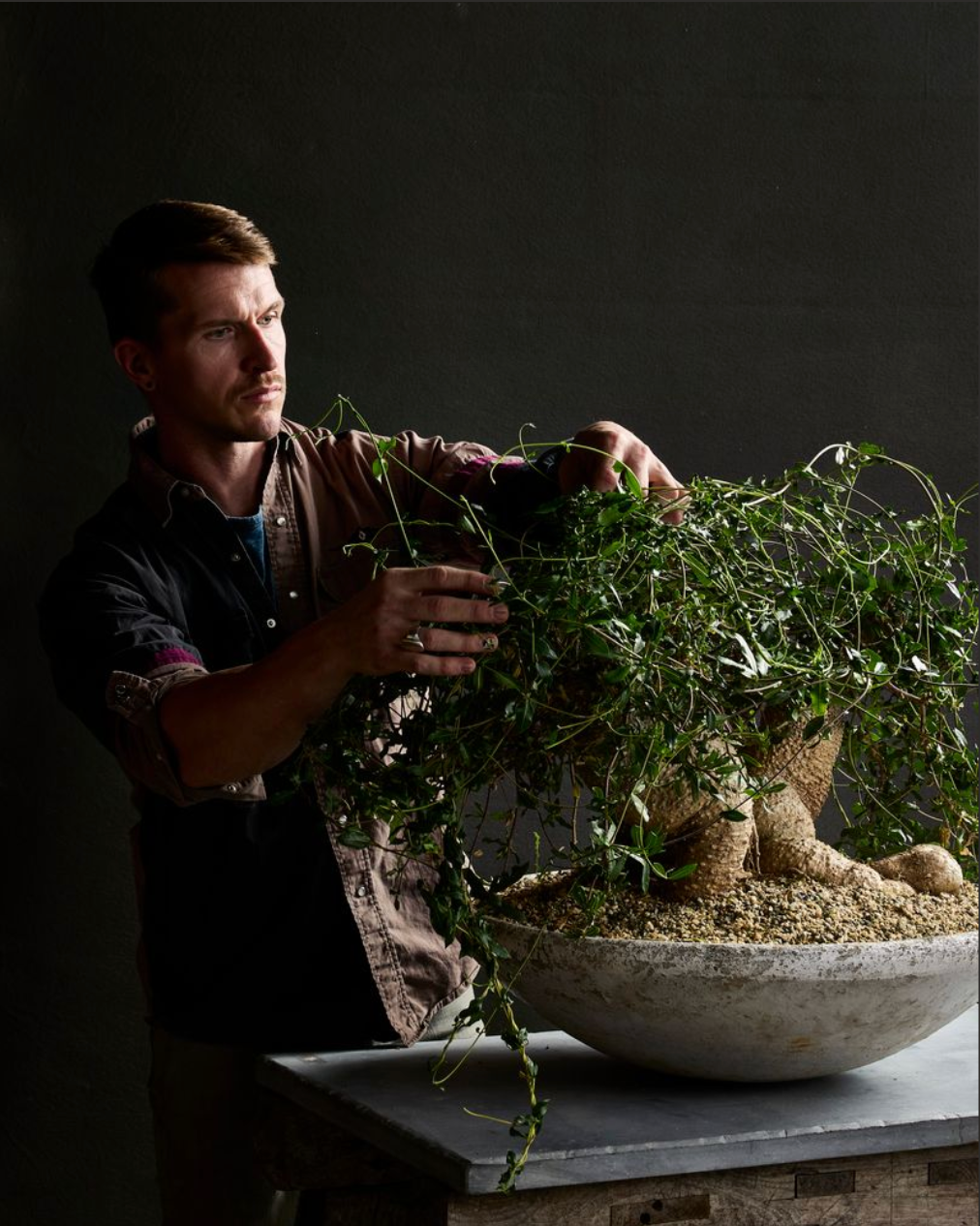
Moffitt says pruning is a big factor that can make a plant feel styled. “I like it to be a little bit more organic and messy up top while still pruned and showing off some of those architectural details,” he says. Many of the bulbous root plants Moffitt favors go dormant in the wintertime, so he says it’s important to shape the plant it in a way that even when it’s dormant, it still looks like a piece of art. Moffitt also prunes and exposes roots on certain plants, including Australian bottle tree, and then lifts them up and drapes them over rocks.
Finish it with styling.
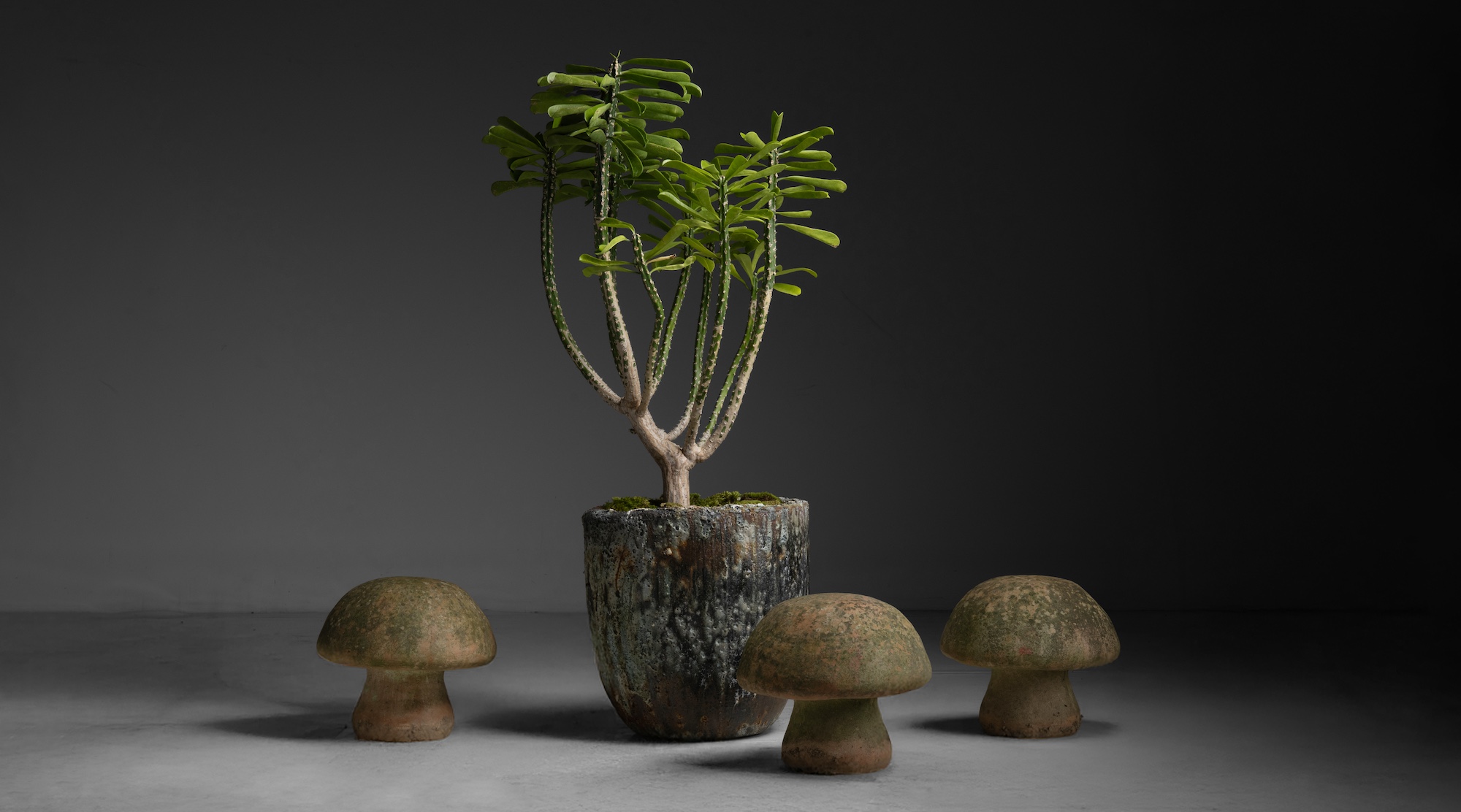
Instead of leaving soil exposed, Moffitt often uses different styling techniques to finish off potting, including a layer of moss balls and a thin layer of rocks. “We’ll do moss for a softer look and stone for more of a hardscape look—almost like you have a mini rock garden with an interesting plant,” he says. Moffitt notes that it’s important not to pile too much on the soil because you don’t want to trap moisture or choke the plant.
The final piece of the puzzle is to take good care of your plants, learning what the proper watering and feeding techniques are for each species. “I’m constantly learning how to take better care of our plants,” says Moffitt. “Unusual pests will pop up with unusual plants. So getting really into plant care is important.”
See also:
- Ask the Expert: House Plant Journal’s Darryl Cheng on 6 Common Indoor Plant Pests
- Winter Is Coming: How to Care for Houseplants When They Go Dormant
- 8 Favorites: Houseplants for the Bath





Have a Question or Comment About This Post?
Join the conversation