

We all need signs that lead us hopefully forward. After a serious winter (one that actually felt like winter), with punishingly low temperatures and more snow cover than the Northeast has become accustomed to, the first bursts of witch-hazel flowers in New York City are like the fizzing pop of a bottle of Champagne. Celebration, in floral form. The end is in sight. These shrubs and small trees that bloom in late winter and generously into spring are Asian witch-hazels: two Hamamelis species, a natural hybrid, and many cultivars.
They may not be native, but they sure are welcome. Here is why they are awesome.
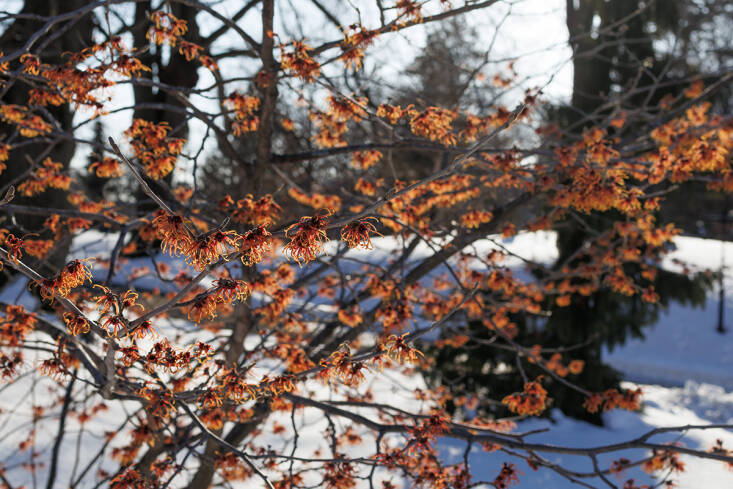
All witch-hazels flower at the extremes of the season: In late fall, at winter’s doorway, North American species of Hamamelis bloom. But Asian witch-hazels belong to winter’s end, suitably in tune with Lunar New Year’s celebrations.
Temperature dictates whether the petals open or close—sunny days when temperatures are near or above freezing see their streamers unfurling, curling up again when temperatures plummet. This adaptation also makes them exceptionally long bloomers. Most flowering trees and shrubs drop their petals after a couple of weeks; Asian witch-hazels may bloom for eight.
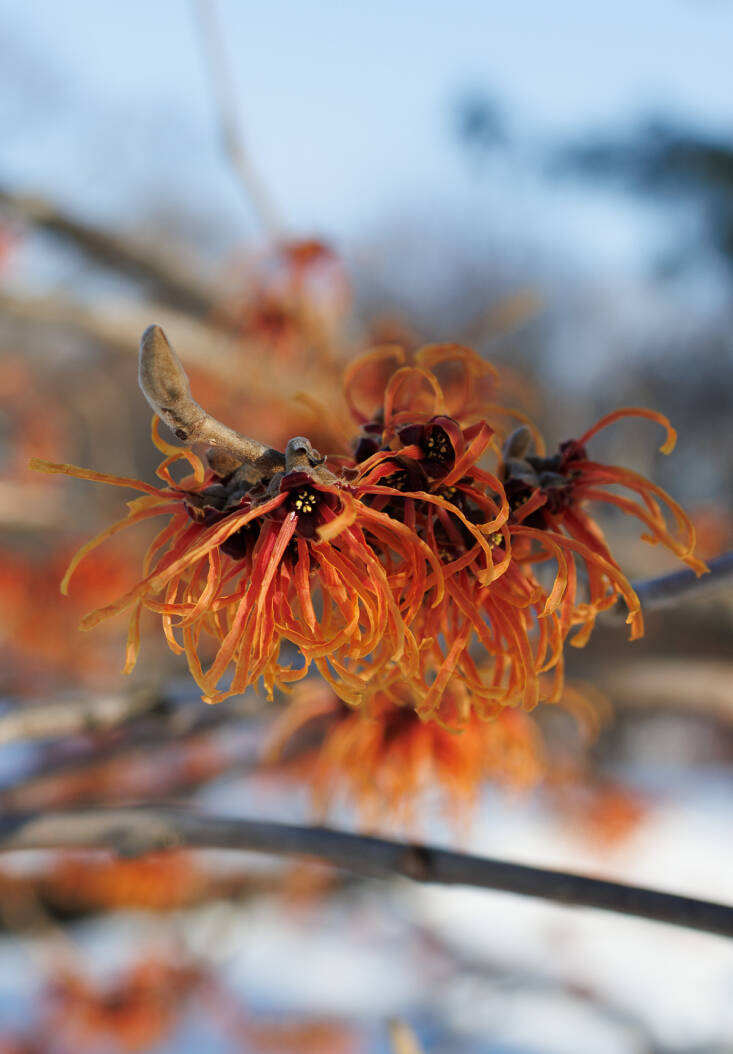
Depending on their parentage, the petals of witch-hazel flowers are spidery, crinkled, crimped, or curled. They surround the flowers’ tiny star-like heart, where compact anthers are cupped by four sheltering calyces (often vividly red). The flowers are adapted to be pollinated by insects, but fertilization is delayed for months, until temperatures warm—a survival strategy. Witch-hazels may be pollinated by owlet moths, a common name for the family Noctuidae, with over 1,000 genera and over 10,000 species. Some owlet moths are able to thermoregulate in very cold temperatures.
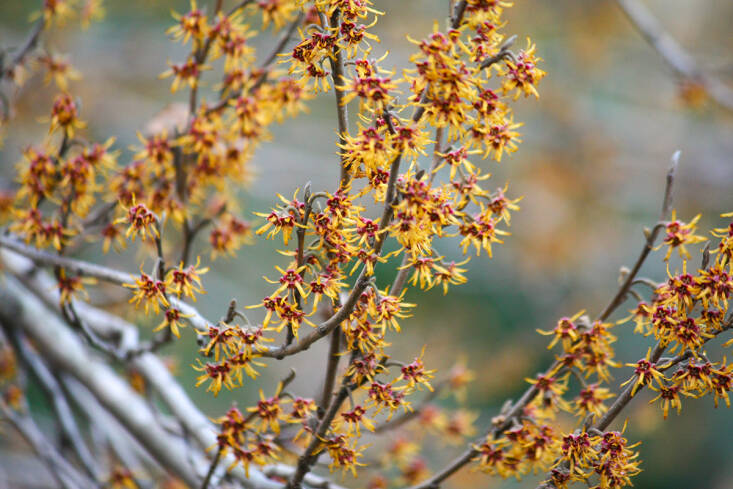
Another adaptation that has been studied in precocious flowering plants, including Asian witch-hazels, is that bud-set occurs the previous year, not in late winter, when nutrient-flow (aka sap) within the xylem and phloem is compromised by the cold.
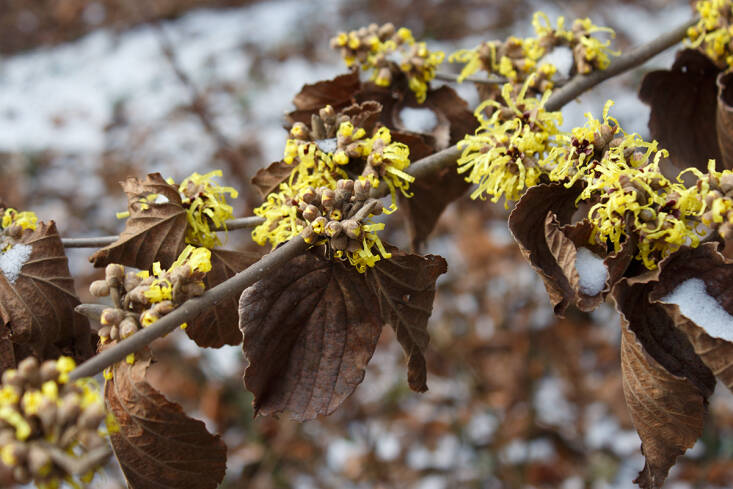
There are only two species of Asian witch-hazel: Hamamelis japonica (Japanese witch-haxel), and H. mollis (Chinese witch-hazel). Japanese witch-hazel blooms a little later than Chinese, but has cold-hardier flower buds. Its petals are longer and wavier but less saturated in color. Chinese witch-hazel is less cold-hardy but is electrically yellow, with a noticeably strong fragrance, and often dry leaves remaining on the branches with the flowers.
And there is the hybrid. Cue the fireworks.
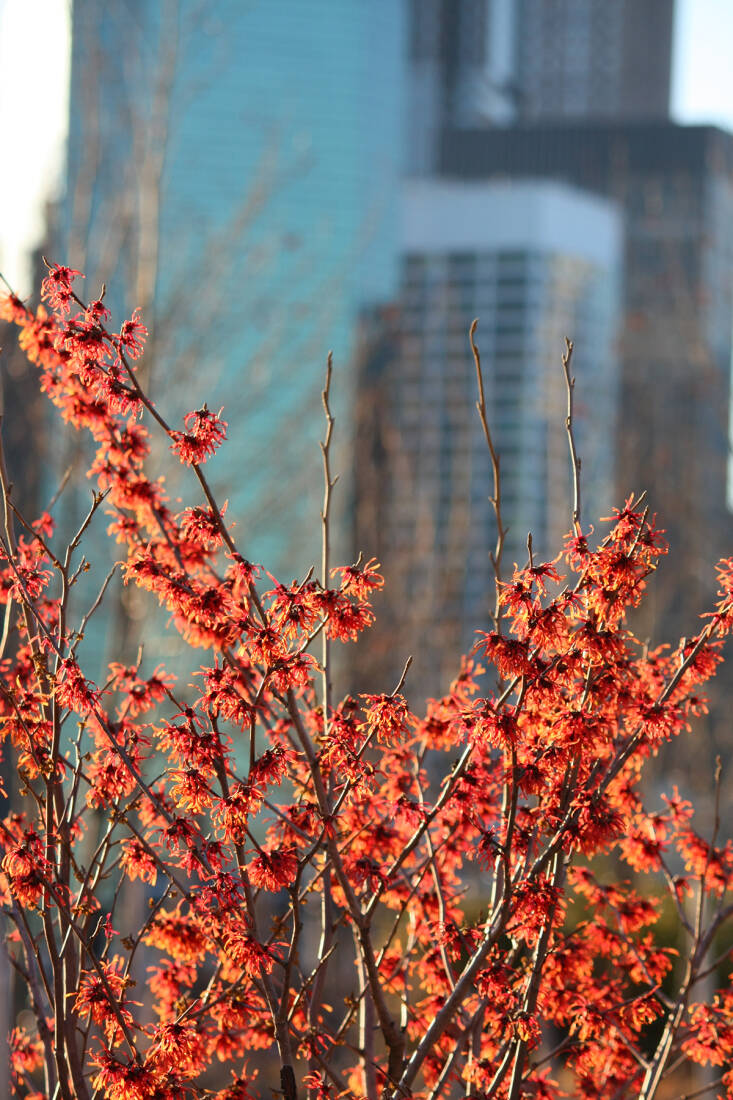
Hamamelis × intermedia is a cross between (that is, a hybrid of) the Chinese and Japanese species. And it was an accident. A very happy one. It took place at the Arnold Arboretum in Massachusetts in 1928. William Judd, a plant collecter and the arboretum’s propagator at the time, collected open-pollinated seed from a Chinese witch-hazel that was growing near other witch-hazels in the collection. The trees that subsequently grew from the collected seeds displayed neither the traits of one nor the other species, but both. Ta-daa.
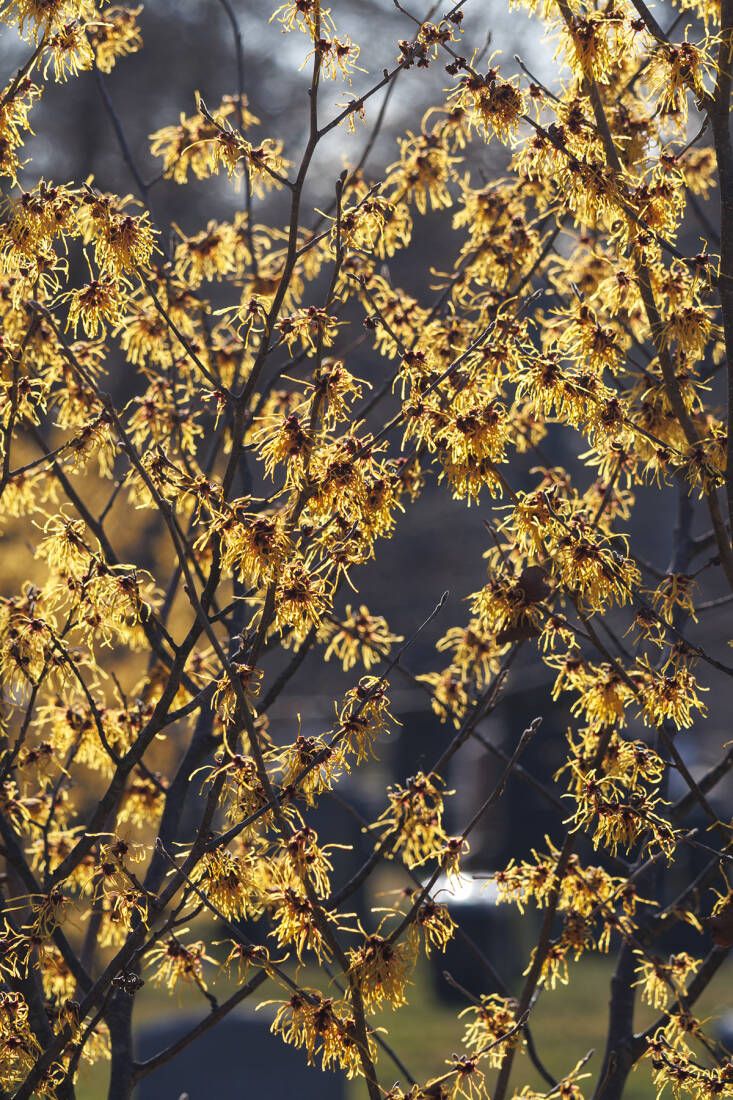
After years of close observation, in 1945 taxonomist and herbarium curator Alfred Rehder named this hybrid Hamamelis × intermedia, from the intermediate parent-tree traits in the new hybrid—to wit, bigger, brighter flowers, more cold hardiness, and that witch-hazel scent. It is the many cultivars of this happy hybrid that blaze the trail for spring, in cold-climate gardens across the world.
You might also like:
- Another story about a natural hybrid: African Basil, origin Ohio
- Gardening 101: How to Grow Witch-Hazels





Have a Question or Comment About This Post?
Join the conversation